
Reptile
Knight Anole
Anolis equestrisAlso known as Cuban Knight Anole, Cuban Giant Anole, Chipojo, Chupacocote
Knight anoles are imposing arboreal lizards that dominate the high canopy of tropical hardwood forests and mature suburban trees. Highly territorial males vigorously defend their perches by puffing up their bodies, erecting a notched nape crest, and flaring a pale pinkish dewlap. While they primarily hunt large tree-dwelling invertebrates, their powerful jaws readily crush snails, frogs, and even smaller lizards.
ArborealDiurnalCarnivorous
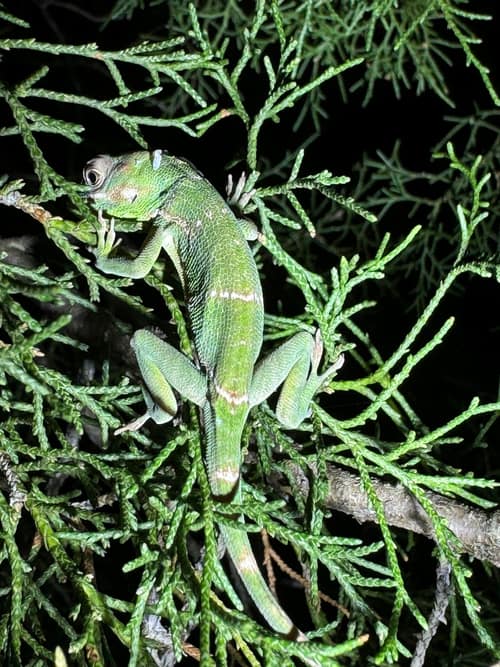
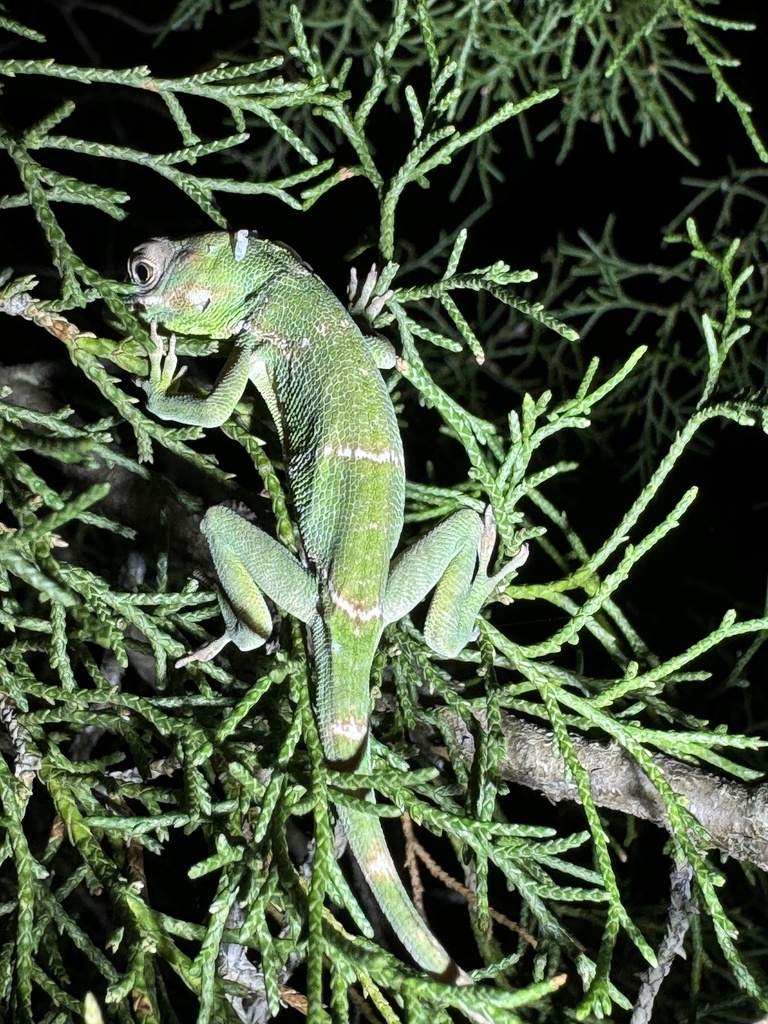
—observations
—countries
—peak records
Least ConcernConservation statusIUCN Red List categoriesLCNTVUENCREWEXLeast ConcernRed List categories, explained →
Diet & preyInsects, Tree Frogs, Brown Anoles
Predators
- Birds of Prey
- Feral Cats
- Large Snakes
ThreatsSevere freezes in introduced ranges, deforestation, and predation by domestic pets
HabitatsTropical hardwood forests, suburban gardens, orchards, and palm canopies
Life span5–8 years
Classification
- FamilyDactyloidae
- GenusAnolis
- SpeciesAnolis equestris
Range data is not available yet.
Interaction riskLow
- Low
- Moderate
- High
- Very high
- Why interaction risk is low
- Delivers a painful, crushing bite if cornered; observe quietly without attempting to catch or handle.
- Why it is dangerous
- Possesses exceptionally strong jaw musculature and sharp teeth that cause deep, bleeding wounds if seized.
- How to recognize a risky encounter
- Recognize by the large size, vivid emerald green skin, heavy wedge-shaped head, and yellowish stripe below the eye.
- What to do
- Maintain a respectful observation distance and do not attempt to grab or trap them from branches.
Responsible observation
- Canopy Scanning: Search high in broadleaf trees and palm fronds during warm, sunny mornings.
- Respect Boundaries: Avoid reaching toward perching lizards, as they stand their ground and bite defensively.
- Watch Territorial Displays: Look for flared pink dewlaps and rapid head bobs when two adults meet.
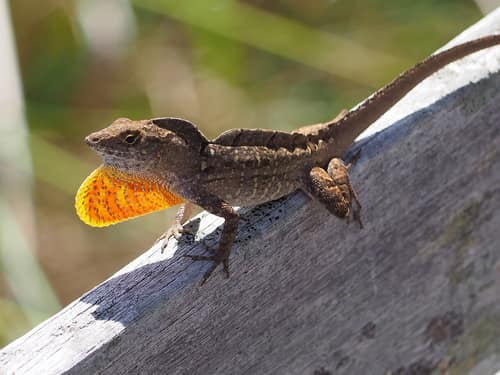
Prey Nosferattus / CC0 · cc0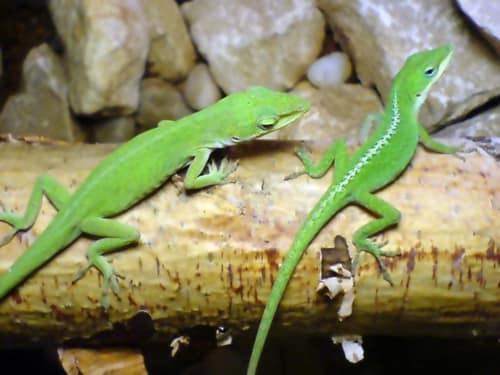
Close Relative (c) Robert Michniewicz (edited by Ark), some rights reserved (CC BY-SA) · cc-by-sa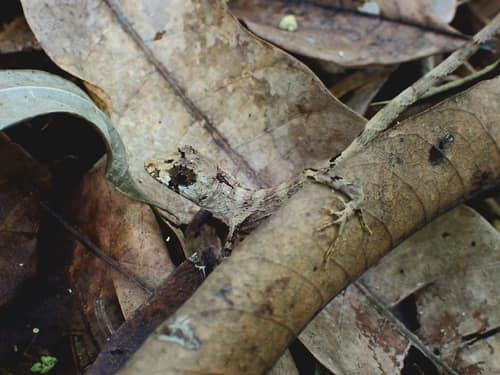
Close Relative (c) Kurt Miller, some rights reserved (CC BY-SA) · cc-by-sa
Help improve the field guideSomething wrong?
Checking your Fauna account…Report a name, category, or profile issue for review.