
Amphibian
Diadectes sideropelicus
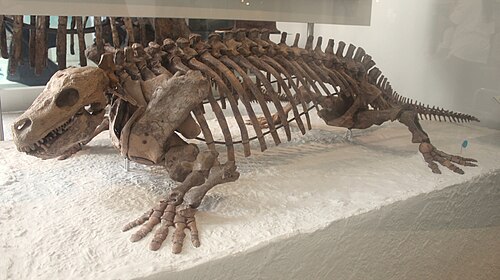
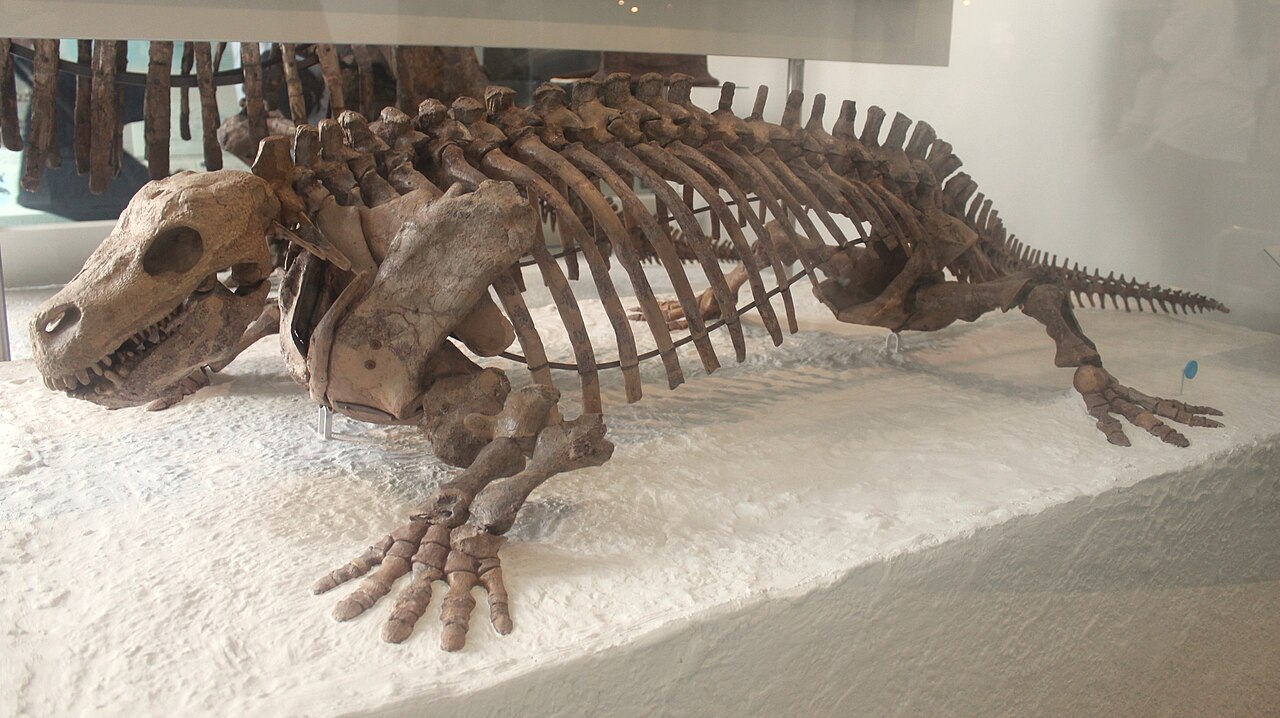
Diadectes sideropelicusDiadectes sideropelicus was a heavily built, barrel-chested reptiliomorph that roamed the floodplains of Early Permian North America as one of the earliest large land-dwelling herbivores. Armed with peg-like front teeth for cropping tough vegetation and broad, ridged cheek teeth for grinding, it processed fibrous plants that few other tetrapods of its time could digest. Sturdy, sprawling limbs and a massive pelvic girdle supported its considerable bulk on dry land far from permanent water.
HerbivoreTerrestrial
—observations
—countries
—peak records
ExtinctConservation statusIUCN Red List categoriesLCNTVUENCREWEXExtinctRed List categories, explained →
Diet & preySeed ferns, Horsetails, Early conifers
Predators
- Dimetrodon
- Eryops
ThreatsExtinct; vanished during Early Permian environmental shifts and competition with emerging synapsid herbivores
HabitatsEarly Permian floodplains, river deltas, and terrestrial lowland forests in North America
Life spanUnknown (extinct; estimated 15–30 years)
Classification
- FamilyDiadectidae
- SpeciesDiadectes sideropelicus
Range data is not available yet.
Interaction riskLow
- Low
- Moderate
- High
- Very high
- Why interaction risk is low
- Extinct prehistoric species; fossils are safe to observe in museum collections.
Responsible observation
- Museum Viewing: Look for the broad, barrel-shaped ribcage and peg-like front teeth that mark an early plant-eater.
- Fossil Context: Specimens are most famously preserved in the Early Permian red beds of Texas and Oklahoma.
- Field Ethics: Never excavate vertebrate fossils on public or protected land without proper permits.
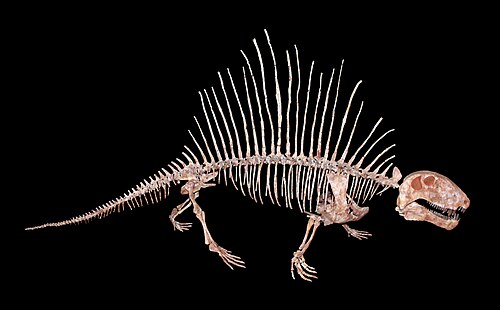
Predator H. Zell / CC BY-SA 3.0 · cc-by-sa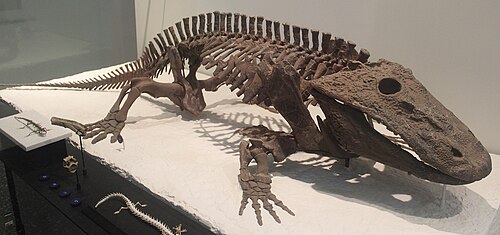
Neighbor jonathan Chen / CC BY-SA 4.0 · cc-by-sa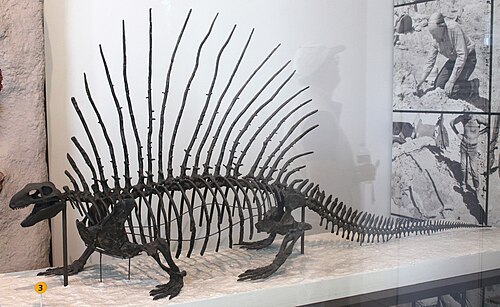
Competitor Jonathan Chen / CC BY-SA 4.0 · cc-by-sa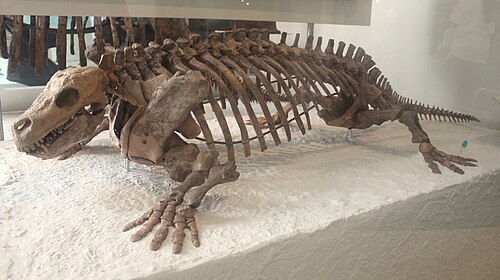
Close Relative Jonathan Chen / CC BY-SA 4.0 · cc-by-sa
Help improve the field guideSomething wrong?
Checking your Fauna account…Report a name, category, or profile issue for review.