
Amphibian
Chroniosuchus paradoxus
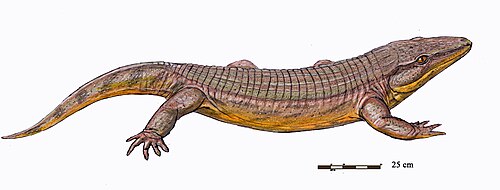
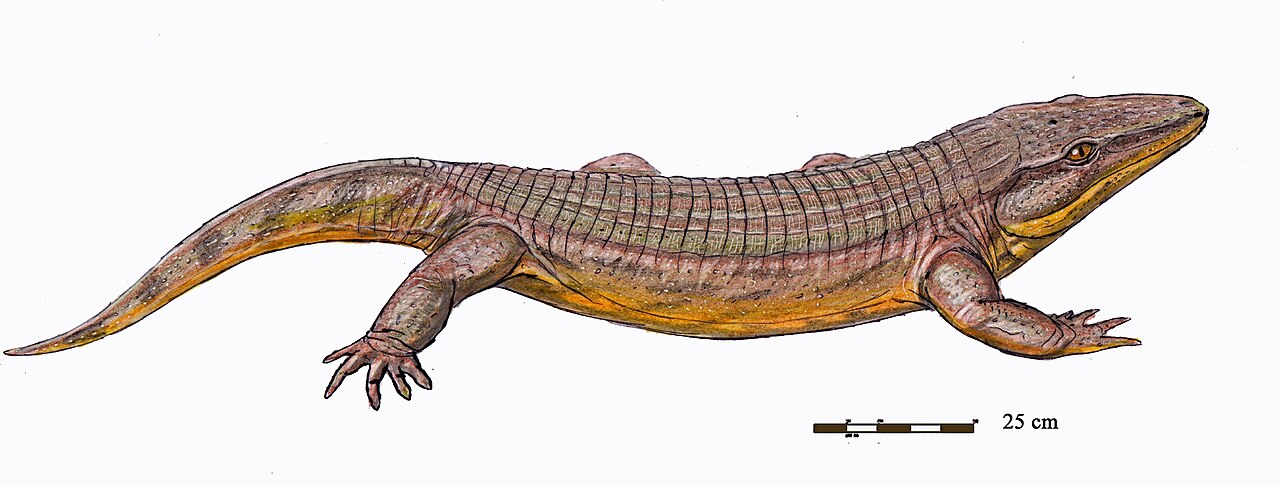
Chroniosuchus paradoxusChroniosuchus paradoxus patrolled the slow-moving freshwater river basins and lakes of Late Permian Russia, behaving much like modern crocodilians. A dorsal band of heavy, interlocking bony scutes shielded its spine while allowing sinuous lateral swimming movements. Powerful jaws lined with conical teeth enabled it to ambush fish and smaller tetrapods from shallow, murky waters.
PrehistoricArmoredCarnivore
—observations
—countries
—peak records
ExtinctConservation statusIUCN Red List categoriesLCNTVUENCREWEXExtinctRed List categories, explained →
Diet & preyPalaeonisciform fish, Small temnospondyls, Early reptiliomorphs
Predators
- Gorgonopsians
- Large therocephalians
ThreatsLate Permian environmental aridification and extinction events
HabitatsPermian rivers, lakes, and floodplains
Life spanUnknown (estimated 15–25 years)
Classification
- FamilyChroniosuchidae
- GenusChroniosuchus
- SpeciesChroniosuchus paradoxus
Range data is not available yet.
Interaction riskLow
- Low
- Moderate
- High
- Very high
- Why interaction risk is low
- Extinct species known only from Late Permian fossil deposits.
Responsible observation
- Fossil Examination: Look for the diagnostic row of overlapping scutes fused to the neural spines.
- Museum Collections: Study holotype specimens conserved at the Paleontological Institute in Moscow.
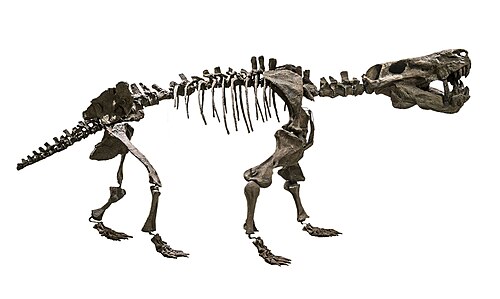
Predator Wikimedia Commons / CC BY-SA 3.0 · cc-by-sa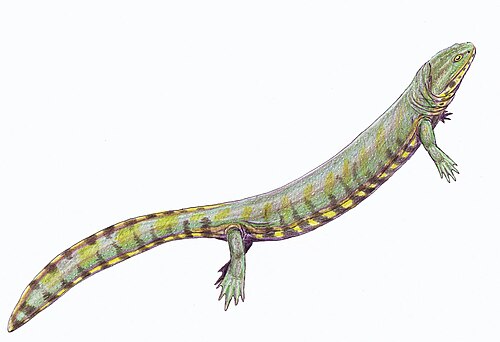
Frequent Companion Dmitry Bogdanov / CC BY 3.0 · cc-by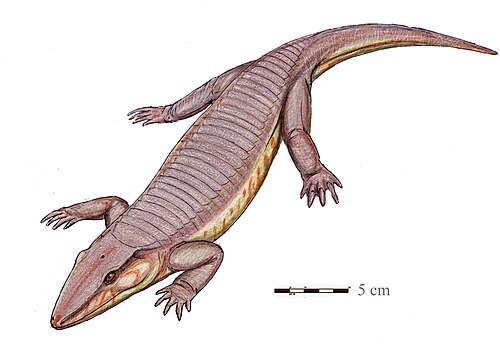
Close Relative DiBgd / CC BY-SA 4.0 · cc-by-sa Image unavailable
Close Relative
Help improve the field guideSomething wrong?
Checking your Fauna account…Report a name, category, or profile issue for review.