
Fish · GBIF taxon 8496719
Climatius reticulatus
Climatius reticulatusClimatius reticulatus navigated Early Devonian shallows using pairs of sharp intermediate spines along its belly to deter prowling predators. Large forward-facing eyes and delicate tooth whorls suggest an active, visual hunter searching murky lakebeds and estuaries for tiny aquatic prey. Specimens preserved in Old Red Sandstone reveal heavily armored shoulder girdles that anchored rigid, spine-supported fins designed for rapid bursts of speed.
FossilCarnivorous
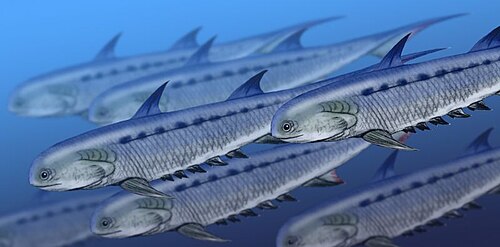

Licensed referenceNobu Tamura (http://spinops.blogspot.com) / CC BY 3.0 · cc-by
—observations
—countries
—peak records
ExtinctConservation statusIUCN Red List categoriesLCNTVUENCREWEXExtinctRed List categories, explained →
Diet & prey
- Small crustaceans
- Aquatic worms
- Larval fish
Predators
- Placoderms
- Eurypterids
- Early sarcopterygians
ThreatsCompetition and predation from larger placoderms and sarcopterygian fish
HabitatsShallow freshwater lakes, estuaries, and nearshore marine waters
Life span5–10 years (estimated)
Size / weightNot available
Classification
- FamilyClimatiidae
- GenusClimatius
- SpeciesClimatius reticulatus
Range data is not available yet.
Interaction riskLow
- Low
- Moderate
- High
- Very high
- Why interaction risk is low
- Extinct fossil species; entirely safe to observe in geological collections and museums.
Responsible observation
- Fossil Inspection: Examine museum specimens with a hand lens to see the delicate, ridged spines.
- Matrix Observation: Look closely at Old Red Sandstone slabs, where multiple individuals occasionally appear together.
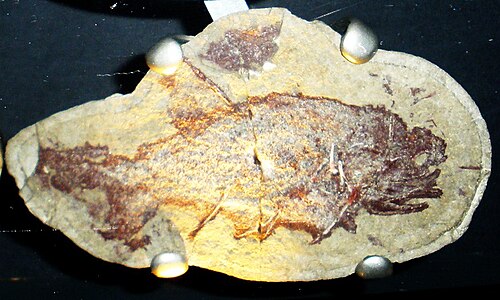
Related Acanthodian Ghedoghedo / CC BY-SA 3.0 · cc-by-sa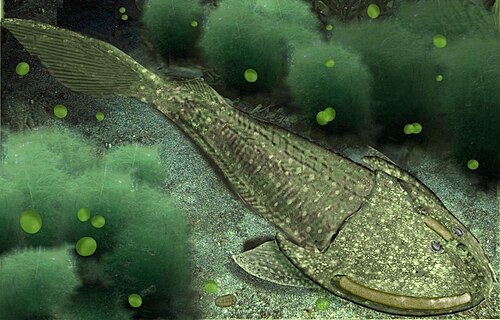
Co-occurring Neighbor Rod6807 / CC BY-SA 3.0 · cc-by-sa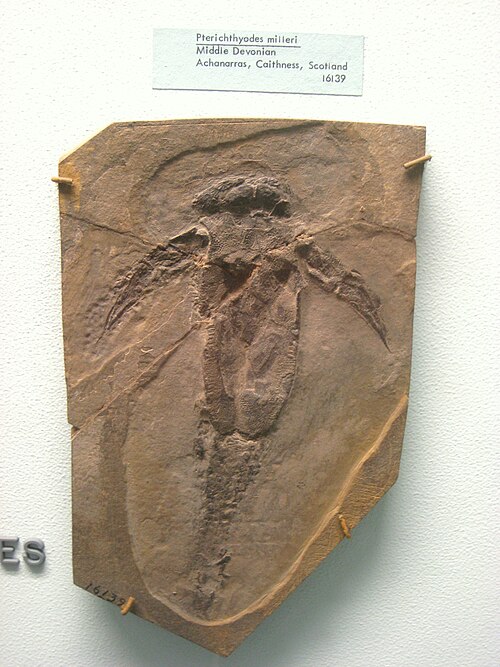
Potential Predator Daderot / Public domain · cc0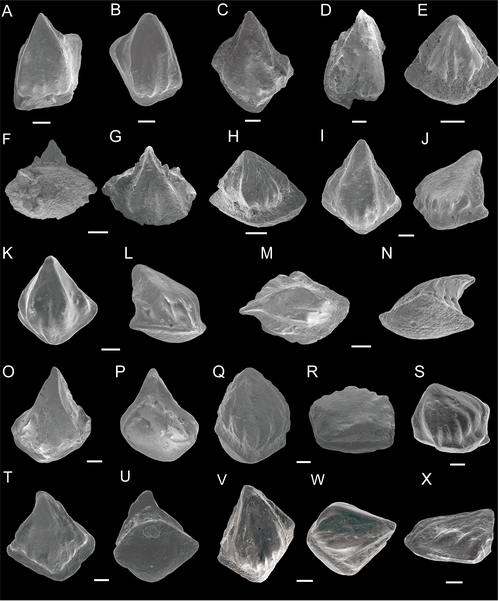
Close Relative Qiang Li, Xindong Cui, Plamen Stanislavov Andreev, Wenjin Zhao, Jianhua Wang, Lijian Peng and Min Zhu / CC BY 4.0 · cc-by
Help improve the field guideSomething wrong?
Checking your Fauna account…Report a name, category, or profile issue for review.