
Bird
Dromornis
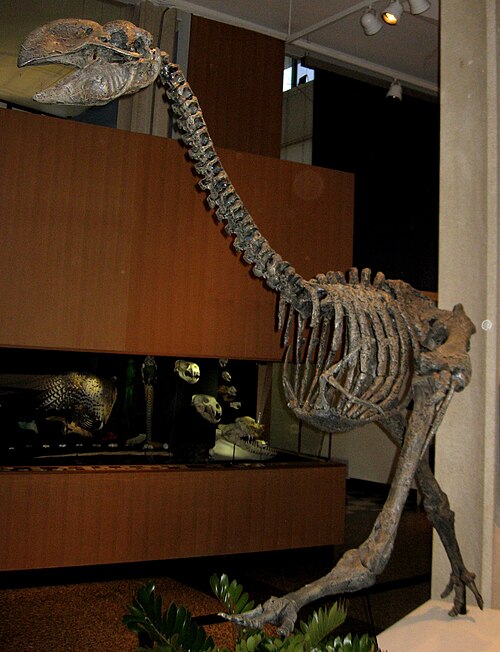
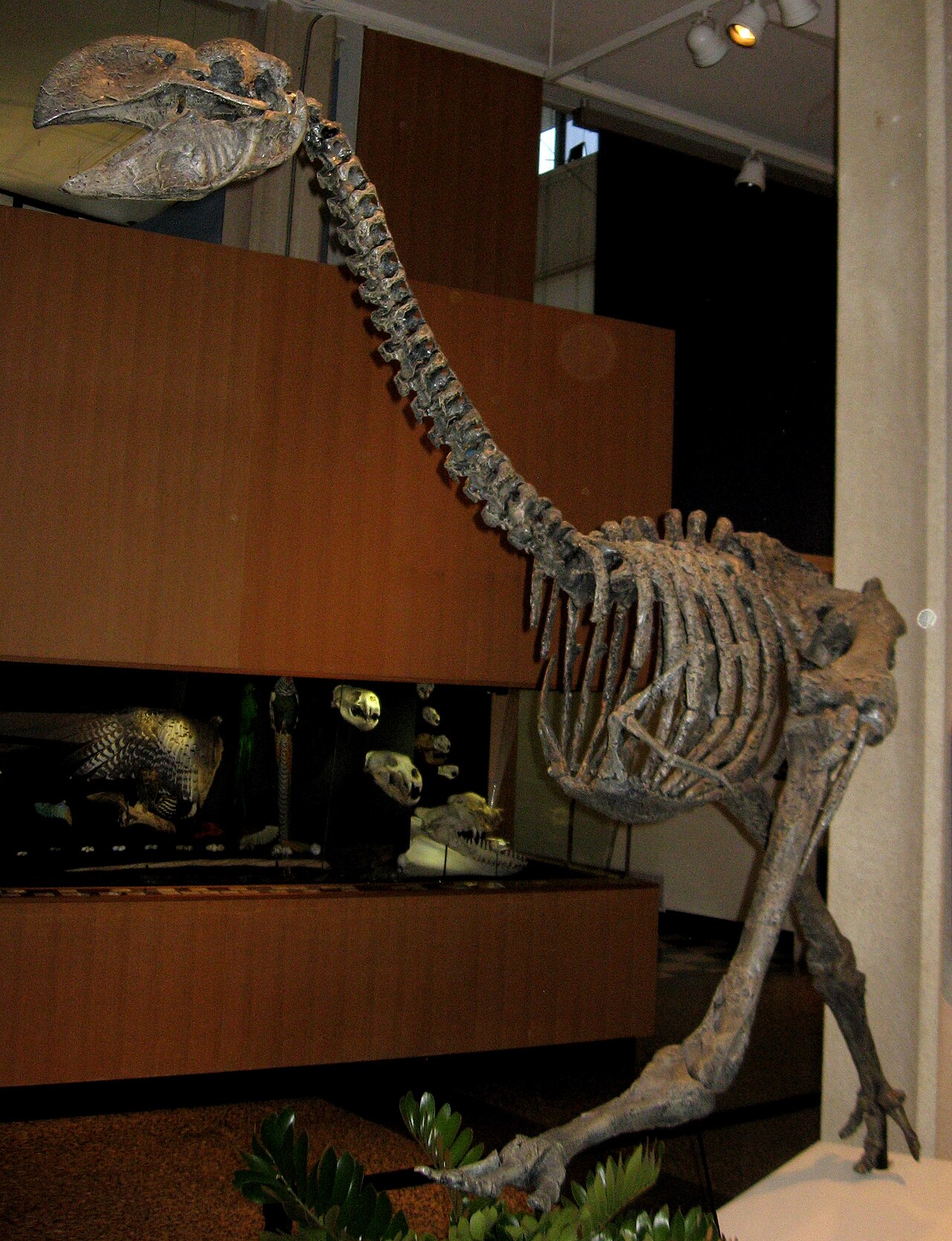
Bullockornis planeiAlso known as Demon Duck of Doom, Bullock's Mihirung
Standing up to 2.5 meters tall, this massive flightless mihirung roamed the subtropical open forests of northern Australia during the middle Miocene. Despite an extraordinarily large, crushing bill that earned it dramatic colloquial nicknames, cranial biomechanics indicate it was primarily adapted to shear tough vegetation and crack hard-shelled fruits rather than hunt prey. Deep muscular legs supported its hefty frame, making it a dominant terrestrial browser across the Riversleigh landscape for millions of years.
PrehistoricFlightlessHerbivore
—observations
—countries
—peak records
ExtinctConservation statusIUCN Red List categoriesLCNTVUENCREWEXExtinctRed List categories, explained →
Diet & preyHard-shelled seeds, Tough foliage, Woody fruits
Predators
- Baru wickeni
- Wakaleo oldfieldi
ThreatsExtinct; gradual aridification and shifting climate during the Miocene epoch
HabitatsMiocene subtropical woodlands, gallery forests, and open floodplains
Life spanEstimated 20–30 years
Classification
- OrderStruthioniformes
- FamilyDromornithidae
- GenusDromornis
- SpeciesBullockornis planei
Range data is not available yet.
Interaction riskHigh
- Low
- Moderate
- High
- Very high
- Why interaction risk is high
- Extinct prehistoric bird known only from fossils; safe to examine in museum collections.
Responsible observation
- Museum Study: View cast skeletons and enormous skull fossils on display at the Riversleigh fossil centres in Queensland.
- Site Protection: Leave all fossil fragments undisturbed if exploring Australian paleontological heritage reserves.
 Image unavailable
Predator 
Close Relative Kevmin / CC BY-SA 3.0 · cc-by-saFamily Member
Help improve the field guideSomething wrong?
Checking your Fauna account…Report a name, category, or profile issue for review.