
Invertebrate
Sclerocephalus haeuseri
Sclerocephalus haeuseriSclerocephalus haeuseri was an apex aquatic predator that flourished in ancient freshwater lakes and river basins across central Europe during the early Permian period. Fossils show a drastic ontogenetic shift, transforming from small, aquatic larvae equipped with delicate external gills into heavily armored, broad-headed adults capable of navigating both open water and lake margins. Their exceptional preservation in German black shales reveals preserved soft tissue outlines, stomach contents filled with paleoniscoid fish, and dense dermal bone armor.
FossilCarnivorous
—observations
—countries
—peak records
ExtinctConservation statusIUCN Red List categoriesLCNTVUENCREWEXExtinctRed List categories, explained →
Diet & preyPalaeonisciform fish, Acanthodian fish, Branchiosaurid amphibians
Predators
- Larger temnospondyls
- Apex xenacanthid sharks
ThreatsPaleozoic environmental shifts and basin desiccation
HabitatsDeep freshwater lakes and river systems
Life spanEstimated 10–20 years
Classification
- FamilyActinodontidae
- SpeciesSclerocephalus haeuseri
Range data is not available yet.
Interaction riskLow
- Low
- Moderate
- High
- Very high
- Why interaction risk is low
- Extinct prehistoric species; fossil specimens pose no risk to observe.
Responsible observation
- Museum Viewing: Examine exceptional skull roofs and gill arches in European natural history museums.
- Fossil Etiquette: Leave any suspected field discoveries in situ and contact local paleontological authorities.
 Image unavailable
Prey 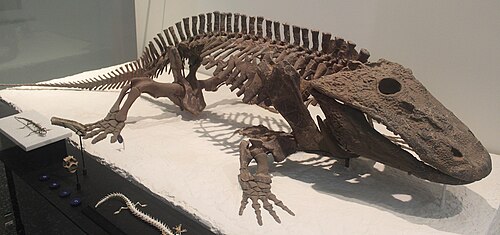
Distant Relative jonathan Chen / CC BY-SA 4.0 · cc-by-sa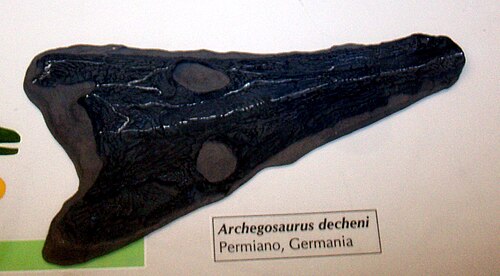
Close Relative Ghedoghedo / CC BY-SA 3.0 · cc-by-sa
Help improve the field guideSomething wrong?
Checking your Fauna account…Report a name, category, or profile issue for review.