
Fungus · GBIF taxon 8411734
Green Wood Cup
Chlorociboria aeruginascensAlso known as Green Elfcup, Blue Stain Fungus, Green Stain
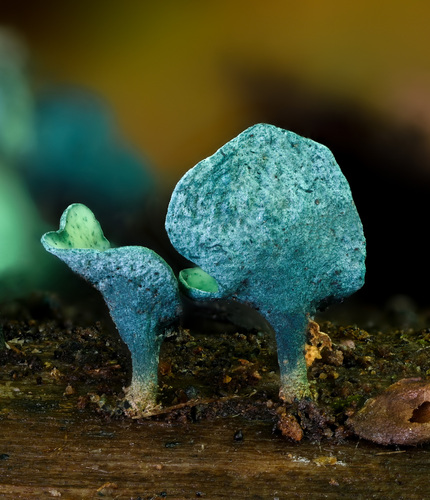
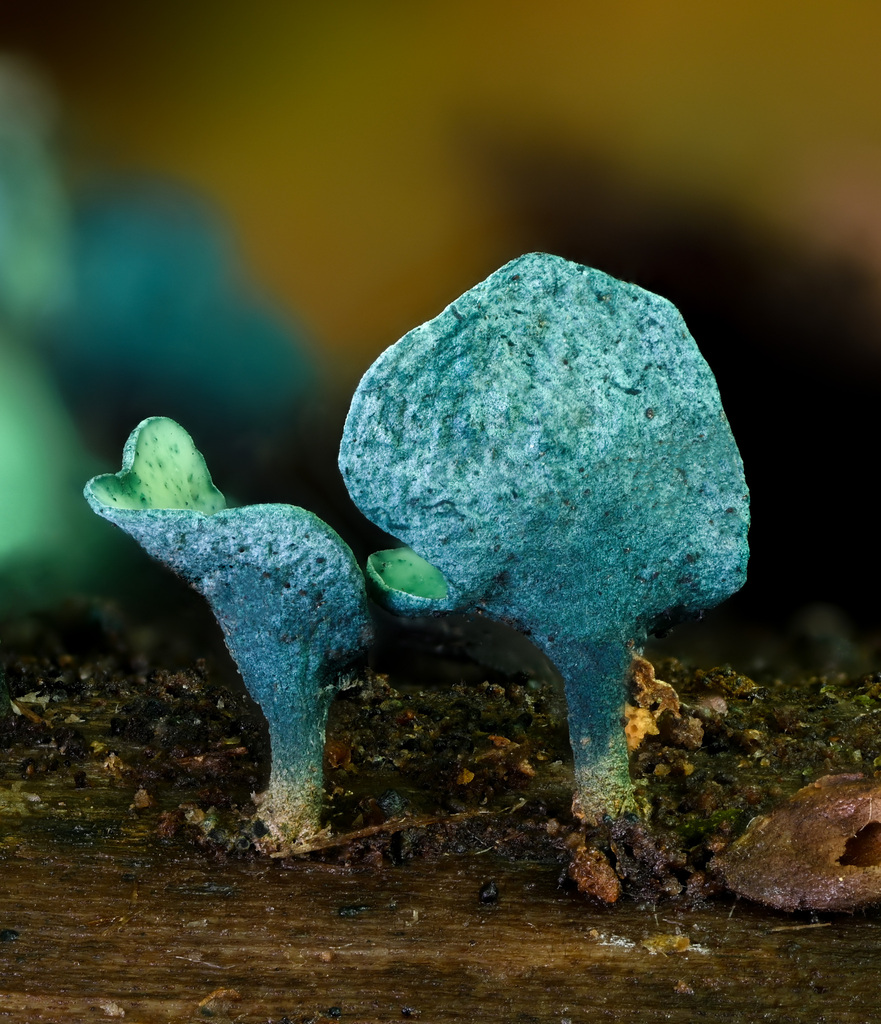
Green wood cup secretes the vibrant turquoise-blue pigment xylindein into the dead deciduous wood it decomposes, permanently dyeing rotting branches a distinctive blue-green. While the stained timber is a frequent sight across temperate forest floors, the tiny saucer-shaped fruiting bodies emerge only during prolonged damp spells in summer and autumn. Craftspeople historically prized this naturally stained wood to build intricate decorative marquetry and veneers known as Tunbridge ware.
Wood-DecayCup FungusForest
—observations
—countries
—peak records
Not EvaluatedConservation statusIUCN Red List categoriesLCNTVUENCREWEXNot Evaluated — not placed on the risk ladderRed List categories, explained →
Diet & prey
- Decaying hardwood
- Cellulose
- Lignin
Predators
- Fungus gnats
- Springtails
- Slugs
ThreatsRemoval of fallen deadwood through intensive forest management
HabitatsMoist deciduous and mixed temperate forests
Life spanPerennial mycelium; fruiting bodies persist 2–4 weeks
Size / weightNot available
Classification
- OrderHelotiales
- FamilyChlorociboriaceae
- GenusChlorociboria
- SpeciesChlorociboria aeruginascens
Range data is not available yet.
Interaction riskLow
- Low
- Moderate
- High
- Very high
- Why interaction risk is low
- Many edible mushrooms have toxic look-alikes; never eat wild fungi based on app identification alone.
Responsible observation
- Spotting Wood: Search bark-free rotting logs on damp forest floors for bright turquoise-stained timber.
- Finding Cups: Inspect stained logs closely after heavy rains with a hand lens to see the tiny discs.
- Habitat Care: Keep decaying logs undisturbed so the mycelium can continue recycling nutrients.
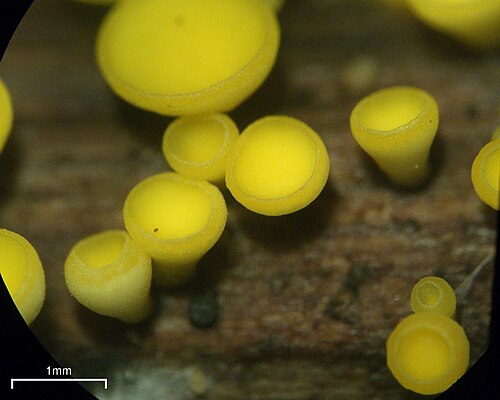
Neighbor Jason Hollinger / CC BY 2.0 · cc-by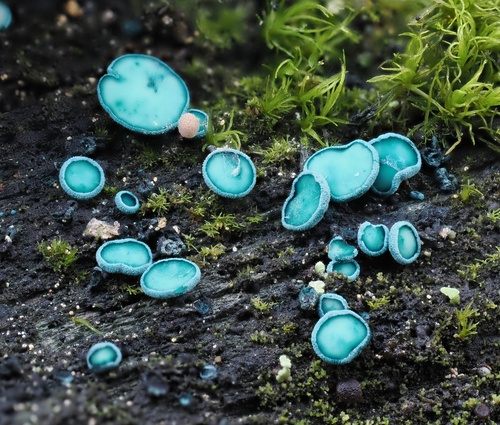
Close Relative (c) Alan Rockefeller, some rights reserved (CC BY) · cc-by
Help improve the field guideSomething wrong?
Checking your Fauna account…Report a name, category, or profile issue for review.