
Reptile · GBIF taxon 8374394
Yellow-lipped Sea Krait
Laticauda colubrinaAlso known as Banded Sea Krait, Colubrine Sea Krait
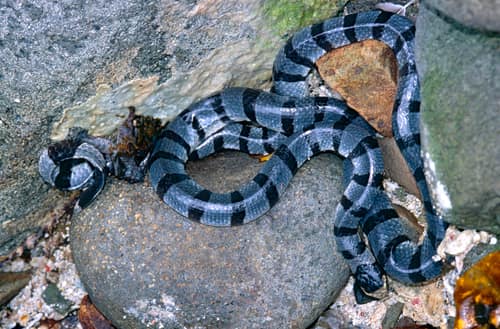
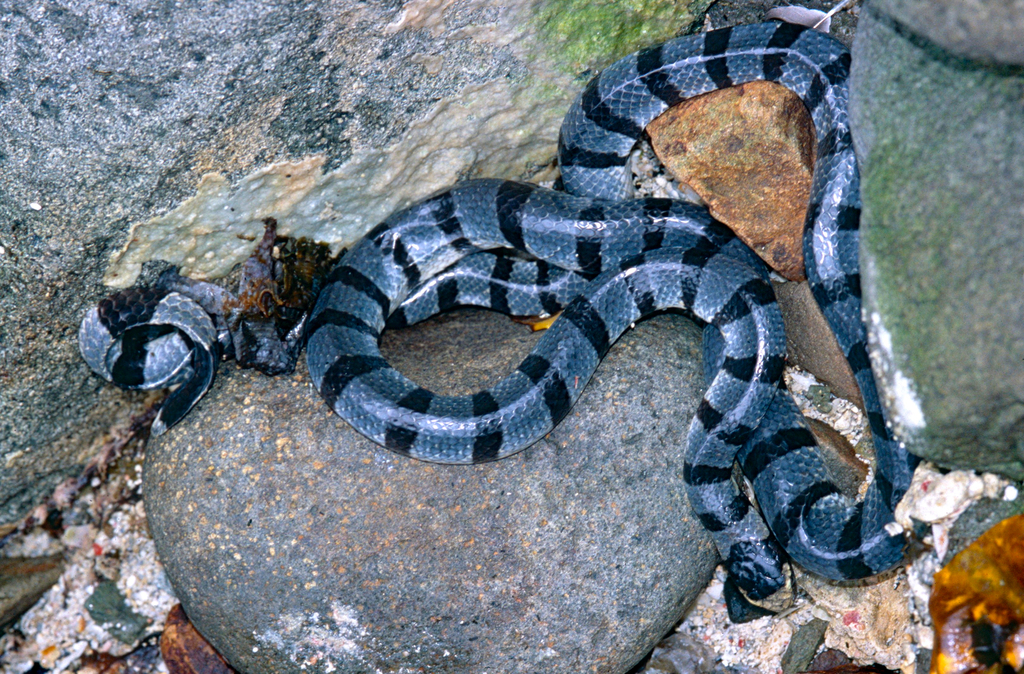
The Yellow-lipped Sea Krait has bold dark bands, a yellow snout, and a laterally flattened paddle tail. It hunts eels around reefs but comes ashore to rest, digest, shed, and lay eggs.
Marine SnakeBanded PatternEel Hunter
—observations
—countries
—peak records
Least ConcernConservation statusIUCN Red List categoriesLCNTVUENCREWEXLeast ConcernRed List categories, explained →
Diet & prey
- Moray eels
- Conger eels
- Small reef fish
Predators
- Large fish
- Sharks
- Sea eagles
ThreatsReef degradation, fishing bycatch, coastal development, and persecution
HabitatsCoral reefs, rocky coasts, sea caves, and nearby islands
Life spanLikely more than 10 years
Size / weightNot available
Classification
- FamilyElapidae
- GenusLaticauda
- SpeciesLaticauda colubrina
Range data is not available yet.
Interaction riskVery high
- Low
- Moderate
- High
- Very high
- Why interaction risk is very high
- Highly venomous; never touch or block its route between reef and shore.
- Why it is dangerous
- Its potent elapid venom can cause paralysis, and any bite requires immediate emergency treatment.
- How to recognize a risky encounter
- Look for regular dark bands, a yellow snout, and a vertically flattened swimming tail.
- What to do
- Never touch, trap, move, or provoke the snake; seek emergency care after any possible bite.
Responsible observation
- Distance: Back away and leave a broad route to water or shelter.
- Shape: Confirm the yellow snout, dark bands, and paddle-shaped tail.
Help improve the field guideSomething wrong?
Checking your Fauna account…Report a name, category, or profile issue for review.