
Plant · GBIF taxon 8353146
Purple Saxifrage
Saxifraga oppositifoliaAlso known as Purple Mountain Saxifrage, Twinleaf Saxifrage
Purple saxifrage carpets high-altitude tundra and icy scree with dense cushions of scale-like leaves and vivid magenta blossoms. As one of the earliest plants to bloom after spring snowmelt, its compact ground-hugging form traps solar radiation and resists howling polar winds. It holds the northernmost recorded record for a flowering plant on land, surviving within eight degrees of the North Pole.
AlpineArcticFlowering
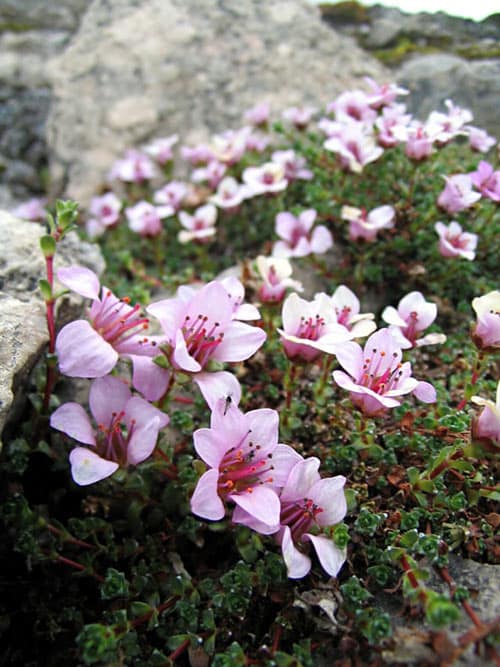
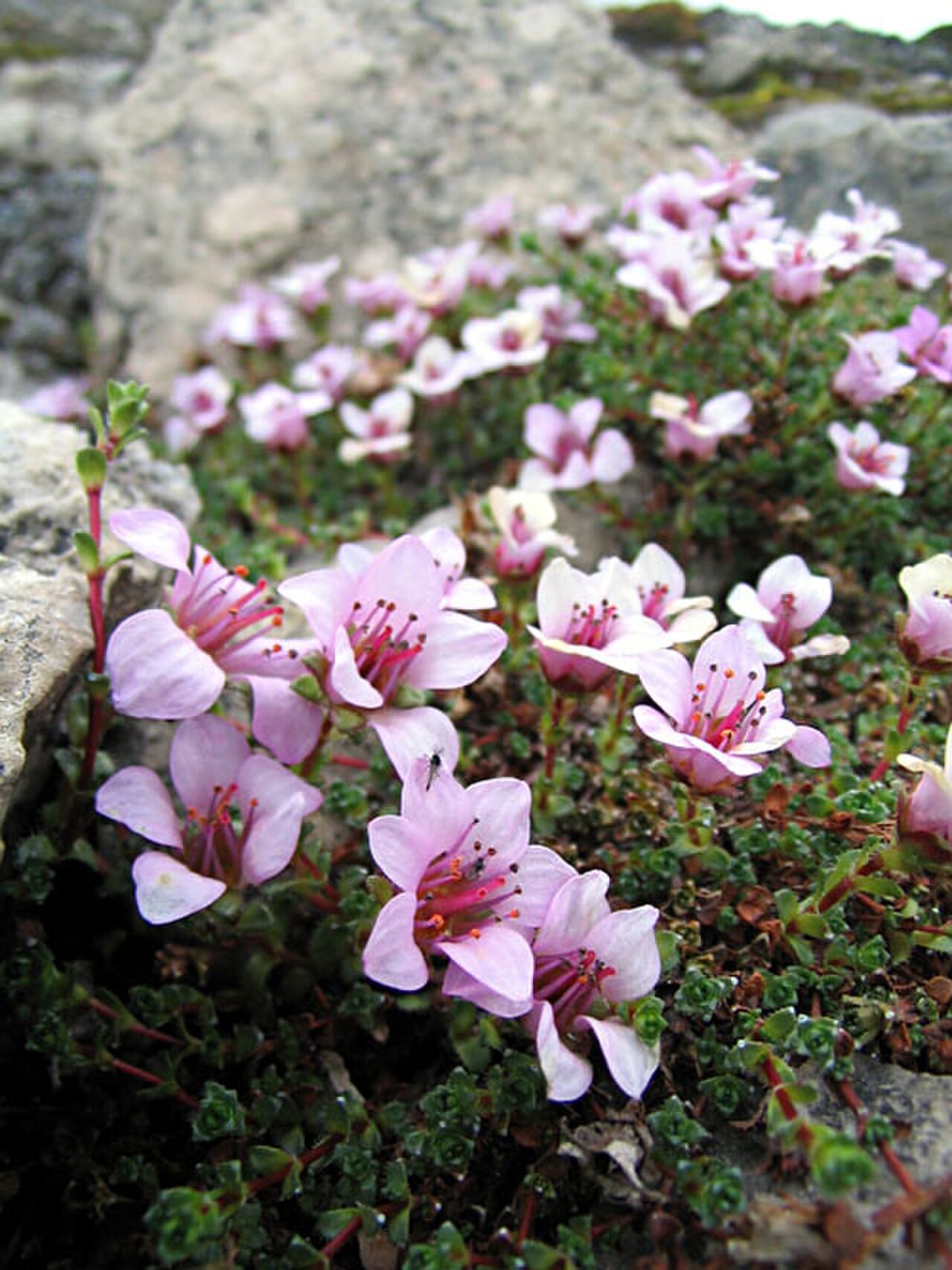
Licensed referenceWikimedia Commons / CC BY-SA 3.0 · cc-by-sa
—observations
—countries
—peak records
Least ConcernConservation statusIUCN Red List categoriesLCNTVUENCREWEXLeast ConcernRed List categories, explained →
Diet & prey
- Autotrophic (Photosynthetic)
Predators
- Arctic Hare
- Reindeer
- Rock Ptarmigan
ThreatsClimate warming leading to alpine habitat shift and competition
HabitatsArctic tundra, alpine scree, exposed rocky ridges, cliffs
Life spanPerennial (can live over 50 years)
Size / weightNot available
Classification
- FamilySaxifragaceae
- SpeciesSaxifraga oppositifolia
Range data is not available yet.
Interaction riskLow
- Low
- Moderate
- High
- Very high
- Why interaction risk is low
- Safe to observe at a normal distance.
Responsible observation
- Bloom Timing: Look for bright magenta blossoms emerging through melting snow in late spring or early summer.
- Tread Lightly: Watch your step on alpine ridges, as slow-growing arctic cushion plants take decades to recover from damage.
- Observe Up Close: Examine the tiny, overlapping opposite leaves that give the plant its scientific name.
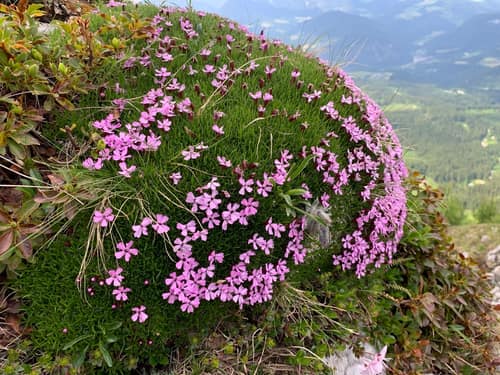
Frequent Companion (c) Katrin Simon, some rights reserved (CC BY), uploaded by Katrin Simon · cc-by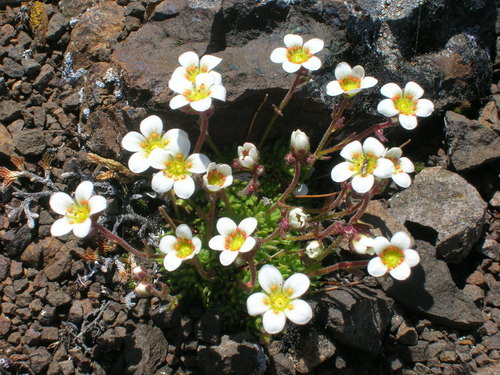
Close Relative (c) J Brew, some rights reserved (CC BY-SA), uploaded by J Brew · cc-by-sa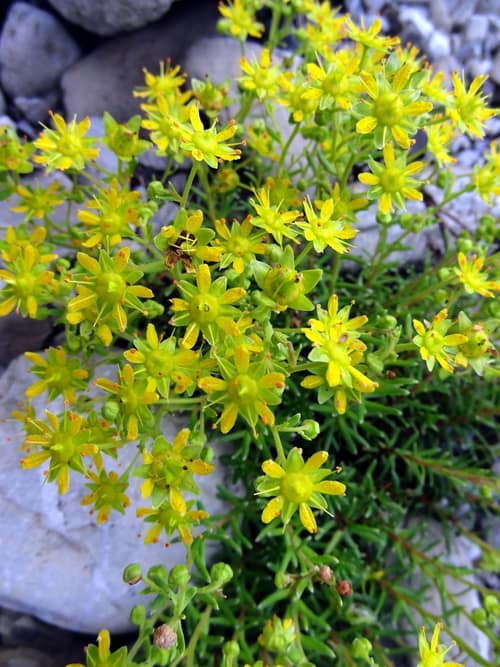
Close Relative (c) Udo Schmidt, some rights reserved (CC BY-SA) · cc-by-sa
Help improve the field guideSomething wrong?
Checking your Fauna account…Report a name, category, or profile issue for review.