
Reptile · GBIF taxon 8305299
Ethiopian Mountain Viper
Bitis parvioculaAlso known as Ethiopian Adder, Ethiopian Forest Viper
Cloaked in high-contrast geometric patterns of black, yellow, and brown, the Ethiopian mountain viper blends seamlessly into the moist leaf litter of highland forests. Endemic to the misty mountains of southern and central Ethiopia, this elusive viper relies on ambush tactics to capture passing rodents and small mammals. Its heavy body and broad triangular head remain hidden beneath thick vegetation, making wild encounters exceedingly rare.
VenomousHighlandRare
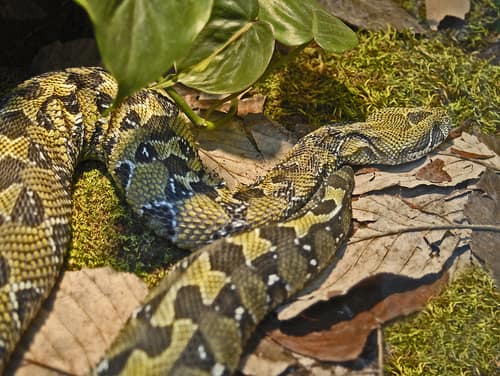
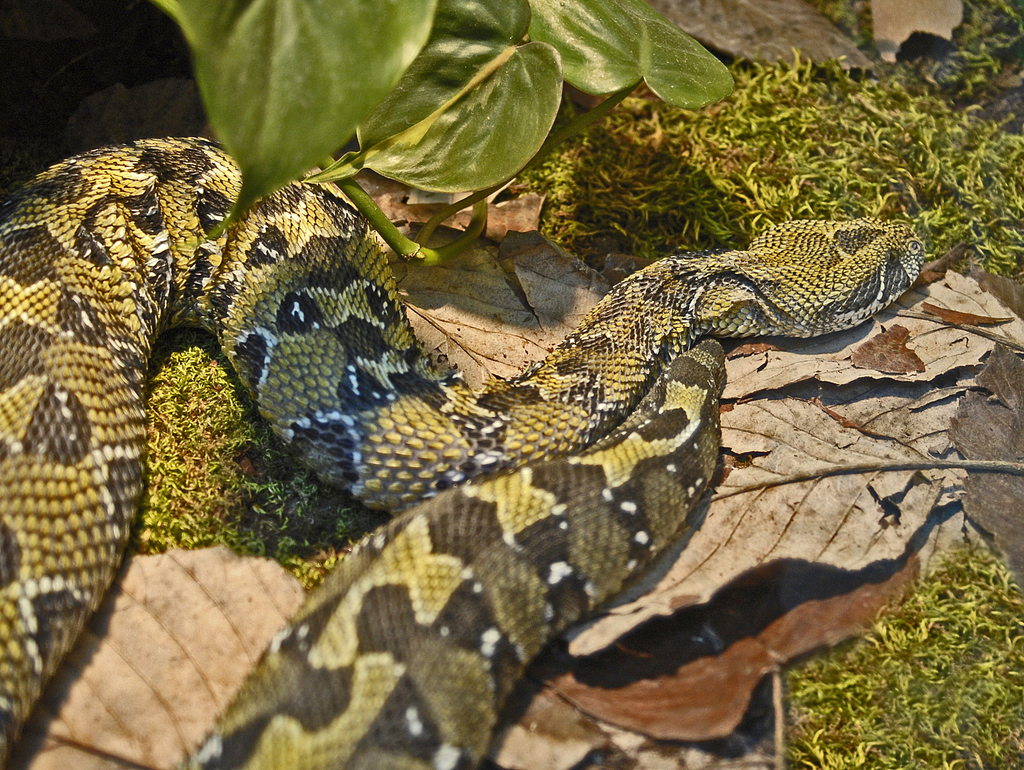
Licensed reference(c) Hectonichus, some rights reserved (CC BY-SA) · cc-by-sa
—observations
—countries
—peak records
EndangeredConservation statusIUCN Red List categoriesLCNTVUENCREWEXEndangeredRed List categories, explained →
Diet & prey
- Rodents
- Small mammals
- Frogs
Predators
- Birds of prey
- Large snakes
- Carnivorous mammals
ThreatsDeforestation, agricultural expansion, pet trade collection
HabitatsMontane forests, grassland edges, bamboo zones
Life span10–15 years
Size / weightNot available
Classification
- FamilyViperidae
- SpeciesBitis parviocula
Range data is not available yet.
Interaction riskVery high
- Low
- Moderate
- High
- Very high
- Why interaction risk is very high
- Possesses potent venom and long fangs; maintain a safe distance and never attempt to handle.
- Why it is dangerous
- Injects potent cytotoxic venom via long hinged fangs, causing severe tissue destruction and pain.
- How to recognize a risky encounter
- Look for a broad triangular head, small eyes, and yellow-bordered dark geometric dorsal markings.
- What to do
- Freeze if spotted nearby and step back slowly without making sudden movements.
- What to notice
- Recognized by its thick body, broad head, and high-contrast geometric patterns in Ethiopian highlands.
- Support conservation
- Keep exact geographic coordinates off public media to protect fragile wild populations.
Responsible observation
- Observation: Keep a distance of at least two to three meters when observing in the wild.
- Attire: Wear sturdy high-top boots and thick gaiters when trekking through dense mountain foliage.
- Safety: Never reach blindly into thick underbrush, leaf litter, or rock crevices.
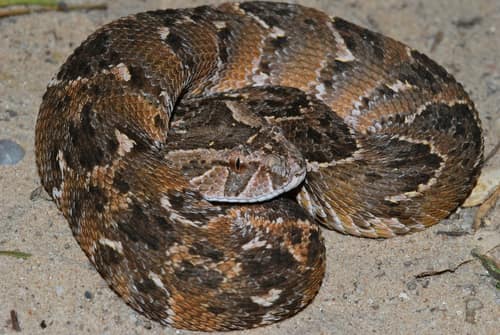
Close Relative (c) Bernard DUPONT, some rights reserved (CC BY-SA) · cc-by-sa
Close Relative (c) Lucy Keith-Diagne, some rights reserved (CC BY) · cc-by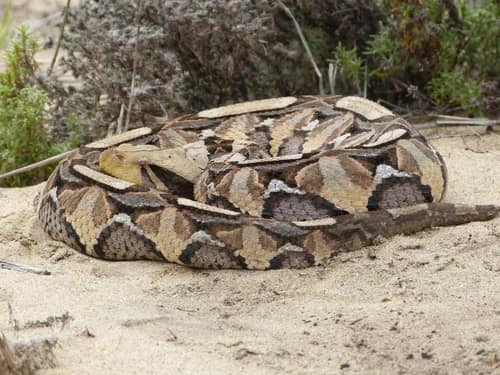
Close Relative (c) Nick Schaller, some rights reserved (CC BY), uploaded by Nick Schaller · cc-by
Help improve the field guideSomething wrong?
Checking your Fauna account…Report a name, category, or profile issue for review.