
Plant · GBIF taxon 8227431
Madagascar Olive
Noronhia emarginataAlso known as Sweet Olive
Madagascar Olive is a hardy evergreen tree adapted to coastal winds, salt spray, and drought, recognized by its stiff, leathery leaves with distinctly notched tips. Clusters of small, fragrant, pale-yellow flowers bloom among the foliage and mature into rounded, purple drupes that sustain native fruit-eating birds and bats. Although endemic to coastal forests in Madagascar, it has been widely planted across tropical and subtropical regions as an ornamental windbreak and shade tree.
EvergreenCoastalFragrant
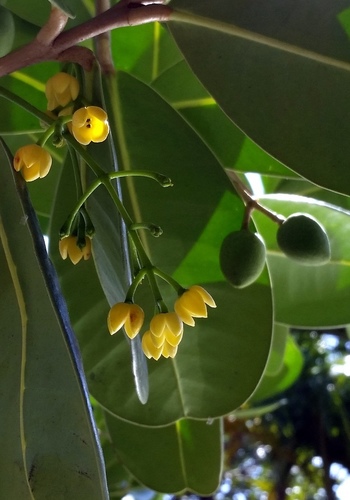
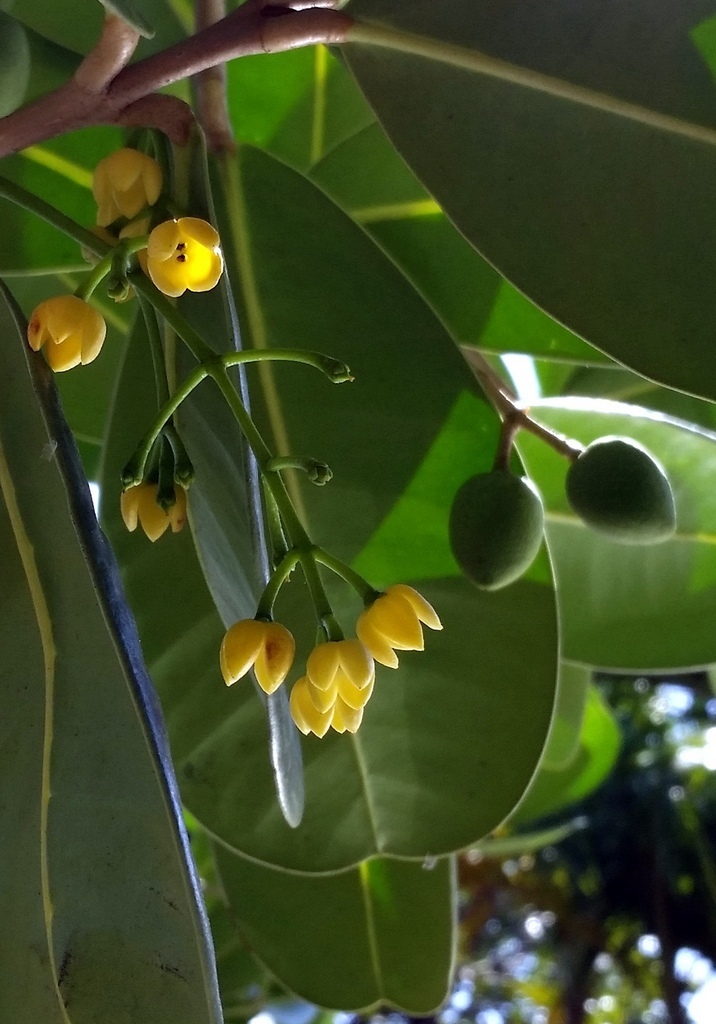
Licensed reference(c) Wendy Cutler, some rights reserved (CC BY-SA) · cc-by-sa
—observations
—countries
—peak records
Least ConcernConservation statusIUCN Red List categoriesLCNTVUENCREWEXLeast ConcernRed List categories, explained →
Diet & prey
- Sunlight
- Water
- Carbon dioxide
Predators
- Black Lemur
- Madagascan Fruit Bat
- Bulbuls
ThreatsCoastal development, habitat fragmentation, and invasive plant competition
HabitatsCoastal strand forests, littoral dunes, and tropical scrublands
Life span50–100 years
Classification
- OrderLamiales
- FamilyOleaceae
- GenusNoronhia
- SpeciesNoronhia emarginata
Range data is not available yet.
Interaction riskLow
- Low
- Moderate
- High
- Very high
- Why interaction risk is low
- Wild berries have toxic look-alikes; never eat based on app identification alone.
Responsible observation
- Foliage Inspection: Look closely at leaf tips for the signature notch that gives the species its specific epithet.
- Fragrance Check: Inhale near flowering branches to detect the subtle, sweet scent of its small pale blossoms.
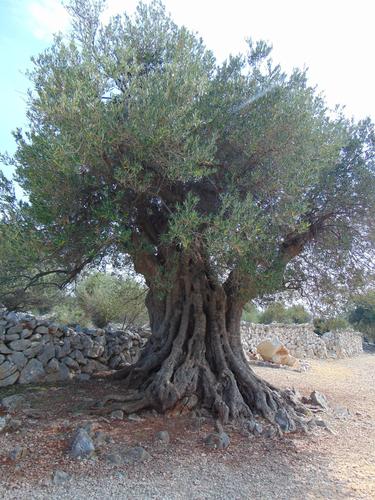
Same Family no rights reserved, uploaded by viridian · cc0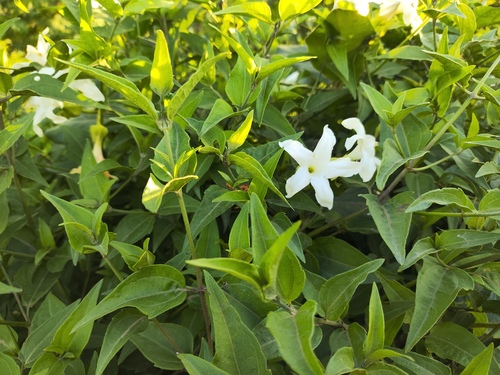
Same Family (c) Silvia Ten, some rights reserved (CC BY), uploaded by Silvia Ten · cc-by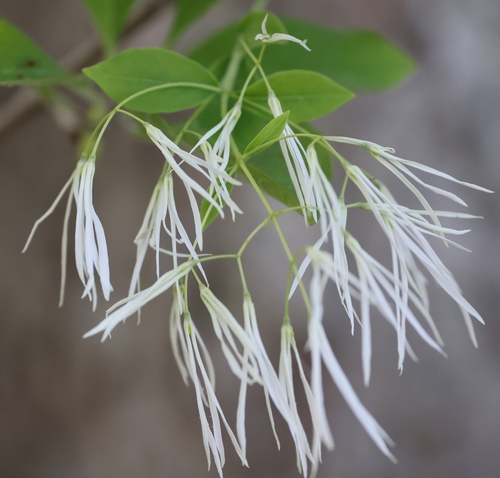
Same Family (c) Kathy Richardson, some rights reserved (CC BY) · cc-by
Help improve the field guideSomething wrong?
Checking your Fauna account…Report a name, category, or profile issue for review.