Also known as Common Wood-Sorrel, Alleluia, Cuckoo's Meat
European wood-sorrel carpets damp, shaded woodland floors across Eurasia with clusters of clover-like, three-part leaves. Each heart-shaped leaflet folds neatly downward at night or during heavy rain to conserve warmth and shed moisture. In spring it raises delicate white, lilac-veined blossoms, followed in summer by tiny closed flowers beneath the foliage and seed capsules that burst open explosively at a touch.
Diet & preyPhotosynthetic (autotrophic); absorbs water and mineral nutrients from moist, acidic woodland soils
Predators
Slugs
Snails
Roe deer
ThreatsWoodland clearance, heavy trampling, and dense invasive groundcovers
HabitatsDamp deciduous and coniferous woodland floors, mossy banks, shaded hedgerows, and ravines across Europe and Asia
Life spanPerennial (spreading via creeping scaly rhizomes for many years, though individual shoots are seasonal to a few years old
Classification
FamilyOxalidaceae
SpeciesOxalis acetosella
Range & activity
Range data is not available yet.
Safe observation
Interaction riskHigh
Low
Moderate
High
Very high
Why interaction risk is high
Contains oxalic acid; toxic to dogs, cats, and livestock, and harmful to humans if eaten in quantity.
Why it is dangerous
Contains soluble oxalates (oxalic acid), which bind calcium in the bloodstream and can cause kidney damage, tremors, and gastrointestinal distress in pets and humans if consumed in large amounts.
How to recognize a risky encounter
Low-growing woodland herb with three clover-like, heart-shaped leaflets on slender stalks and delicate white, five-petaled flowers etched with fine lilac veins.
What to do
Safe to touch and observe in place, but keep dogs and grazing pets from nibbling the foliage and avoid ingesting wild plants.
Responsible observation
Leaf Movement: Visit at dusk or in light rain to watch the heart-shaped leaflets fold neatly downward.
Seed Dispersal: Gently touch a ripe, swollen seed capsule in summer to see it pop and fling seeds.
Pet Safety: Keep dogs on a leash along woodland trails so they do not chew the oxalate-rich leaves.

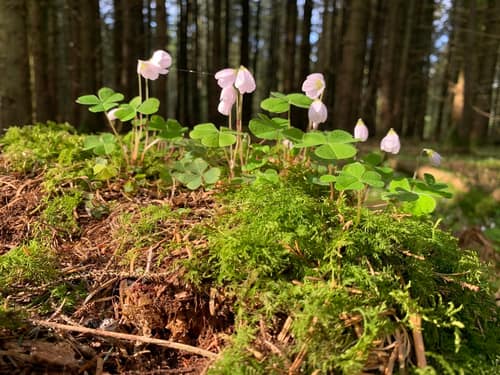
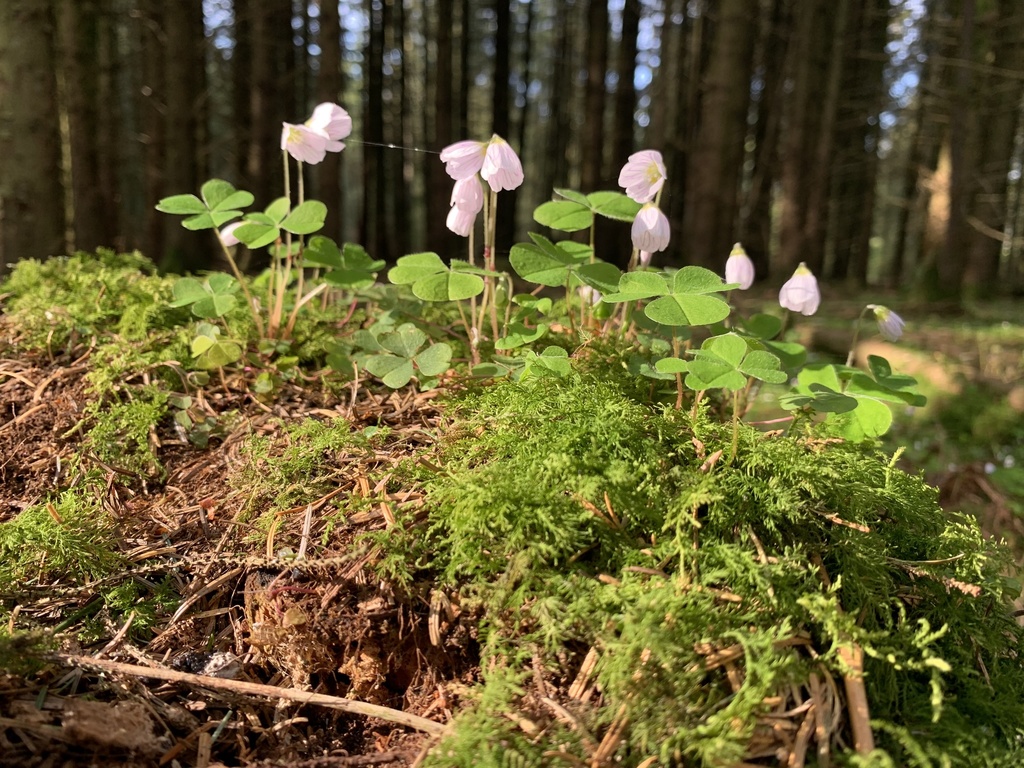
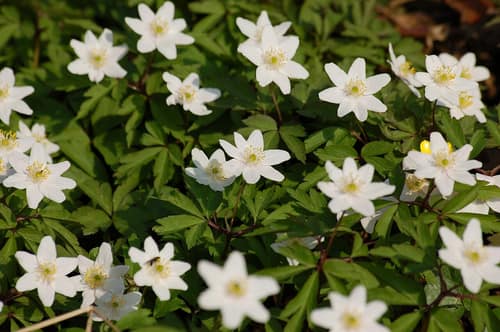
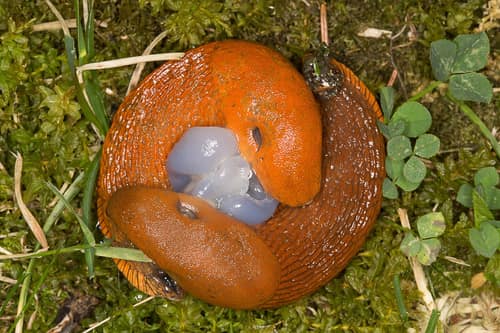
 Image unavailable