
Reptile · GBIF taxon 8161292
Australian Water Dragon
Intellagama lesueuriiAlso known as Eastern Water Dragon, Gippsland Water Dragon
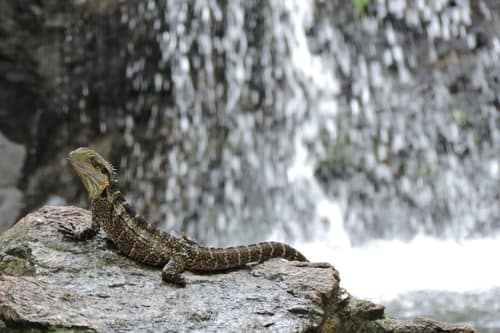
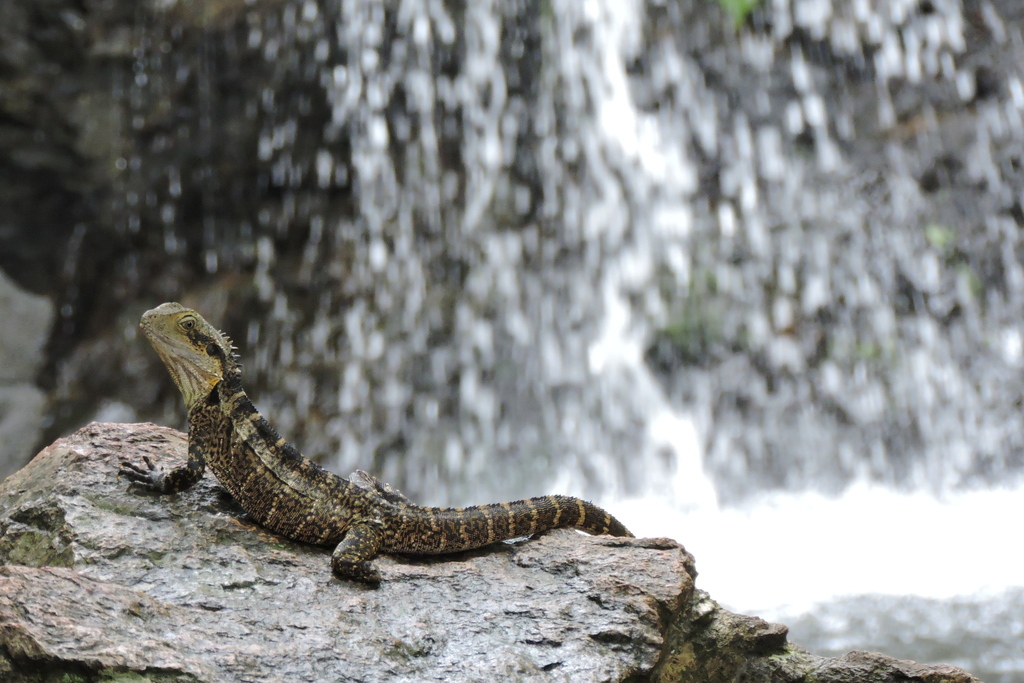
Australian water dragons spend their days perched on branches overhanging freshwater streams, dropping instantly into the water at the first sign of danger. Males defend prominent basking territories with head-bobbing displays and arm-waving gestures, displaying bright red or yellow chest patterns during the breeding season. Extremely adaptable, these heavy-bodied lizards have embraced urban parklands and golf courses, swimming with powerful side-to-side tail movements.
Semi-aquaticDiurnalTerritorial
—observations
—countries
—peak records
Least ConcernConservation statusIUCN Red List categoriesLCNTVUENCREWEXLeast ConcernRed List categories, explained →
Diet & prey
- Insects
- Small Frogs
- Fallen Fruit
Predators
- Lace Monitor
- Kookaburra
- Feral Cat
ThreatsFeral predators, vehicle strikes, habitat destruction
HabitatsRiparian zones, riverbanks, urban parks, wet sclerophyll forest
Life span10–20 years
Size / weightNot available
Classification
- FamilyAgamidae
- GenusIntellagama
- SpeciesIntellagama lesueurii
Range data is not available yet.
Interaction riskLow
- Low
- Moderate
- High
- Very high
- Why interaction risk is low
- May scratch or bite defensively if grabbed; observe safely from a few meters away.
- Why it is dangerous
- Possesses sharp claws for climbing and strong jaws capable of delivering a painful bite if cornered or handled.
- How to recognize a risky encounter
- Recognized by a spiky crest down the spine, long whip-like tail, and dark stripe behind the eye.
- What to do
- Do not attempt to catch or corner wild individuals; enjoy watching them from a respectful distance.
Responsible observation
- Approach slowly: Walk calmly along riverbank paths without making sudden overhead movements that mimic predatory birds.
- Look near water: Scan low branches, logs, and rocks sitting right at the water's edge on sunny mornings.
- Observe arm waving: Watch stationary individuals for slow, circular forearm motions used as territorial signals.
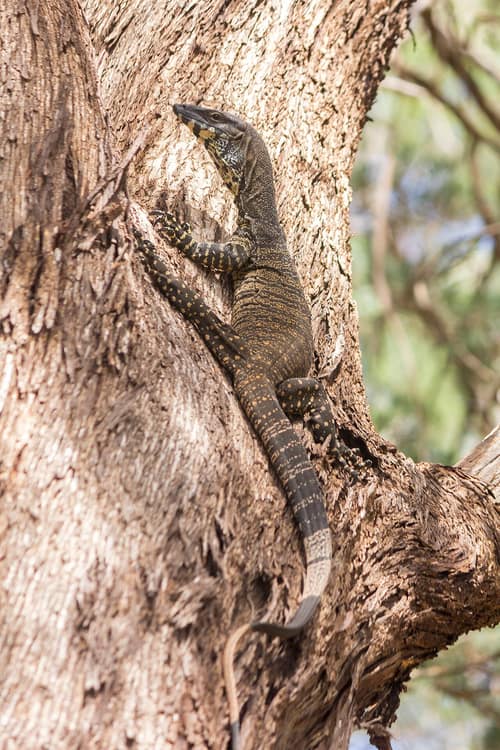
Predator Bidgee / CC BY-SA 3.0 au · cc-by-sa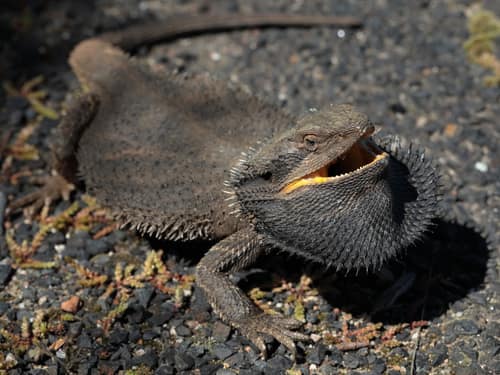
Close Relative (c) tobyyy, some rights reserved (CC BY-SA), uploaded by tobyyy · cc-by-sa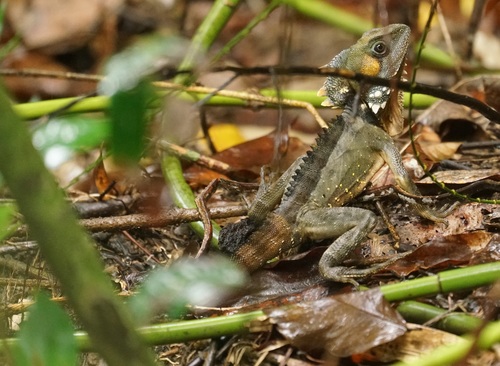
Close Relative (c) Tim, some rights reserved (CC BY), uploaded by Tim · cc-by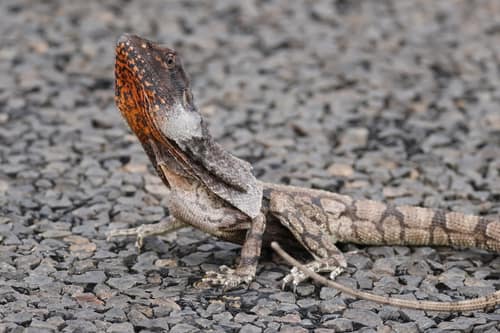
Close Relative (c) Romain Boisseau, some rights reserved (CC BY-SA) · cc-by-sa
Help improve the field guideSomething wrong?
Checking your Fauna account…Report a name, category, or profile issue for review.