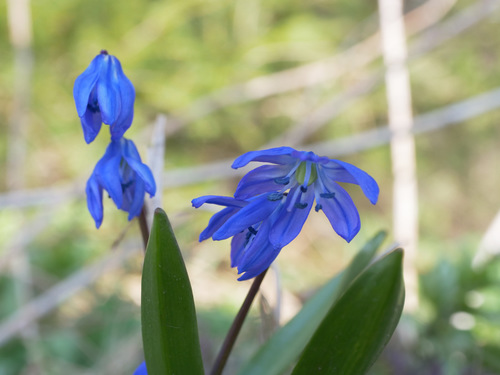
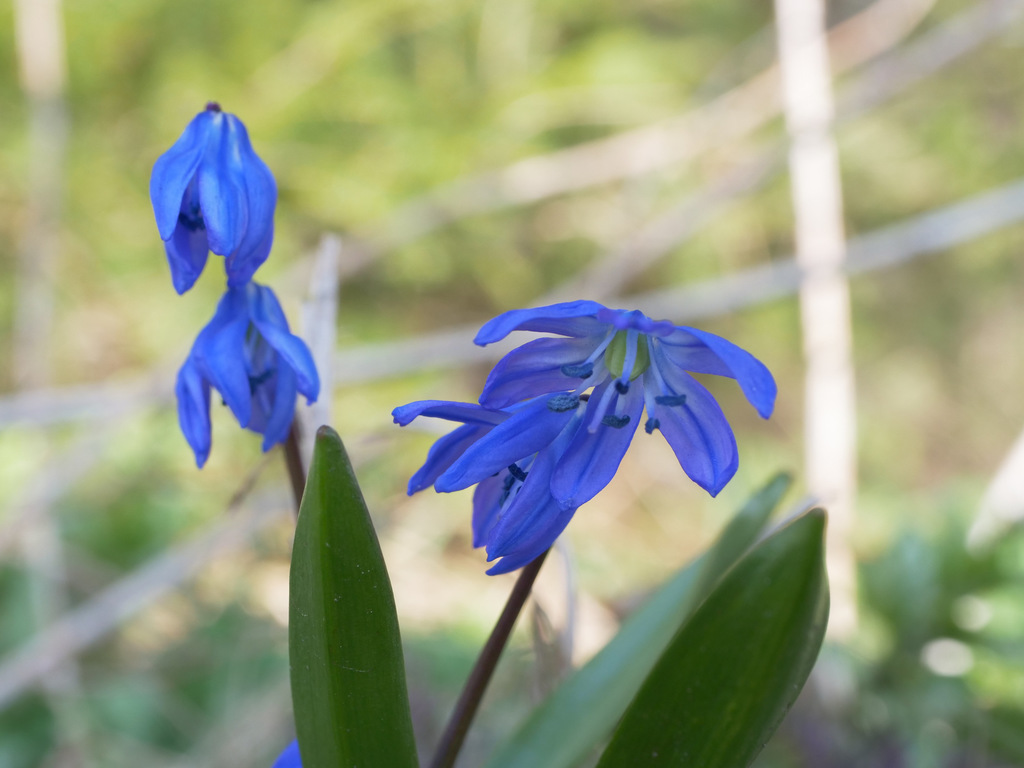
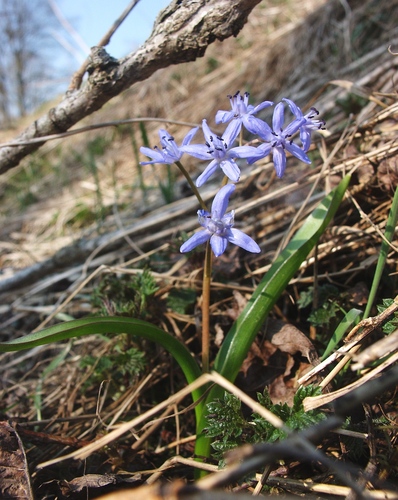
Siberian squill emerges in late winter to paint forest floors and residential lawns in breathtaking swaths of cobalt blue before deciduous canopies unfurl. Each bulb sends up several glossy, strap-like leaves alongside slender flowering stalks tipped with nodding, star-like bells that offer crucial early nectar to emerging queen bumblebees. Outside its native Eurasian range, it naturalizes enthusiastically through bulb offsets and ant-dispersed seeds, often carpeting shaded woodlands.
Not EvaluatedConservation statusIUCN Red List categoriesLCNTVUENCREWEXNot Evaluated — not placed on the risk ladderRed List categories, explained →
Key facts
Diet & preyAutotrophic (photosynthesis)
Predators
Slugs
Snails
ThreatsLawn mowing, intentional chemical eradication, woodland ground cover displacement
HabitatsDeciduous woodlands, forest edges, rocky slopes, meadows, and shaded lawns
Life spanPerennial (bulbs persist for decades)
Classification
OrderAsparagales
FamilyAsparagaceae
GenusScilla
SpeciesScilla siberica
Range & activity
Range data is not available yet.
Safe observation
Interaction riskHigh
Low
Moderate
High
Very high
Why interaction risk is high
All plant parts contain toxic cardiac glycosides; keep away from pets and do not ingest.
Why it is dangerous
Contains cardiotoxic steroids and glycosides that cause severe gastrointestinal irritation, vomiting, and potential heart rhythm disturbances if ingested.
How to recognize a risky encounter
Look for two to four strap-shaped leaves and bright, drooping gentian-blue flowers marked with a dark central stripe on each petal.
What to do
Wear gloves if planting or removing bulbs to prevent sap sensitivity, and wash hands thoroughly after contact.
Responsible observation
Spring Timing: Look across forest floors and shaded lawns in early spring before canopy leaf-out.
Pet Safety: Keep dogs from digging up or gnawing on the toxic underground bulbs.
Garden Care: Plant bulbs in autumn under deciduous trees for low-maintenance seasonal ground cover.