
Amphibian · GBIF taxon 8052504
New Guinea Amau Frog
Paedophryne amauensisAlso known as Amau Frog
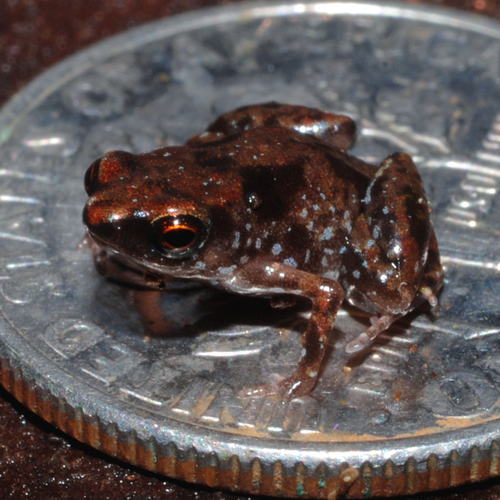
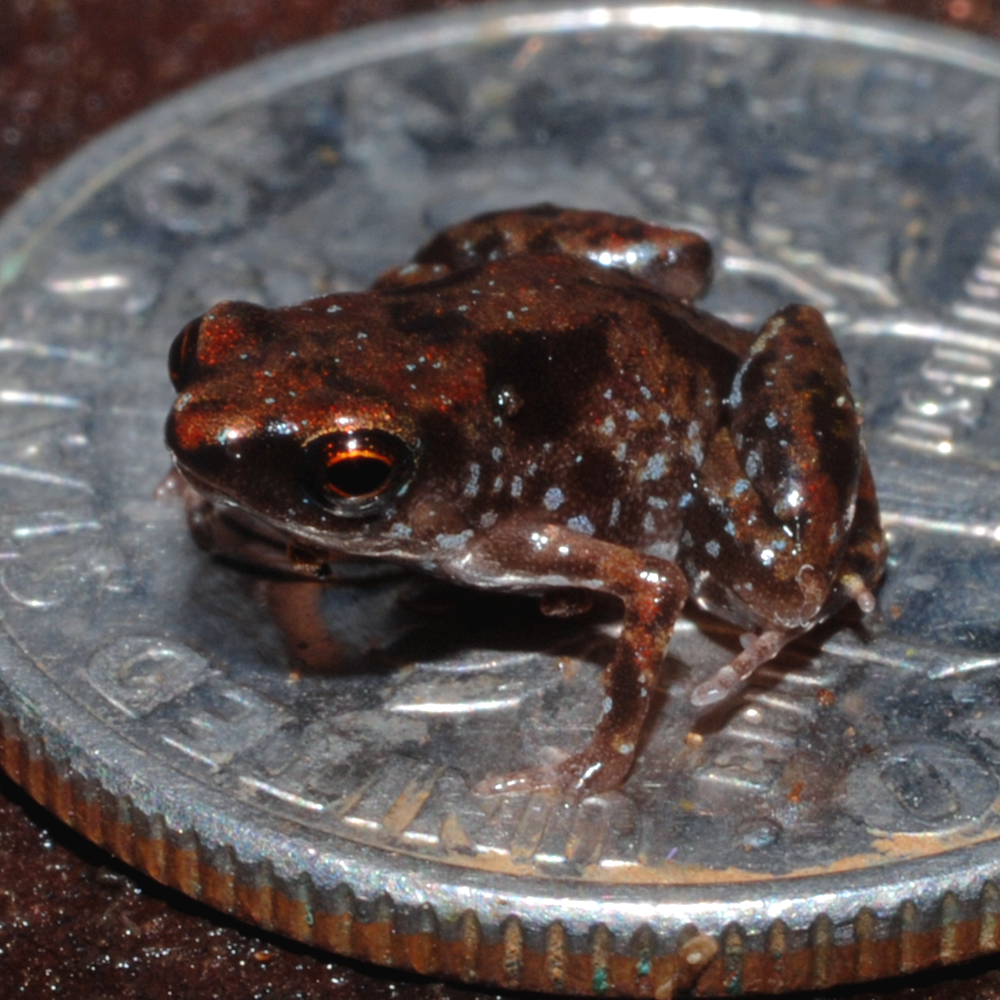
Amau frogs dwell deep within the damp rainforest leaf litter of Papua New Guinea, where their tiny dark brown bodies blend seamlessly into decaying vegetation. Males produce high-pitched, insect-like calls peaking around 8.4 kilohertz to attract mates during humid nights. Unlike most amphibians, they skip the free-swimming tadpole stage entirely, hatching directly from eggs as fully formed miniature froglets.
MiniatureAmphibianLeaf Litter
—observations
—countries
—peak records
Least ConcernConservation statusIUCN Red List categoriesLCNTVUENCREWEXLeast ConcernRed List categories, explained →
Diet & prey
- Mites
- Springtails
- Tiny ants
Predators
- Predatory ants
- Centipedes
- Spiders
ThreatsDeforestation, habitat degradation, and climate change
HabitatsTropical rainforest floor and leaf litter
Life span1–3 years
Size / weightNot available
Classification
- OrderAnura
- FamilyMicrohylidae
- GenusPaedophryne
- SpeciesPaedophryne amauensis
Range data is not available yet.
Interaction riskLow
- Low
- Moderate
- High
- Very high
- Why interaction risk is low
- Safe to observe at a normal distance.
- What to notice
- A tiny brown frog less than 8 millimeters long hiding in dark rainforest leaf litter.
- Support conservation
- Never collect or touch these tiny frogs; remain on designated paths to prevent microhabitat destruction.
Responsible observation
- Listen closely: Search for high-frequency chirps that sound remarkably like crickets at dusk.
- Watch your step: Walk carefully along established paths to avoid crushing unseen individuals.
- Use light sources: Use red headlamps at night to spot vocalizing males without startling them.
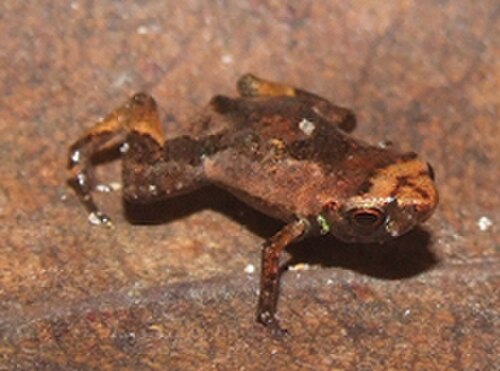
Size Rival Dias, I / CC BY 4.0 · cc-by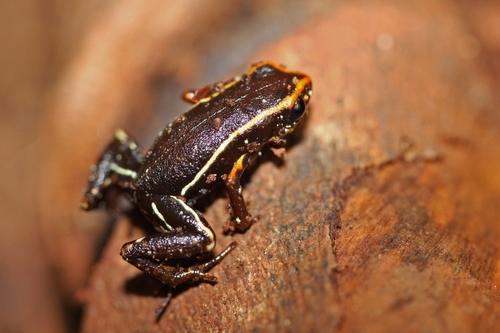
Miniature Frog Cousin (c) Thomas Brown, some rights reserved (CC BY), uploaded by Thomas Brown · cc-by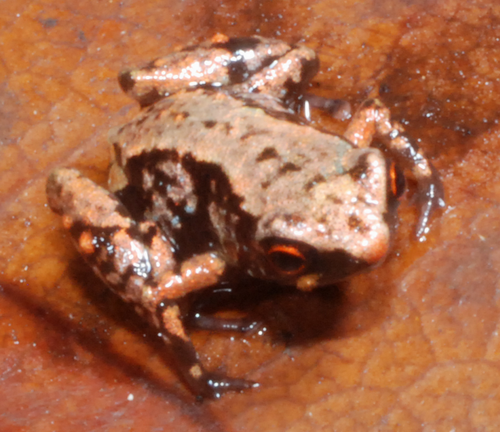
Close Relative Rittmeyer EN, Allison A, Gründler MC, Thompson DK, Austin CC / CC BY 2.5 · cc-by
Help improve the field guideSomething wrong?
Checking your Fauna account…Report a name, category, or profile issue for review.