
Fish
Atlantic Wolffish
Anarhichas lupusAlso known as Seawolf, Atlantic Catfish, Ocean Catfish, Devil Fish
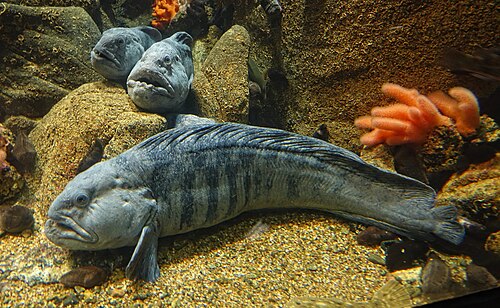
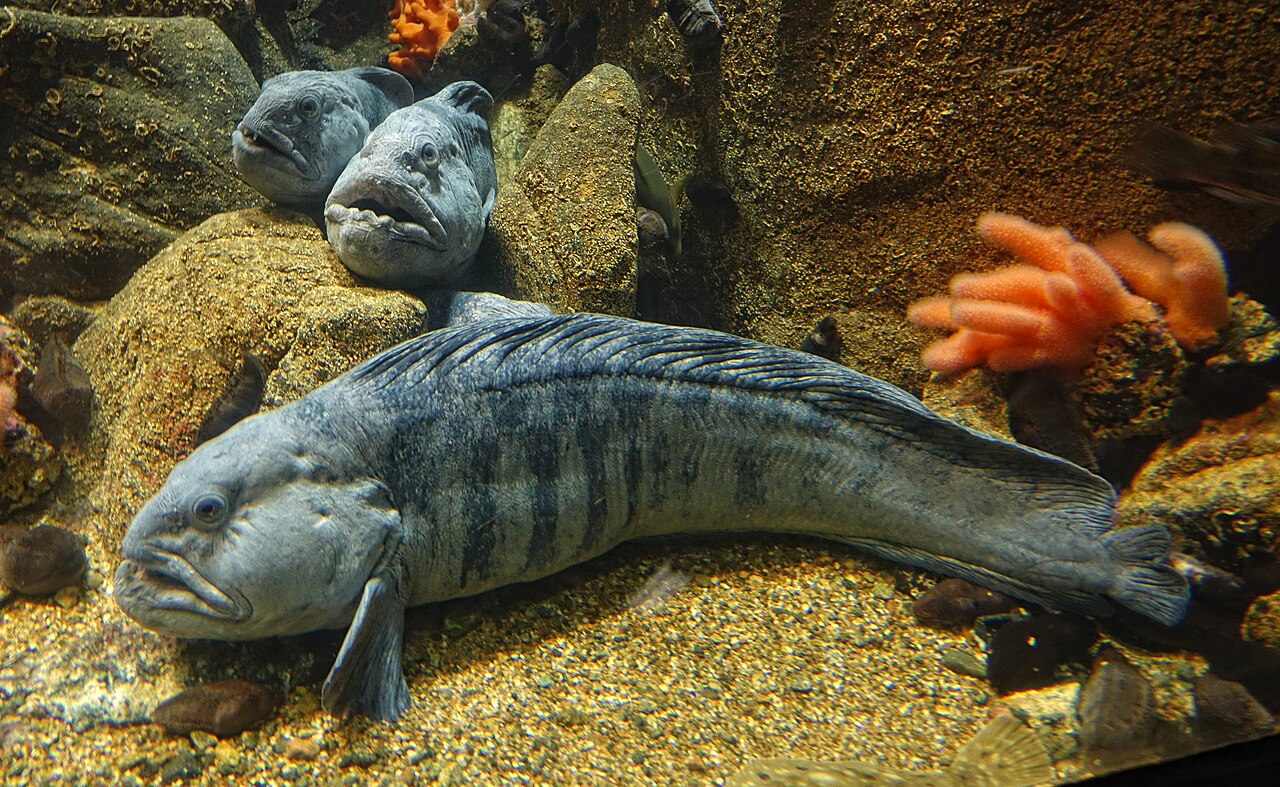
Atlantic wolffish dwell along cold, rocky seafloors, using specialized crushing teeth to crack through the armor of sea urchins, crabs, and hard-shelled mollusks. Natural antifreeze compounds circulate through their blood, keeping tissues functional in frigid sub-zero Arctic and North Atlantic waters. During the autumn breeding season, males fiercely guard large clutches of adhesive eggs tucked into bedrock crevices until they hatch months later.
Cold-WaterBottom DwellerPredator
—observations
—countries
—peak records
Not EvaluatedConservation statusIUCN Red List categoriesLCNTVUENCREWEXNot Evaluated — not placed on the risk ladderRed List categories, explained →
Diet & preyGreen Sea Urchin, Atlantic Rock Crab, Sea Scallop
Predators
- Greenland Shark
- Cod
- Halibut
ThreatsCommercial bottom trawling, habitat destruction, and incidental fisheries bycatch
HabitatsCold coastal and deep continental shelf waters with rocky or bouldered seafloors
Life spanUp to 20 years
Classification
- OrderPerciformes
- FamilyAnarhichadidae
- GenusAnarhichas
- SpeciesAnarhichas lupus
Range data is not available yet.
Interaction riskLow
- Low
- Moderate
- High
- Very high
- Why interaction risk is low
- Powerful crushing jaws can deliver a severe bite; avoid handling caught or cornered individuals.
- Why it is dangerous
- Large canine and molariform teeth driven by massive jaw musculature can easily crush human fingers and puncture bone.
- How to recognize a risky encounter
- Recognized by an elongated slate-blue body, prominent protruding front fangs, and a continuous dorsal fin.
- What to do
- Never place hands near the mouth even when the fish appears dead, as the snapping reflex can persist.
- What to notice
- Look for heavy-headed, eel-like fish tucked tightly into deep crevices among rocky reefs.
- Support conservation
- Avoid disturbing nesting dens and report incidental captures to fisheries management programs.
Responsible observation
- Diving encounters: Observe from outside crevices, keeping hands and equipment well clear of the mouth.
- Angling release: Use heavy pliers to unhook fish without placing hands near the crushing jaws.
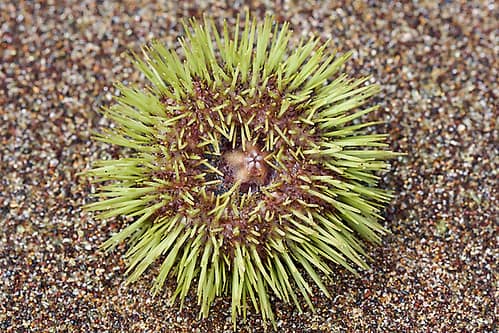
Prey "Green sea urchin" by lightmatter is licensed under CC BY 2.0. To view a copy of this license, visit https://creativecommons.org/licenses/by/2.0/. · cc-by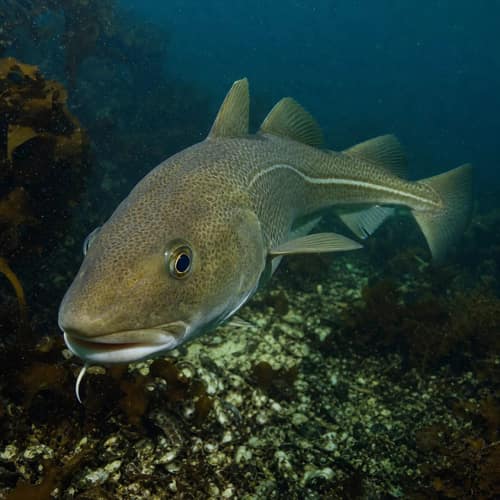
Competitor NOAA / Public Domain (NOAA) · Public Domain (NOAA)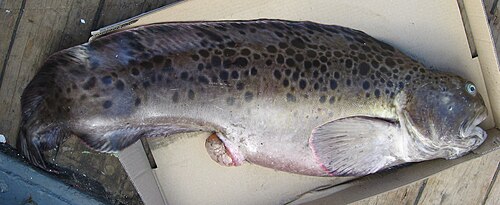
Close Relative Kim Hansen / CC BY-SA 4.0 · cc-by-sa Image unavailable
Close Relative 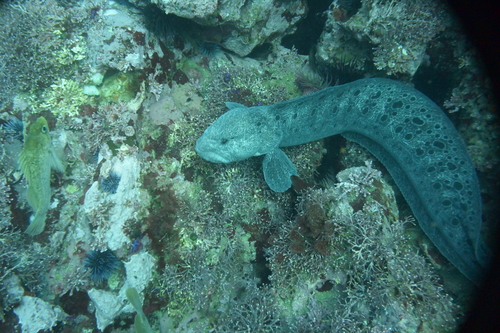
Same Family (c) J.R.Frey, some rights reserved (CC BY), uploaded by J.R.Frey · cc-by
Help improve the field guideSomething wrong?
Checking your Fauna account…Report a name, category, or profile issue for review.