
Plant · GBIF taxon 8002952
Common Ragweed
Ambrosia artemisiifoliaAlso known as Annual Ragweed, Low Ragweed, Bitterweed, Roman Wormwood
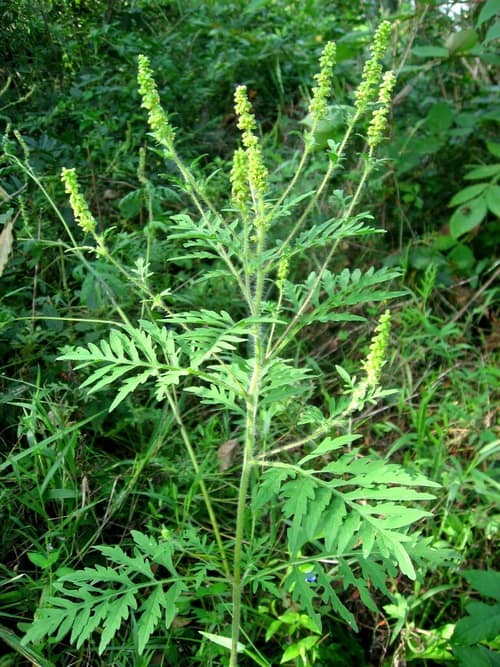
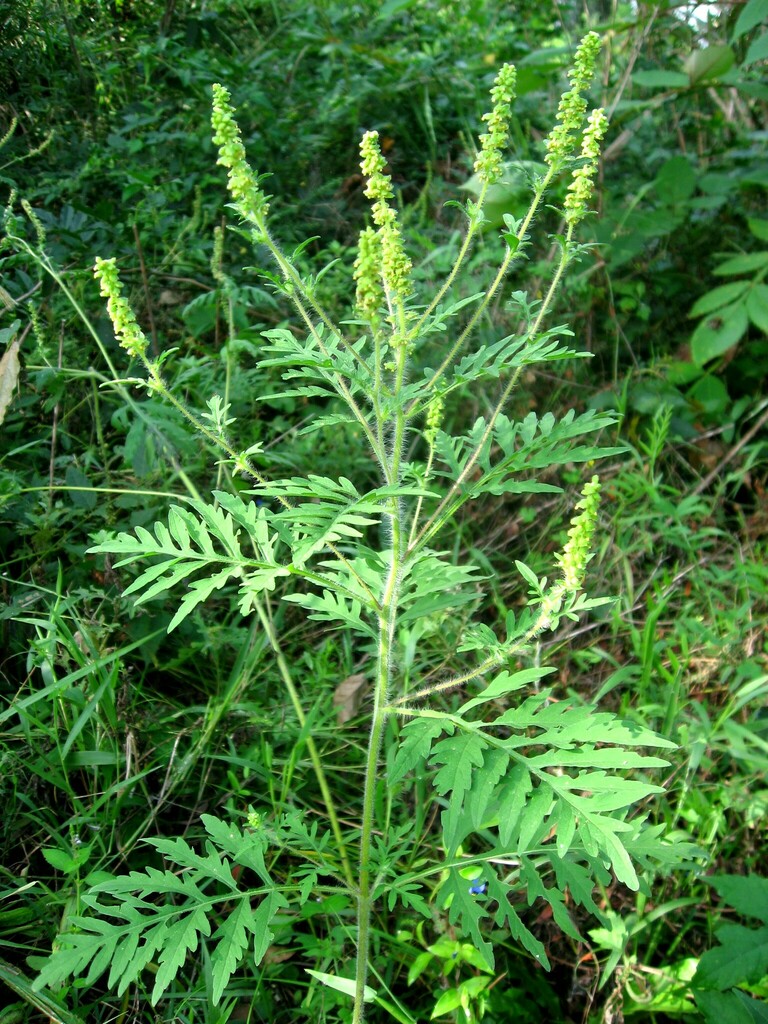
Common ragweed produces inconspicuous green flower spikes that shed millions of microscopic pollen grains into late-summer winds. Its deeply dissected, fern-like leaves form bushy upright plants along disturbed roadsides, pastures, and vacant lots. Airborne pollen from this aggressive annual is the primary trigger for seasonal hay fever across North America and Europe.
Wind-pollinatedAllergenAnnual
—observations
—countries
—peak records
Least ConcernConservation statusIUCN Red List categoriesLCNTVUENCREWEXLeast ConcernRed List categories, explained →
Diet & prey
- Sunlight
- Water
- Soil Nitrates
Predators
- Ragweed Leaf Beetle
- American Goldfinch
- Spotted Cucumber Beetle
ThreatsHerbicide resistance management
HabitatsDisturbed soil, roadsides, agricultural fields, vacant lots
Life spanAnnual (1 year)
Size / weightNot available
Classification
- OrderAsterales
- FamilyAsteraceae
- GenusAmbrosia
- SpeciesAmbrosia artemisiifolia
Range data is not available yet.
Interaction riskLow
- Low
- Moderate
- High
- Very high
- Why interaction risk is low
- Produces abundant airborne pollen in late summer that triggers severe hay fever; sensitive individuals should keep distance.
- Why it is dangerous
- Produces vast amounts of windborne pollen containing proteins that induce severe allergic rhinitis, asthma attacks, and eye irritation.
- How to recognize a risky encounter
- Recognizable by its lacy, fern-like leaves and yellow-green terminal flower spikes during late summer.
- What to do
- Wear a protective mask and gloves when pulling plants, ideally clearing them before flowers open.
Responsible observation
- Identification: Look for deeply divided, lacy green leaves and small yellow-green flower spikes at stem tips.
- Allergy Management: Avoid close exposure on dry, windy late-summer mornings when pollen counts peak.
- Control: Remove young plants by hand before late-summer flowering to prevent pollen release.
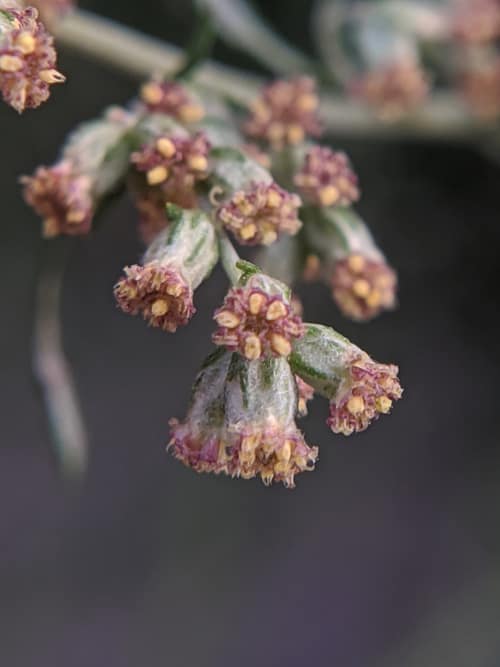
Look-alike no rights reserved, uploaded by Adam Kranz · cc0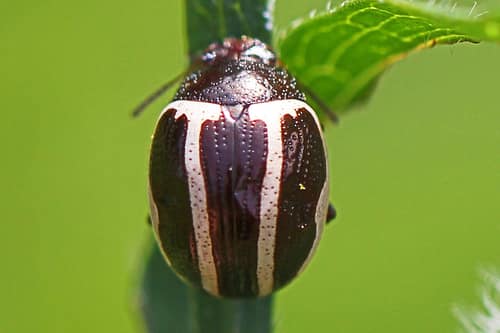
Herbivore Judy Gallagher / CC BY 2.0 · cc-by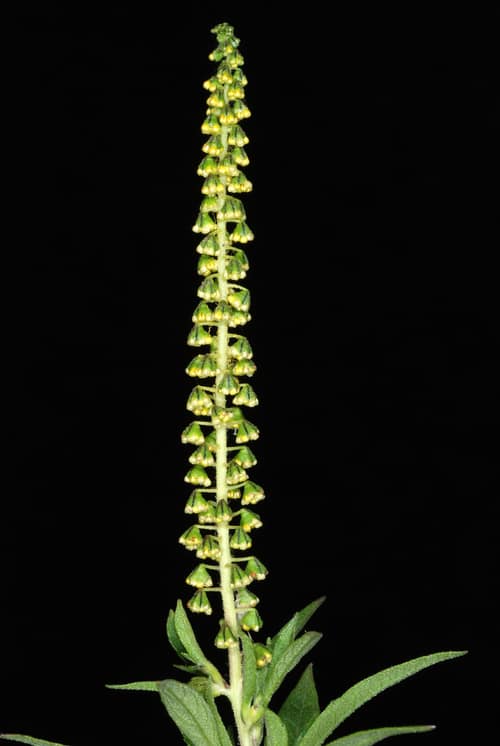
Close Relative (c) Douglas Goldman, some rights reserved (CC BY-SA), uploaded by Douglas Goldman · cc-by-sa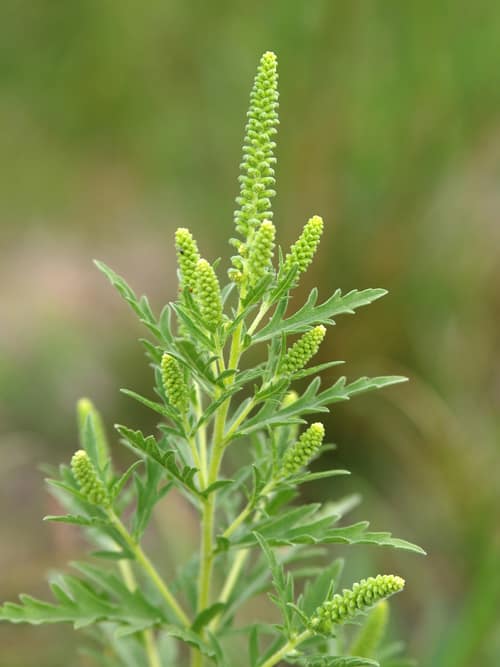
Close Relative (c) Annabell Hormann / korina.info, some rights reserved (CC BY-SA) · cc-by-sa
Help improve the field guideSomething wrong?
Checking your Fauna account…Report a name, category, or profile issue for review.