
Species
Common Coral Slime
Ceratiomyxa fruticulosaAlso known as Coral Slime Mold, Coral Slime
Common coral slime develops crystalline, translucent stalks that branch like miniature marine coral across damp, decaying wood. Unlike true myxogastrid slime molds, it bears its single microscopic spores externally on delicate individual stalks projecting from the branches. The plasmodial phase creeps invisibly through rot-softened logs grazing on microbes before emerging in vast, frost-white carpets after soaking summer rains.
DecomposerWoodlandCosmopolitan
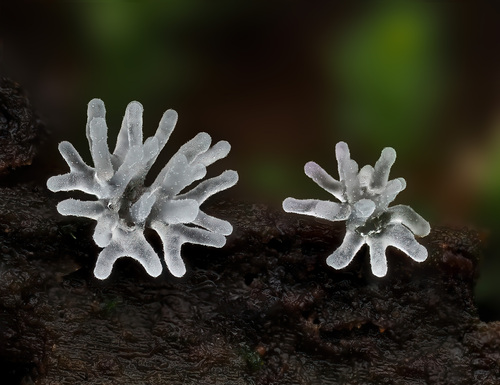
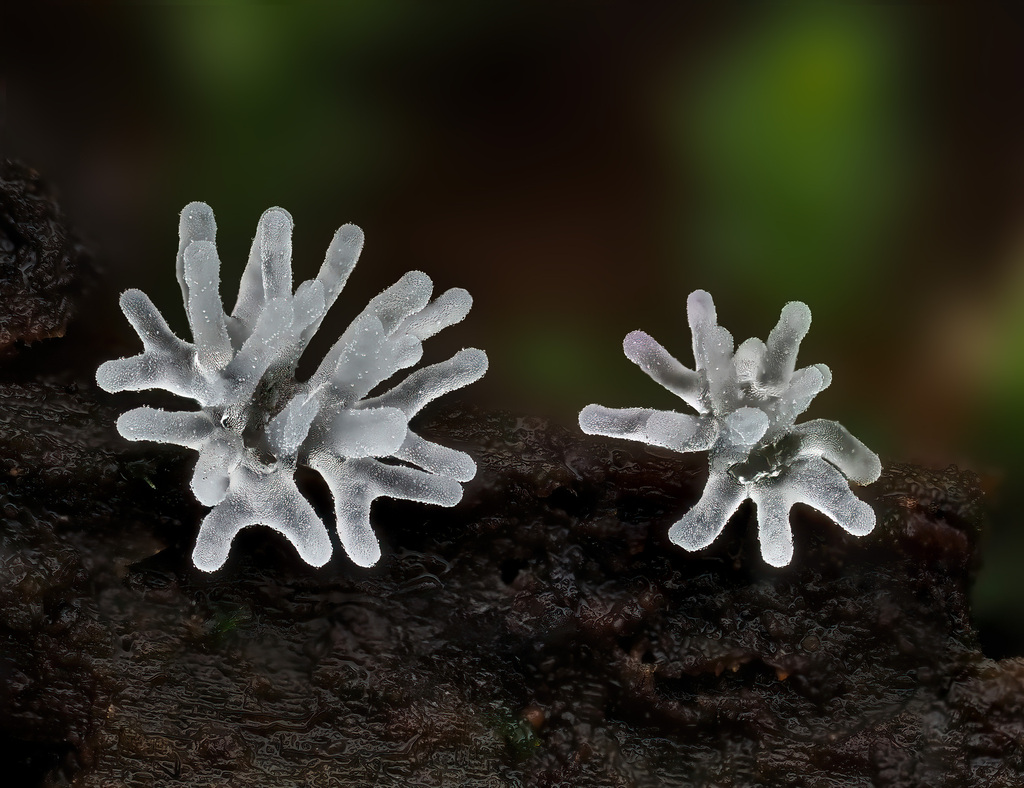
—observations
—countries
—peak records
Not EvaluatedConservation statusIUCN Red List categoriesLCNTVUENCREWEXNot Evaluated — not placed on the risk ladderRed List categories, explained →
Diet & preyBacteria, Fungal spores, Biofilms
Predators
- Slugs
- Beetles
- Springtails
ThreatsDeforestation and prolonged drought
HabitatsDecaying logs and leaf litter in temperate and tropical forests
Life spanSeveral days to weeks
Classification
- OrderCeratiomyxales
- FamilyCeratiomyxaceae
- GenusCeratiomyxa
- SpeciesCeratiomyxa fruticulosa
Range data is not available yet.
Interaction riskLow
- Low
- Moderate
- High
- Very high
- Why interaction risk is low
- Safe to observe at a normal distance.
Responsible observation
- Magnification: Examine with a hand lens or macro lens to view the tiny external spores.
- Field Timing: Search damp, shaded logs on forest floors one to three days after heavy rain.
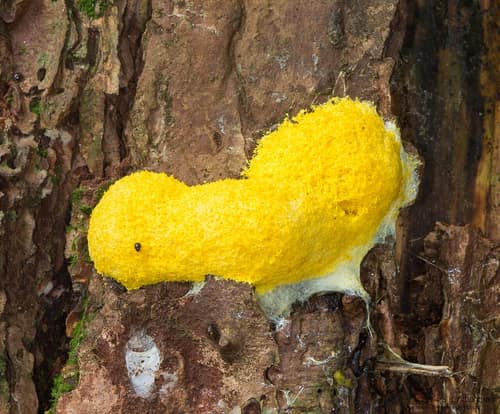
Neighbor Norbert Nagel / CC BY-SA 3.0 · cc-by-sa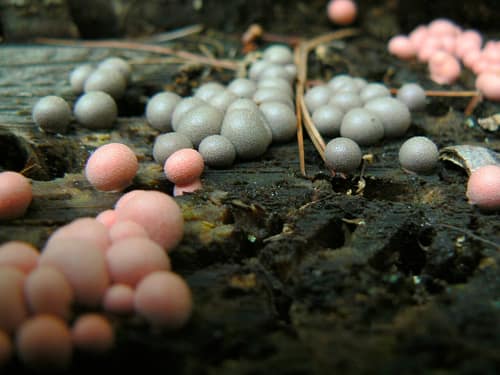
Neighbor Benny Mazur from Toledo, OH / CC BY 2.0 · cc-by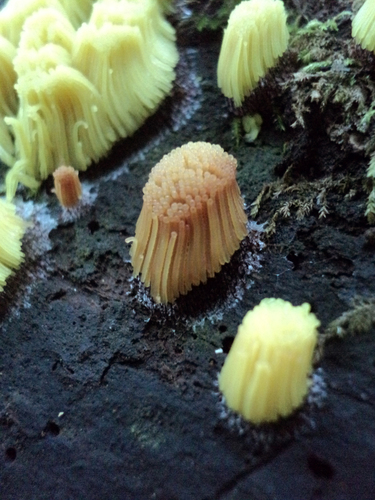
Neighbor (c) Thomas Laxton, some rights reserved (CC BY-SA), uploaded by Thomas Laxton · cc-by-sa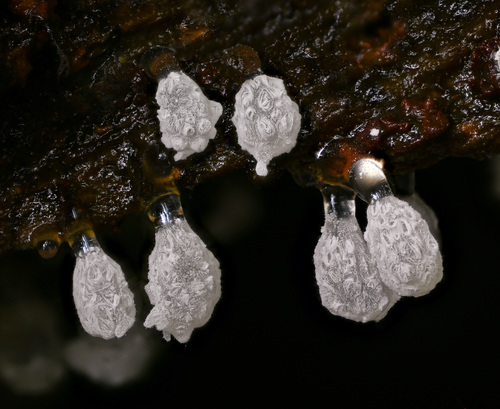
Close Relative (c) Alan Rockefeller, some rights reserved (CC BY) · cc-by
Help improve the field guideSomething wrong?
Checking your Fauna account…Report a name, category, or profile issue for review.