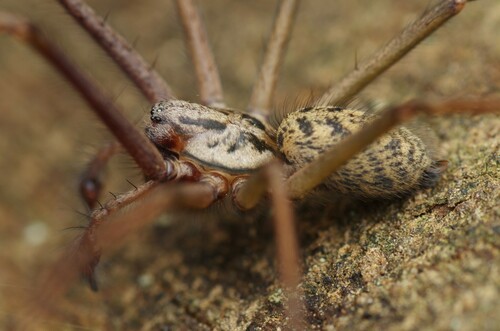
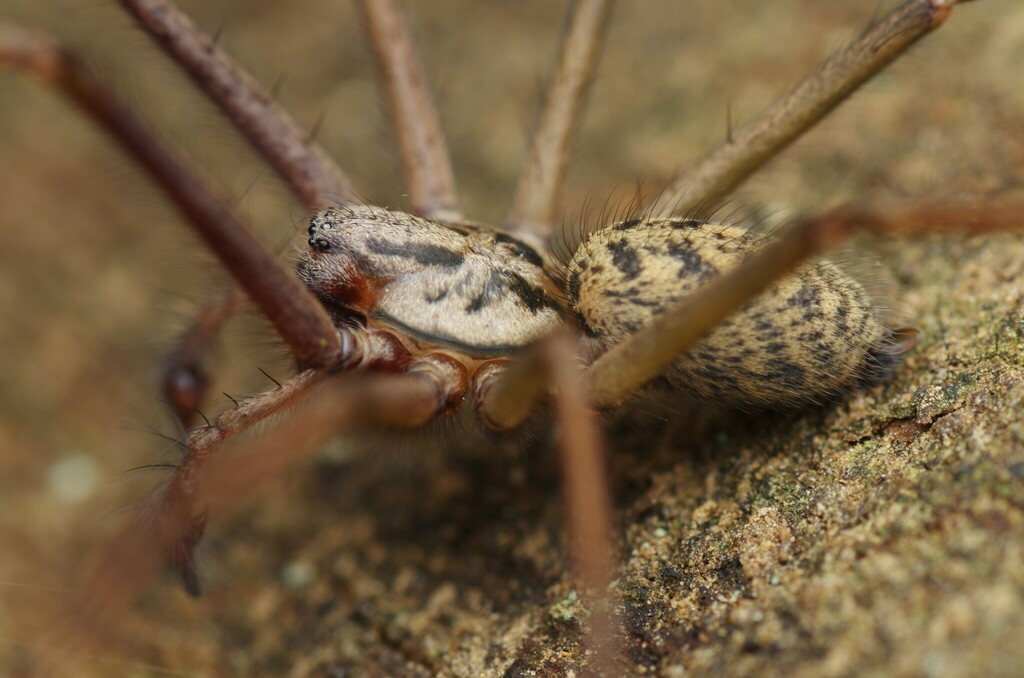
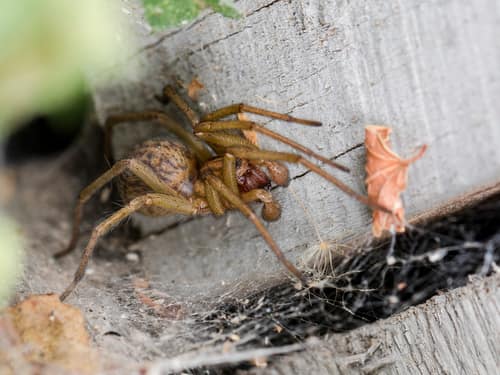
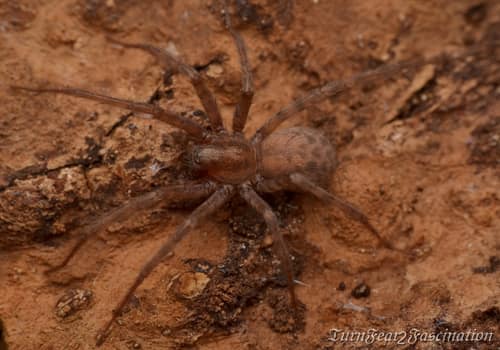
Giant house spiders construct flat, sheet-like funnel webs in dark, undisturbed corners, lurking deep inside a tubular retreat until vibrations reveal wandering prey. Renowned for their blistering sprint speeds, these nocturnal hunters rank among the fastest terrestrial invertebrates over short distances. Wandering males abandon their webs in late summer and autumn to search for mates, which is when they most frequently encounter humans in basements, bathtubs, and stairwells.
Not EvaluatedConservation statusIUCN Red List categoriesLCNTVUENCREWEXNot Evaluated — not placed on the risk ladderRed List categories, explained →
Key facts
Diet & prey
House Fly
Silverfish
Carpet Beetle
Predators
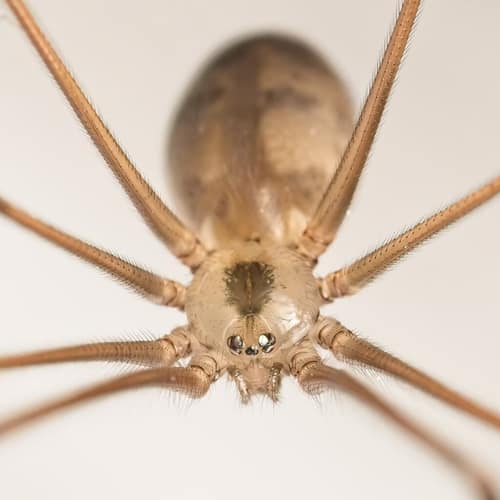
Cellar Spider
Domestic Cat
House Mouse
ThreatsPesticide use, habitat disturbance, and competition from other synanthropic spiders
HabitatsBasements, attics, wall voids, outbuildings, caves, and rock crevices
Life span1–3 years (males die after autumn mating; females live longer)
Size / weightNot available
Classification
OrderAraneae
FamilyAgelenidae
GenusEratigena
SpeciesEratigena atrica
Range & activity
Range data is not available yet.
Safe observation
Interaction riskLow
Low
Moderate
High
Very high
Why interaction risk is low
Bites are rare, mild, and medically harmless: safe to observe at a normal distance.
Responsible observation
Humane Relocation: Trap wandering spiders under a wide glass, slide a sturdy index card underneath, and carry them to a sheltered woodpile or garden shed.
Bathtub Rescue: Drape a dry towel or cardboard ramp over the slick porcelain lip so stranded spiders can climb out on their own.