
Insect · GBIF taxon 7761138
Five-spot Burnet
Zygaena trifoliiAlso known as Five-spotted Burnet Moth
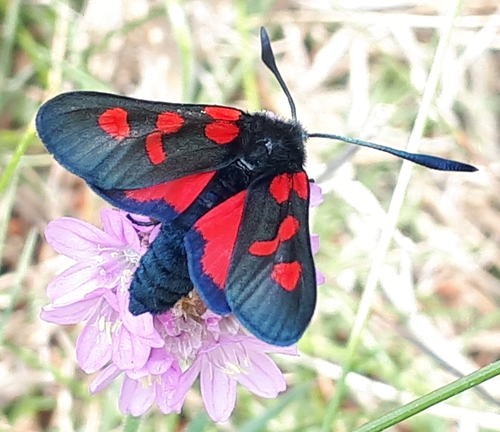
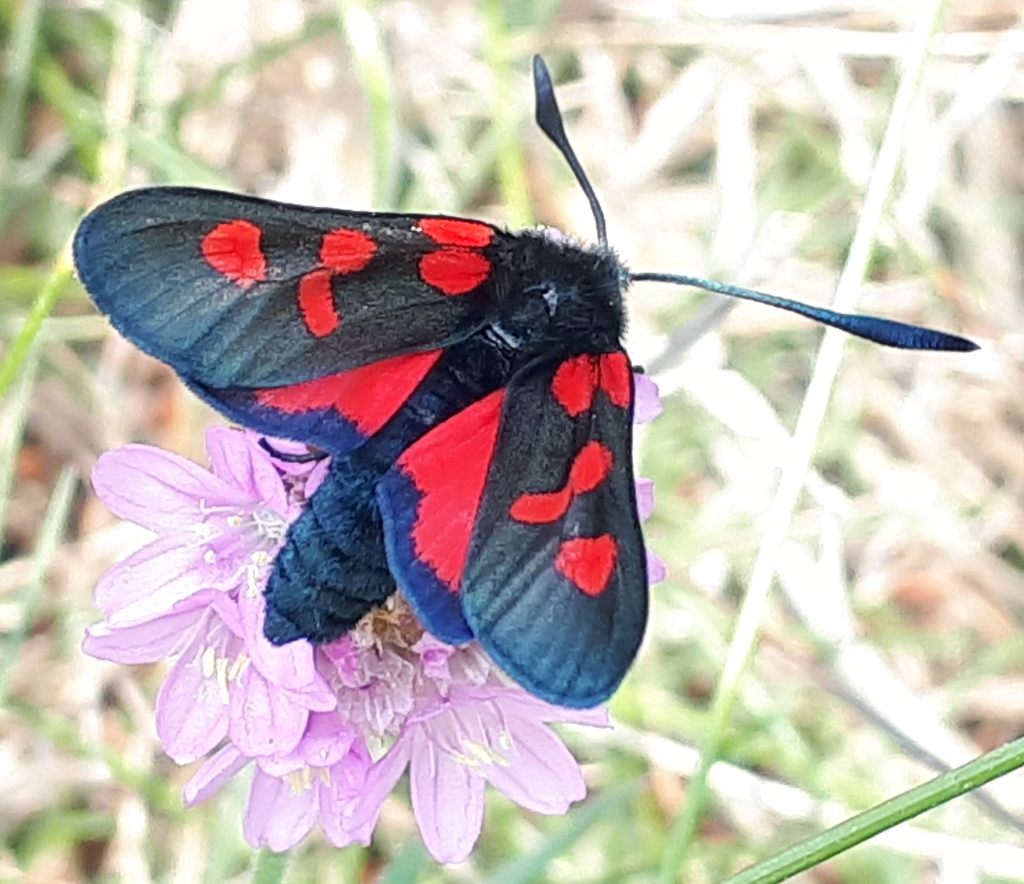
Five-spot burnets flutter sluggishly through sunlit damp meadows and chalk grasslands, flashing crimson warning spots against glossy blue-black forewings. These day-flying moths synthesize hydrogen cyanide internally, rendering adults and caterpillars highly unpalatable to birds and other predators. Adults frequently cluster together on knapweeds and scabious to sip nectar during warm summer days before females deposit eggs on larval food plants.
Day-flyingToxicMoth
—observations
—countries
—peak records
Least ConcernConservation statusIUCN Red List categoriesLCNTVUENCREWEXLeast ConcernRed List categories, explained →
Diet & prey
- Nectar from knapweed
- Nectar from scabious
- Nectar from thistle
Predators
- Birds
- Spiders
- Robber flies
ThreatsLoss of flower-rich damp grasslands to drainage and development.
HabitatsDamp grasslands, marshes, coastal cliffs, and chalk downs.
Life span1 year
Classification
- FamilyZygaenidae
- SpeciesZygaena trifolii
Range data is not available yet.
Interaction riskHigh
- Low
- Moderate
- High
- Very high
- Why interaction risk is high
- Contains cyanogenic toxins to deter predators; safe to observe from a close distance.
- Why it is dangerous
- Contains cyanogenic glycosides and hydrogen cyanide that render all life stages toxic if swallowed.
- How to recognize a risky encounter
- Look for metallic black forewings with five red spots and crimson hindwings bordered in black.
- What to do
- Observe and photograph without touching or disturbing the resting adults.
Responsible observation
- Observe quietly: Approach slowly on warm summer days while they feed on purple flower heads.
- Count spots: Look closely at the forewing pattern to distinguish the five red spots.
- Protect habitat: Avoid stepping on host plants like bird's-foot trefoil in delicate meadows.
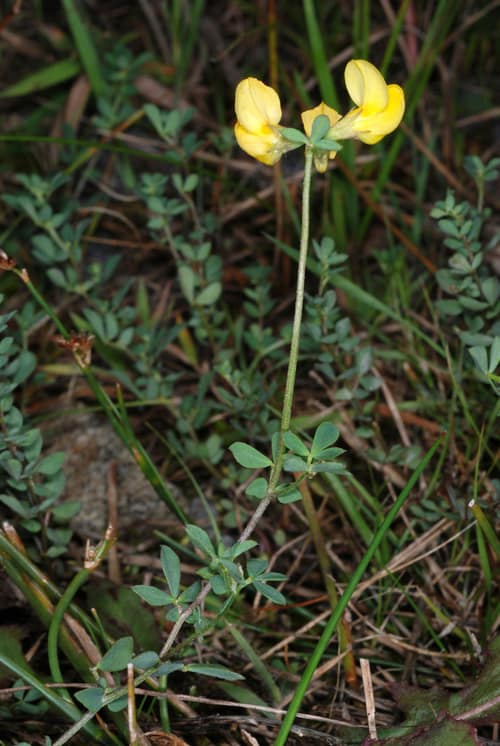
Host Plant (c) Douglas Goldman, some rights reserved (CC BY-SA), uploaded by Douglas Goldman · cc-by-sa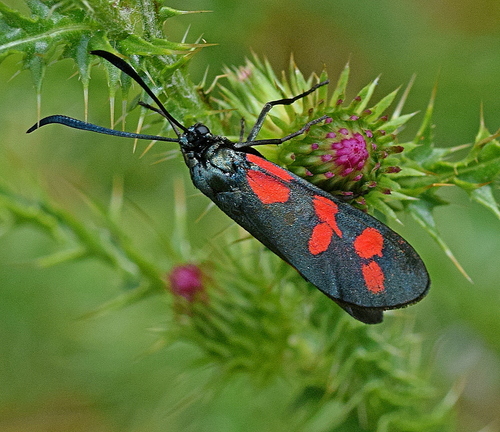
Close Relative (c) Kostas Zontanos, some rights reserved (CC BY) · cc-by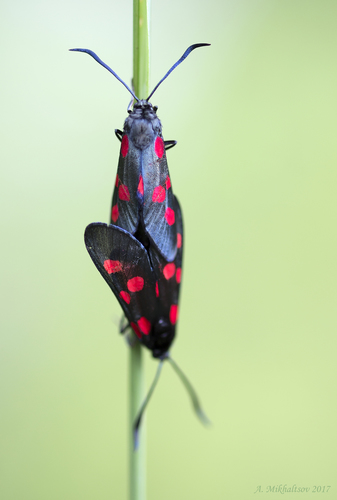
Close Relative (c) Anatoly Mikhaltsov, some rights reserved (CC BY-SA) · cc-by-sa
Help improve the field guideSomething wrong?
Checking your Fauna account…Report a name, category, or profile issue for review.