
Bird
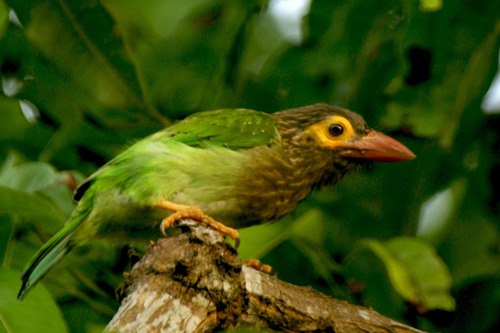
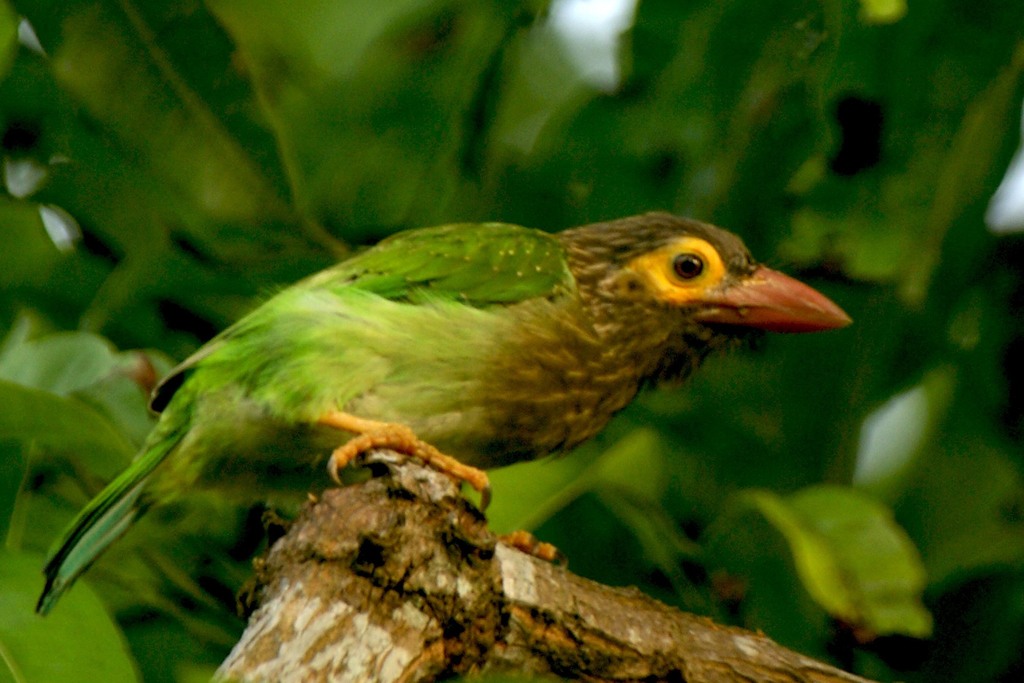
Brown-headed Barbet
Psilopogon zeylanicusAlso known as Large Green Barbet
Brown-headed barbets announce the onset of warm weather across South Asia with their repetitive, ringing territorial calls delivered from the highest branches. These stocky green frugivores play a critical role as seed dispersers, visiting wild fruiting trees such as banyans and peepals throughout the day. Pairs excavate nesting cavities inside rotting tree limbs using their stout, heavy bills, vigorously defending these high nest holes against intrusive woodpeckers and parakeets.
FrugivorousArborealVocal
—observations
—countries
—peak records
Least ConcernConservation statusIUCN Red List categoriesLCNTVUENCREWEXLeast ConcernRed List categories, explained →
Diet & preyCluster Fig, Sacred Fig, Flying Termites
Predators
- Besra
- Shikra
- Common Bronzeback Tree Snake
ThreatsFelling of mature nesting trees and urban clearance of deadwood
HabitatsTropical moist broadleaf forests, woodland edges, gardens, and urban parks
Life span8–12 years
Classification
- OrderPiciformes
- FamilyMegalaimidae
- GenusPsilopogon
- SpeciesPsilopogon zeylanicus
Range data is not available yet.
Interaction riskLow
- Low
- Moderate
- High
- Very high
- Why interaction risk is low
- Safe to observe at a normal distance.
Responsible observation
- Listening: Follow the loud, repetitive 'kutroo-kutroo' call to pinpoint singing birds perched atop high, leafy canopies.
- Fruiting Trees: Scan mature fig trees during morning hours when multiple individuals often feed peacefully together.
- Deadwood Care: Retain dead and decaying tree limbs in gardens to provide essential nest-excavation sites.
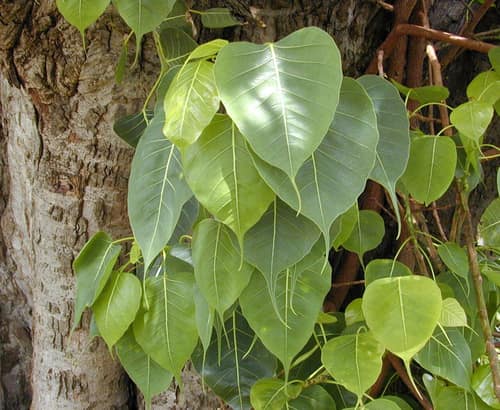
Prey Eric Guinther / CC BY-SA 3.0 · cc-by-sa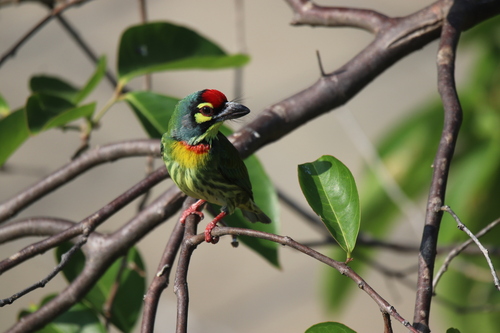
Close Relative (c) Roland Godon, some rights reserved (CC BY), uploaded by Roland Godon · cc-by Image unavailable
Close Relative 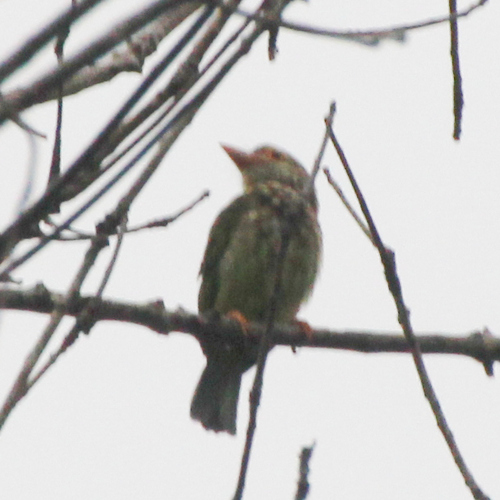
Close Relative (c) Huey, some rights reserved (CC BY) · cc-by
Help improve the field guideSomething wrong?
Checking your Fauna account…Report a name, category, or profile issue for review.