
Insect
Picasso Bug
Sphaerocoris annulusAlso known as Zulu Hud Bug
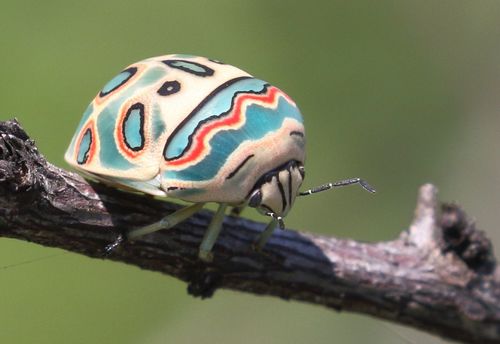
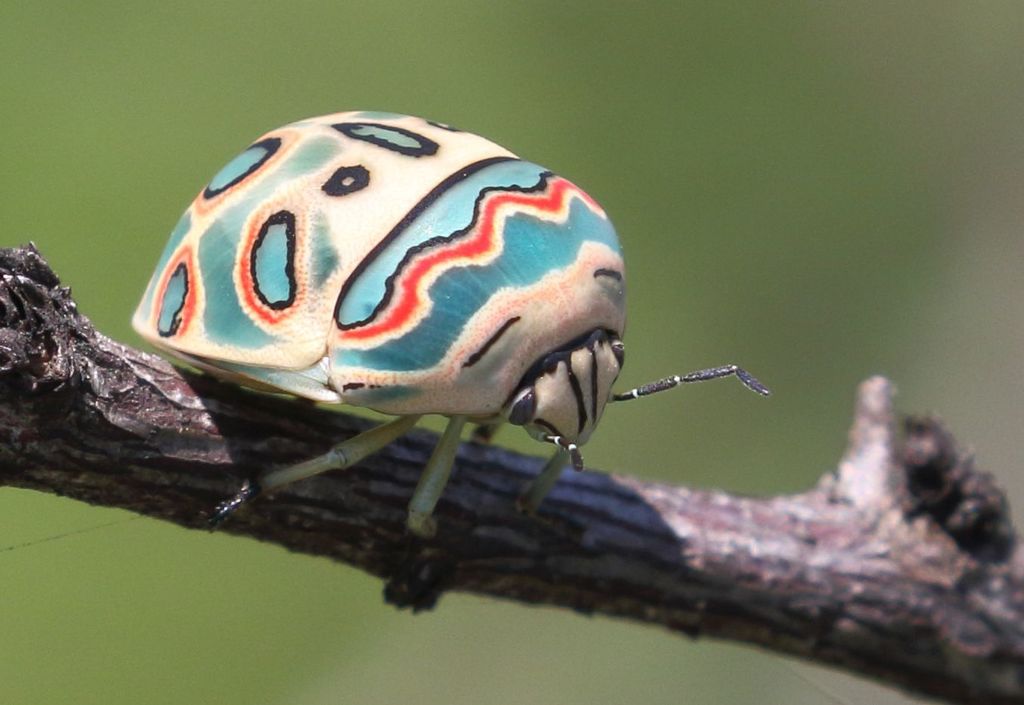
Picasso bugs boast an ornate shield adorned with geometric rings of green, yellow, red, and black that mimic an abstract canvas. They spend their days basking openly on stems and foliage across sub-Saharan Africa, using piercing-sucking mouthparts to siphon sap from various host plants. When threatened, their vivid patterns serve as aposematic warning coloration, signaling their ability to discharge a foul-smelling chemical cocktail from thoracic glands.
ColorfulHerbivoreDiurnal
—observations
—countries
—peak records
Not EvaluatedConservation statusIUCN Red List categoriesLCNTVUENCREWEXNot Evaluated — not placed on the risk ladderRed List categories, explained →
Diet & preyCotton sap, Asteraceae plant sap, Flower juices
Predators
- Insectivorous birds
- Spiders
- Praying mantises
ThreatsHabitat alteration and broad-spectrum pesticide spraying
HabitatsSavannas, open woodlands, shrublands, and agricultural margins
Life spanSeveral months to 1 year
Classification
- OrderHemiptera
- FamilyScutelleridae
- GenusSphaerocoris
- SpeciesSphaerocoris annulus
Range data is not available yet.
Interaction riskLow
- Low
- Moderate
- High
- Very high
- Why interaction risk is low
- Emits a foul-smelling defensive odor when handled; safe to observe without touching.
Responsible observation
- Spotting Foliage: Look carefully along the sunny stems and leaves of wild shrubs and garden plants.
- Gentle Observation: Avoid poking or grabbing the bug, which triggers noxious chemical sprays.
- Macro Photography: Approach slowly with a macro lens to capture the fine geometric rings without startling it.
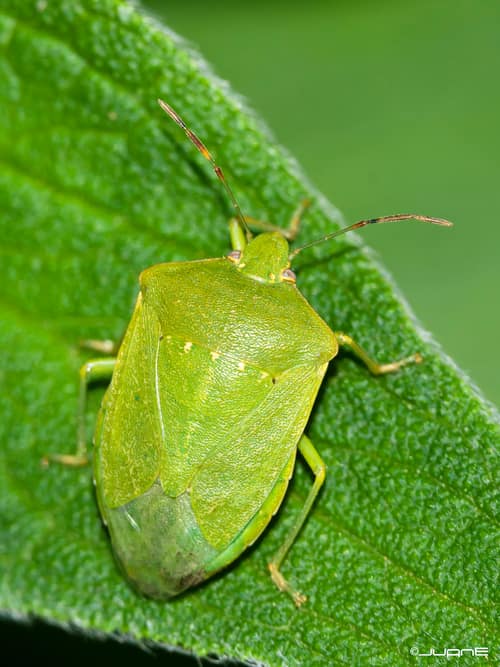
Competitor (c) Juan Emilio, some rights reserved (CC BY-SA) · cc-by-sa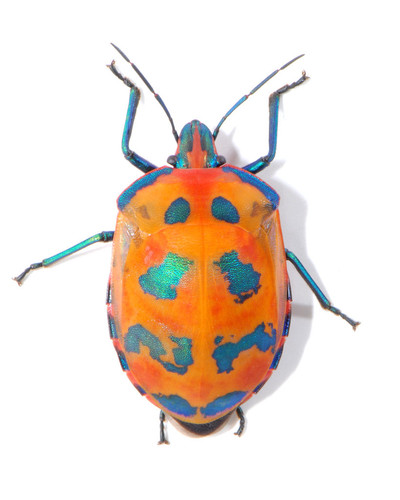
Close Relative (c) Sam Fraser-Smith, some rights reserved (CC BY) · cc-by
Help improve the field guideSomething wrong?
Checking your Fauna account…Report a name, category, or profile issue for review.