
Invertebrate · GBIF taxon 7659712
Vetulicola cuneata
Vetulicola cuneataVetulicola cuneata was an enigmatic Cambrian organism featuring a bipartite body plan with a bulbous, laterally compressed anterior section and an articulated, paddle-shaped tail. Five pairs of gill-like openings flanked its front carapace, expelling water as the animal filter-fed while swimming above muddy ocean substrates. Side-to-side undulation of its segmented tail provided steady propulsion, marking it as an active swimmer among the soft-bodied fauna of the early Cambrian seas.
FossilPrehistoricMarine
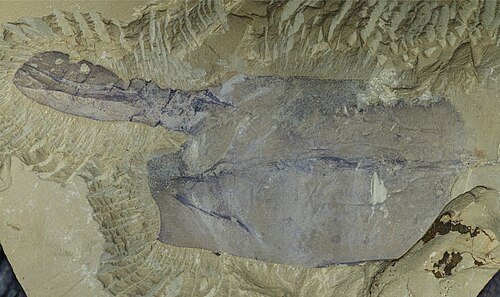
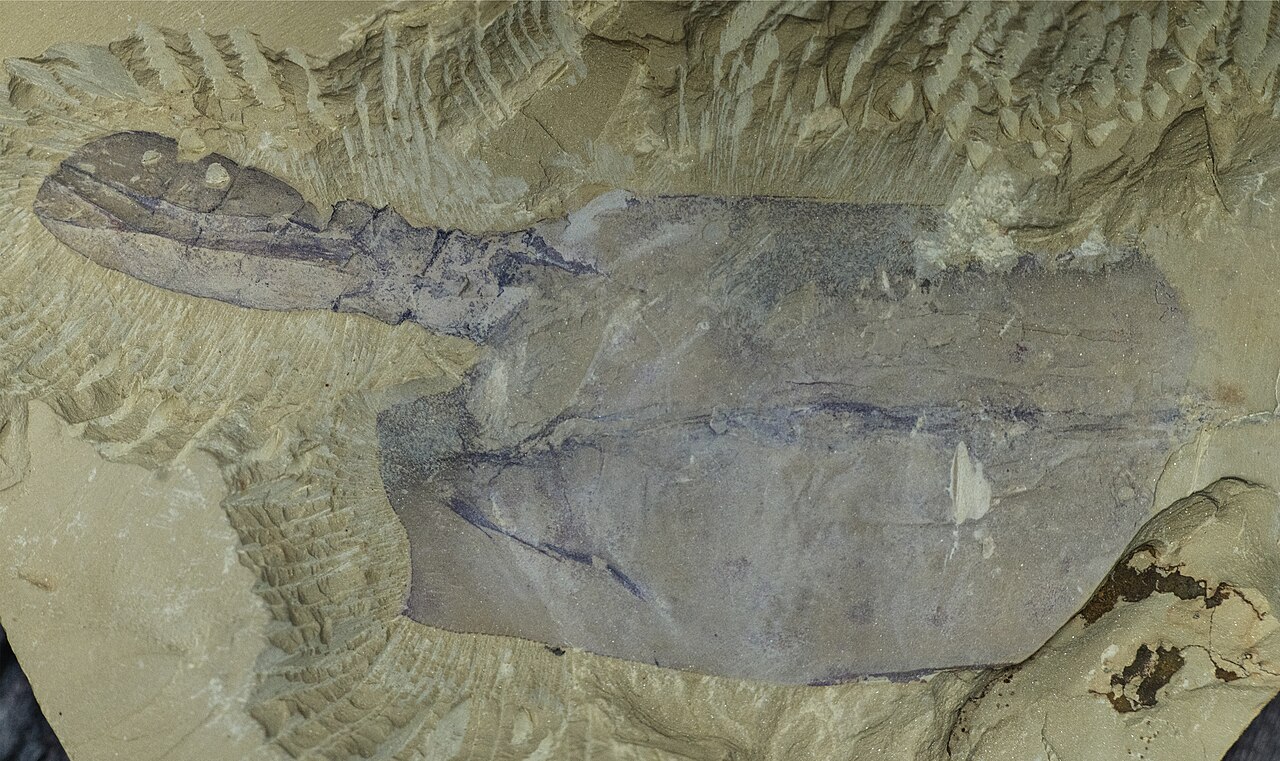
Licensed referenceMasahiro miyasaka / CC BY-SA 4.0 · cc-by-sa
—observations
—countries
—peak records
ExtinctConservation statusIUCN Red List categoriesLCNTVUENCREWEXExtinctRed List categories, explained →
Diet & prey
- Marine phytoplankton
- Organic detritus
- Zooplankton
Predators
- Anomalocaris saron
ThreatsNatural extinction during the Cambrian Period
HabitatsShallow tropical marine shelf environments
Life spanUnknown
Size / weightNot available
Classification
- FamilyVetulicolidae
- GenusVetulicola
- SpeciesVetulicola cuneata
Range data is not available yet.
Interaction riskLow
- Low
- Moderate
- High
- Very high
- Why interaction risk is low
- Extinct fossil species; entirely safe to observe in museum collections.
Responsible observation
- Fossil Identification: Look for a wedge-shaped anterior carapace connected to an articulated, paddle-like tail.
- Specimen Handling: Handle shale matrix slabs solely by the margins to prevent oils from damaging fragile film impressions.
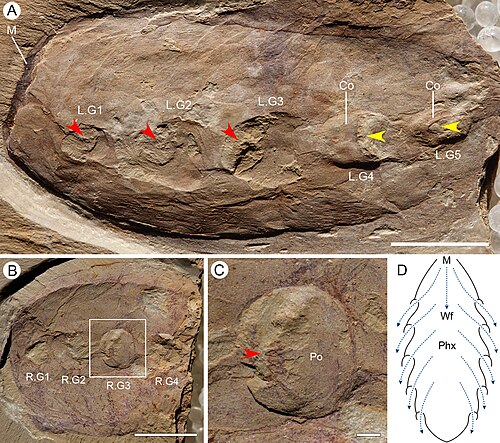
Same Class Qiang Ou, Simon Conway Morris, Jian Han, Zhifei Zhang, Jianni Liu, Ailin Chen, Xingliang Zhang & Degan Shu / CC BY 2.0 · cc-by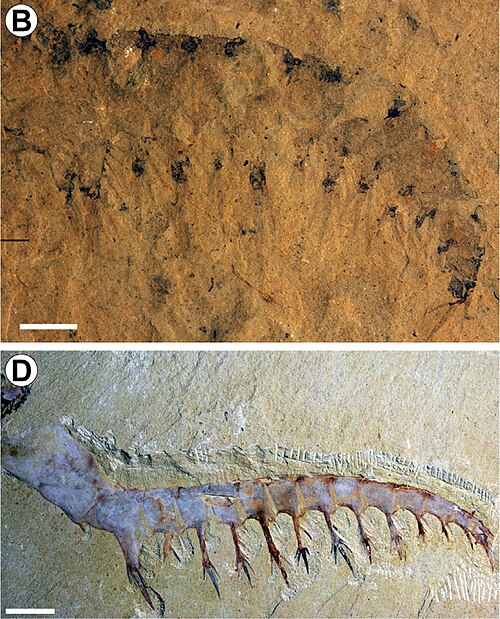
Predator Gaëtan J.-M. Potin and Allison C. Daley / CC BY 4.0 · cc-by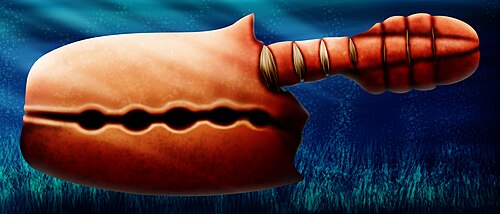
Close Relative PaleoNeolitic / CC BY-SA 4.0 · cc-by-sa
Help improve the field guideSomething wrong?
Checking your Fauna account…Report a name, category, or profile issue for review.