
Reptile
White-lipped Island Pitviper
Trimeresurus insularisAlso known as Indonesian Pit Viper, Lesser Sunda Islands Pit Viper, Blue Pit Viper, Sunda White-lipped Pit Viper
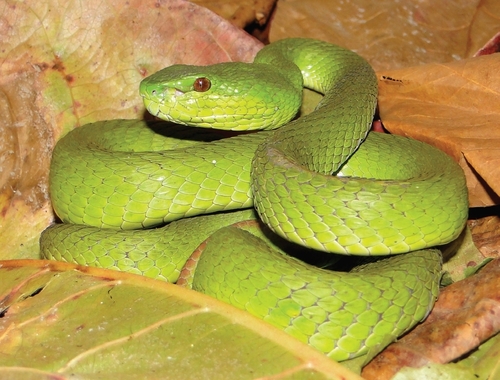
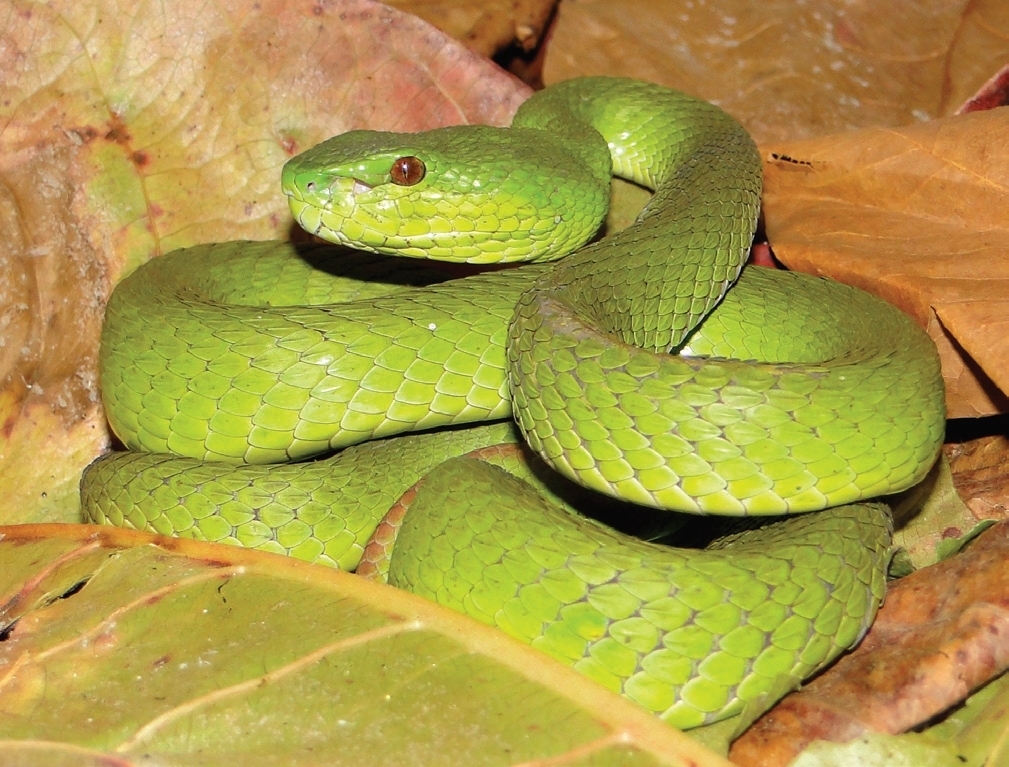
White-lipped Island Pitvipers are arboreal ambush hunters that anchor themselves to branches by their prehensile tails while waiting for prey to pass below. Although famous for the striking bright blue morph found on Komodo and adjacent isles, most populations display vibrant green or vivid yellow colorations with contrasting brick-red tails. Heat-sensitive loreal pits located between each eye and nostril allow them to strike warm-blooded targets in complete darkness.
ArborealNocturnalVenomous
—observations
—countries
—peak records
Least ConcernConservation statusIUCN Red List categoriesLCNTVUENCREWEXLeast ConcernRed List categories, explained →
Diet & preyGeckos, Tree frogs, Small rodents
Predators
- King Cobra
- Birds of prey
- Monitor lizards
ThreatsHabitat destruction, collection for the exotic pet trade, and persecution by humans
HabitatsMonsoon forests, dry woodlands, shrublands, and agricultural plantations
Life span10–15 years
Classification
- FamilyViperidae
- SpeciesTrimeresurus insularis
Range data is not available yet.
Interaction riskVery high
- Low
- Moderate
- High
- Very high
- Why interaction risk is very high
- Possesses medically significant hemotoxic venom; keep a respectful distance and never attempt handling.
- Why it is dangerous
- Delivers hemotoxic and procoagulant venom that causes severe pain, swelling, tissue necrosis, and dangerous systemic bleeding.
- How to recognize a risky encounter
- Look for a triangular head, vertical pupils, heat pits near nostrils, and a distinctive reddish-brown tail tip.
- What to do
- Do not touch, corner, or attempt to move the snake; back away steadily and alert local guides.
Responsible observation
- Scan Low Branches: Look closely at foliage between knee and head height along forest trails at night.
- Use a Flashlight: Illuminate paths carefully in endemic island regions to avoid brushing against resting vipers.
- Maintain Safe Distance: Stay at least two snake lengths away since they can strike rapidly from coiled positions.
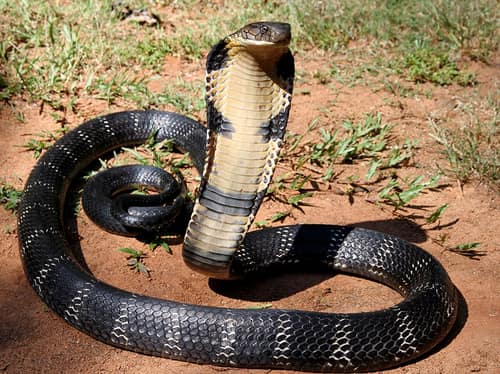
Predator Michael Allen Smith from Seattle, USA / CC BY-SA 2.0 · cc-by-sa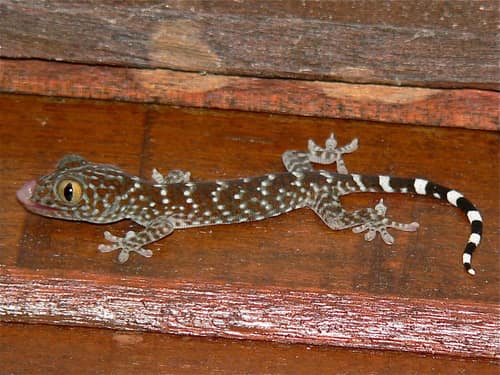
Prey (c) Bernard DUPONT, some rights reserved (CC BY-SA) · cc-by-sa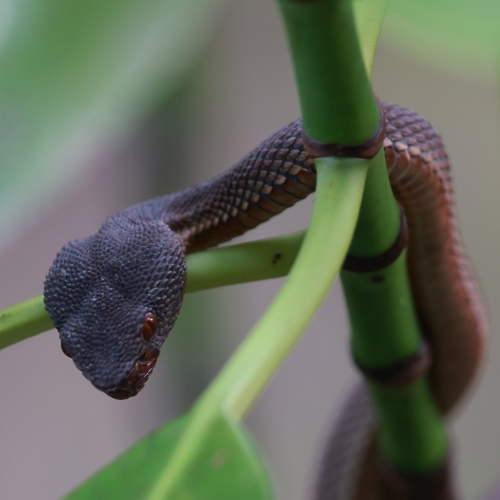
Same Genus (c) Eric Lopes, some rights reserved (CC BY-SA) · cc-by-sa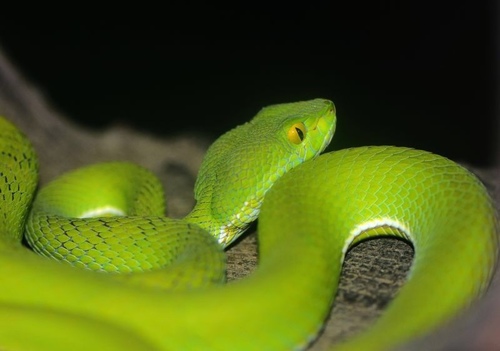
Close Relative (c) Zinogre, some rights reserved (CC BY-SA), uploaded by Zinogre · cc-by-sa
Help improve the field guideSomething wrong?
Checking your Fauna account…Report a name, category, or profile issue for review.