Also known as Texas Mescalbean, Grape Koolaid Tree, Frijolito, Frijolillo
Texas mountain laurel forms dense evergreen thickets across limestone hillsides, displaying glossy dark green foliage year round. In early spring, cascading clusters of violet-purple blossoms open to fill the air with an intense fragrance reminiscent of grape soda. Hard woody pods follow the flowers, eventually splitting open to reveal bright scarlet seeds that were historically used for ceremonial adornment.
ThreatsHabitat conversion, over-grazing, and caterpillar defoliation
HabitatsLimestone hills, Chihuahuan Desert scrub, chaparral, and rocky arroyos
Life span50–100+ years
Size / weightNot available
Classification
FamilyFabaceae
SpeciesDermatophyllum secundiflorum
Range & activity
Range data is not available yet.
Safe observation
Interaction riskHigh
Low
Moderate
High
Very high
Why interaction risk is high
Seeds contain toxic cytisine; do not ingest any plant parts, and keep seeds away from children and pets.
Why it is dangerous
Contains cytisine, a toxic quinolizidine alkaloid that causes severe gastrointestinal distress, muscle spasms, and potential respiratory failure if ingested.
How to recognize a risky encounter
Identified by dense pinnate evergreen leaves, drooping clusters of fragrant purple pea-like flowers, and woody pods containing scarlet red seeds.
What to do
Do not chew or ingest seeds or leaves, keep fallen seeds away from curious pets, and wash hands after handling pods.
Responsible observation
Spring Blooming: Look for rich purple floral clusters in early spring, which emit a distinct grape-soda scent.
Seed Pods: Observe the thick woody pods in summer that split to reveal bright scarlet seeds inside.
Landscaping Use: Appreciate planted specimens in xeric gardens, where they thrive with minimal watering.

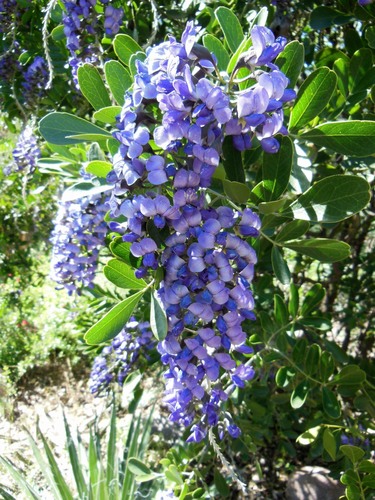
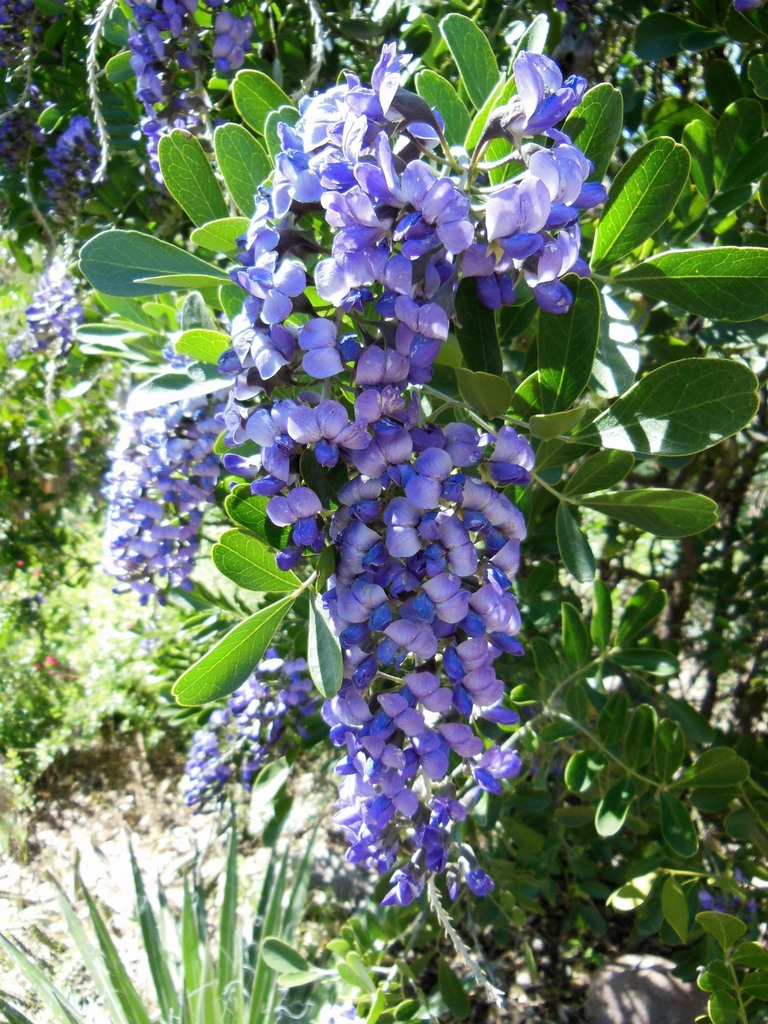
 Image unavailable