
Reptile
Arizona Black Rattlesnake
Crotalus cerberusAlso known as Black Rattlesnake, Cerberus Rattlesnake, Arizona Black Pit Viper
Arizona black rattlesnakes thrive in high-elevation montane forests and rocky canyons across the American Southwest. Uniquely among rattlesnakes, individuals can dynamically alter scale pigmentation within minutes in response to temperature changes or distress. They rely on heat-sensing facial pits and potent venom to hunt small mammals along shaded forest floors.
VenomousMontaneReptile
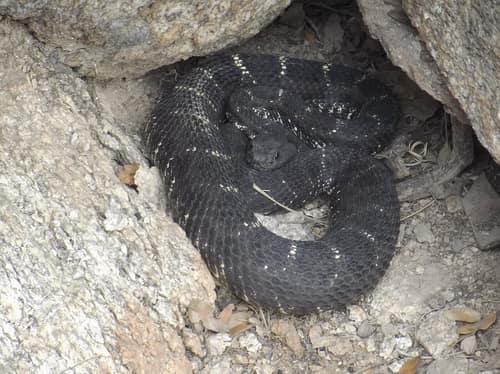
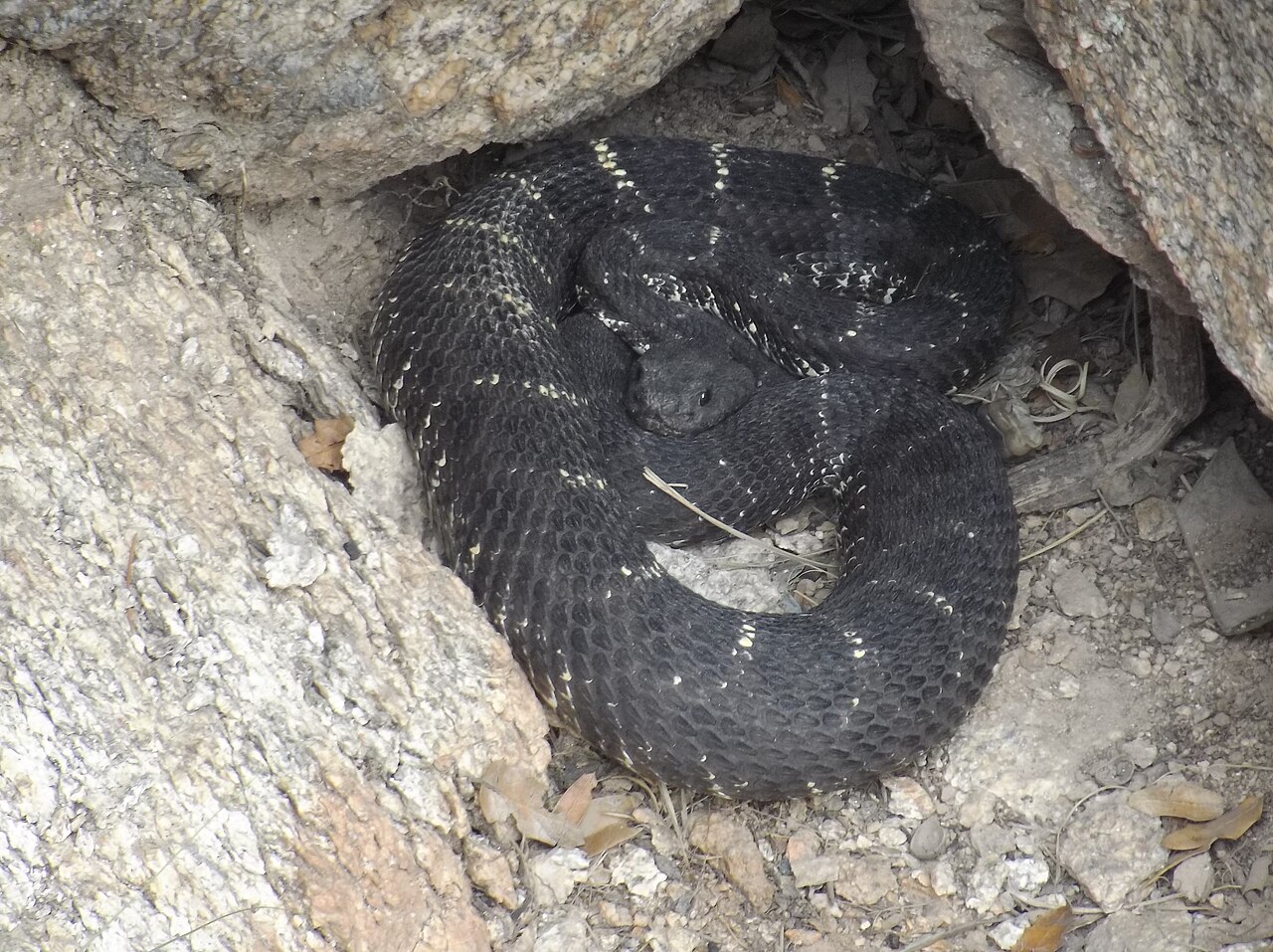
—observations
—countries
—peak records
Least ConcernConservation statusIUCN Red List categoriesLCNTVUENCREWEXLeast ConcernRed List categories, explained →
Diet & preyMice, Lizards, Voles
Predators
- Red-tailed Hawks
- Eagles
- Coyotes
ThreatsHabitat fragmentation, wildfire disruption, human persecution
HabitatsMontane pine-oak forests, chaparral, rocky canyons
Life span15–20 years
Classification
- FamilyViperidae
- SpeciesCrotalus cerberus
Range data is not available yet.
Interaction riskVery high
- Low
- Moderate
- High
- Very high
- Why interaction risk is very high
- Possesses dangerous venom; maintain a safe distance of at least three meters at all times.
- Why it is dangerous
- Complex venom contains hemotoxins and neurotoxins that cause rapid tissue breakdown, intense pain, and systemic failure.
- How to recognize a risky encounter
- Charcoal to jet-black body with faint lighter blotches, wide triangular head, and prominent tail rattle.
- What to do
- Back away slowly if encountered and never reach into unseen rock crevices or dense brush.
Responsible observation
- Give Wide Berth: Maintain a minimum distance of three meters to avoid triggering defensive strikes.
- Watch Trail Edges: Scan rocky crevices and fallen timber before stepping or reaching down.
- Listen for Rattle: Freeze immediately if you hear a buzzing rattle until you spot the snake.
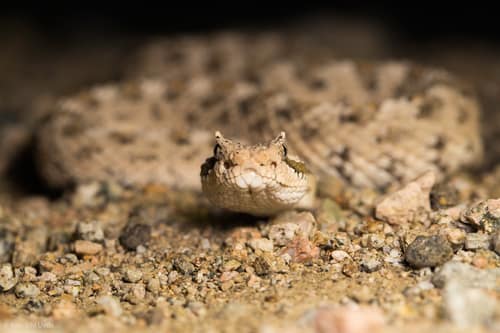
Genus Member (c) Ken-ichi Ueda, some rights reserved (CC BY) · cc-by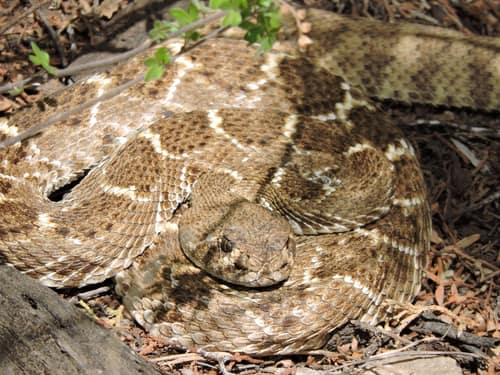
Close Relative (c) Sam Kieschnick, some rights reserved (CC BY), uploaded by Sam Kieschnick · cc-by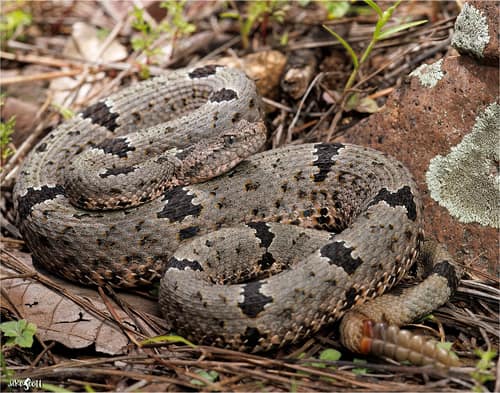
Sympatric Relative Caudatejake / CC BY-SA 4.0 · cc-by-sa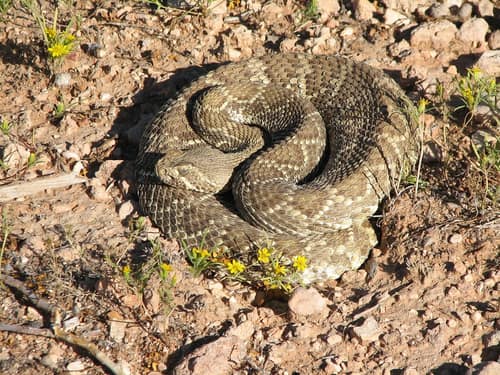
Close Relative "Mojave rattlesnake" by BLM Nevada is licensed under CC BY 2.0. To view a copy of this license, visit https://creativecommons.org/licenses/by/2.0/. · cc-by
Help improve the field guideSomething wrong?
Checking your Fauna account…Report a name, category, or profile issue for review.