
Insect
Rosalia Longicorn
Rosalia alpinaAlso known as Alpine Longhorn Beetle, Alpine Longicorn Beetle, Rosalia Beetle
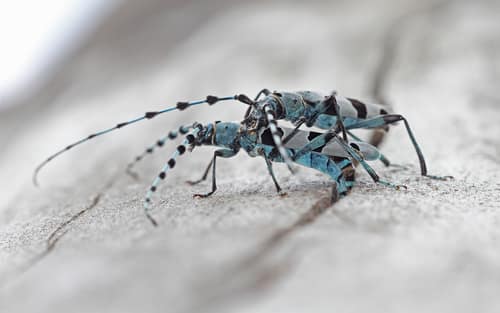
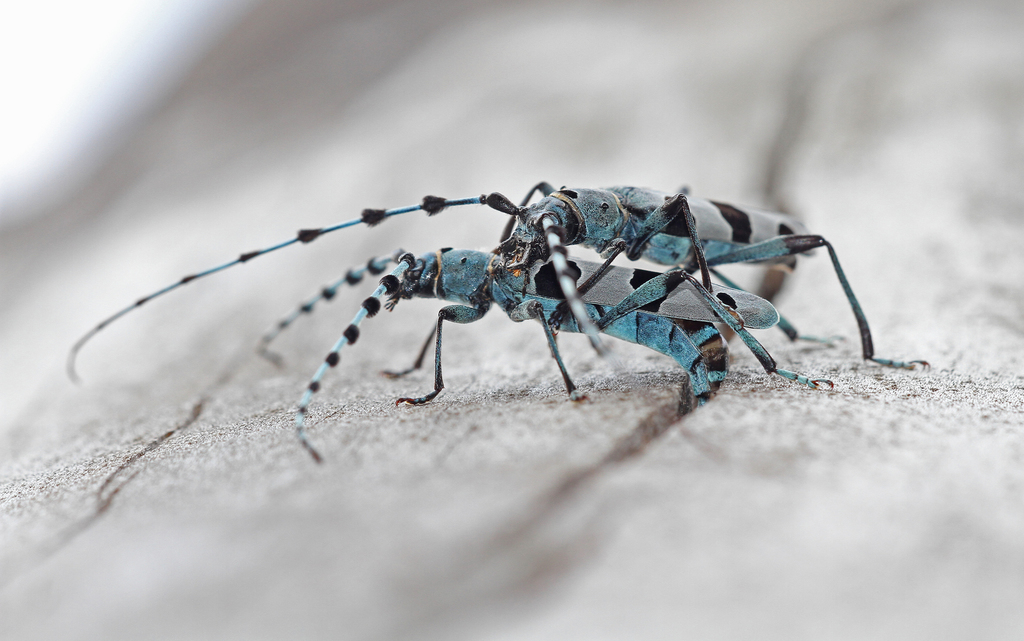
Rosalia longicorns display a velvety blue-grey body decorated with dark black patches, accompanied by remarkably long antennae ringed in matching blue and black shades. Adults emerge during warm summer months to sun themselves on standing deadwood, mating and depositing eggs into the bark of mature European beech trees. Their larvae spend up to three years tunneling through decaying wood, performing a crucial role in mountain forest nutrient cycling.
Wood-BoringColorfulForest Insect
—observations
—countries
—peak records
VulnerableConservation statusIUCN Red List categoriesLCNTVUENCREWEXVulnerableRed List categories, explained →
Diet & preyEuropean Beech Wood, Tree Sap, Pollen
Predators
- Woodpeckers
- Songbirds
- Predatory Beetles
ThreatsRemoval of deadwood, logging of mature beech stands, and trap-laying in timber stacks.
HabitatsOld-growth beech forests, sunlit woodland glades, and mountain slopes.
Life span2–3 years as larva; 3–6 weeks as adult.
Classification
- FamilyCerambycidae
- SpeciesRosalia alpina
Range data is not available yet.
Interaction riskLow
- Low
- Moderate
- High
- Very high
- Why interaction risk is low
- Safe to observe at a normal distance.
- What to notice
- Recognize by the velvety light-blue body, black dorsal spots, and dramatically long banded antennae.
- Support conservation
- Observe entirely from a distance without touching, moving, or dislodging beetles from host wood.
Responsible observation
- Best Viewing: Look along sunny forest edges and dead beech trunks during warm July and August afternoons.
- Log Stack Caution: Avoid disturbing adults gathering around stored timber piles near beech forests.
- Gentle Observation: Maintain a respectful distance to photograph their stunning blue coloration without causing stress.
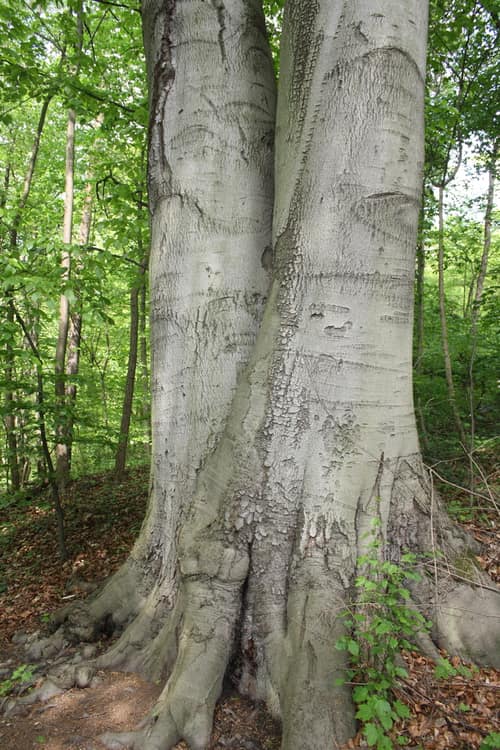
Host Plant (c) Daniel Linzbauer, some rights reserved (CC BY), uploaded by Daniel Linzbauer · cc-by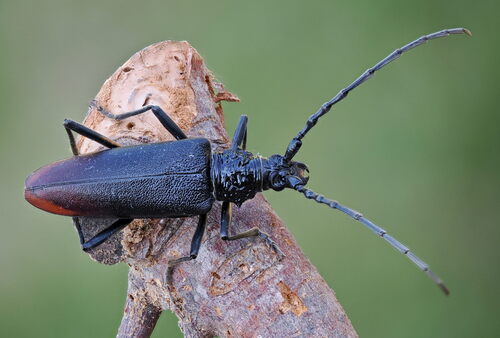
Family Relative (c) Gilles San Martin, some rights reserved (CC BY-SA), uploaded by Gilles San Martin · cc-by-sa Image unavailable
Family Relative
Help improve the field guideSomething wrong?
Checking your Fauna account…Report a name, category, or profile issue for review.