
Reptile · GBIF taxon 7555299
Pseudemys concinna suwanniensis
Pseudemys concinna suwanniensisAlso known as Suwannee River Cooter
Suwannee cooters spend clear Florida mornings basking on sun-drenched river logs, absorbing heat before diving to graze on submerged river meadows. As specialized river herbivores, adults use finely serrated jaw cusps to crop tough aquatic plants like eelgrass and spring run vegetation. Adult females make annual treks onto sandy river terraces to nest, requiring quiet, intact riverbanks to lay their eggs safely.
AquaticHerbivoreBasking
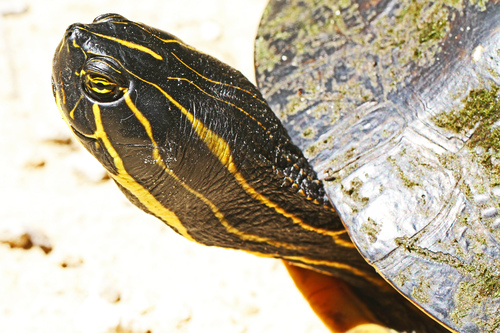
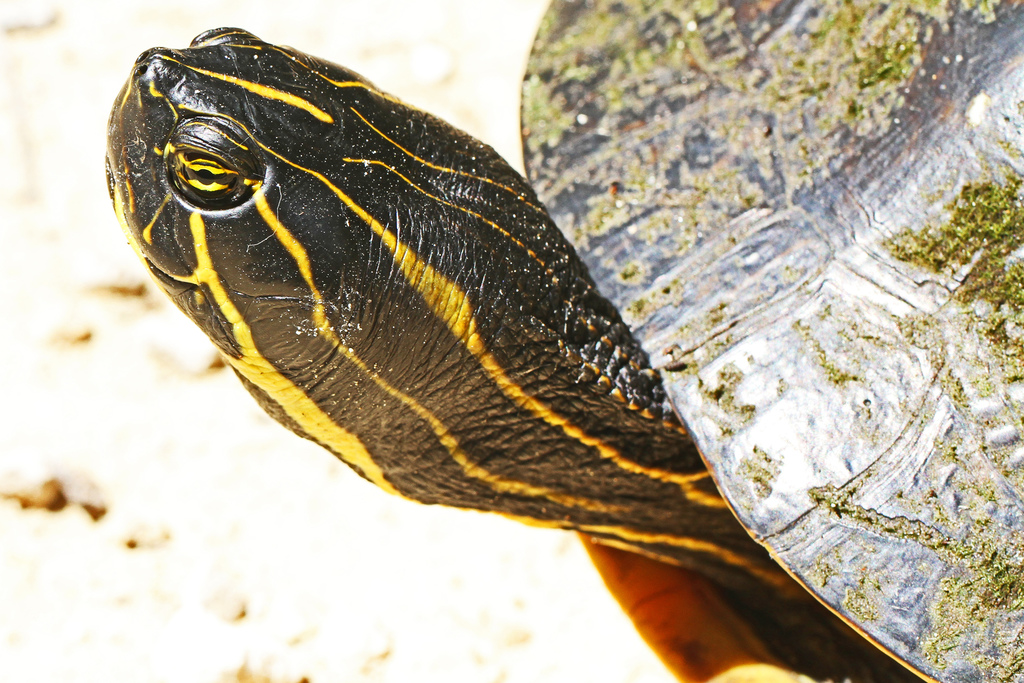
—observations
—countries
—peak records
Least ConcernConservation statusIUCN Red List categoriesLCNTVUENCREWEXLeast ConcernRed List categories, explained →
Diet & prey
- American Eelgrass
- Hydrilla
- Filamentous Algae
Predators
- American Alligator
- Raccoon
- River Otter
ThreatsBoat propeller strikes, water extraction, pollution, and nest predation
HabitatsSpring runs, clear limestone rivers, and spring-fed tributaries
Life span30–40 years
Size / weightNot available
Classification
- FamilyEmydidae
- SpeciesPseudemys concinna suwanniensis
Range data is not available yet.
Interaction riskLow
- Low
- Moderate
- High
- Very high
- Why interaction risk is low
- Can deliver a sharp defensive bite and scratch if handled; observe quietly from a boat or shore.
- What to notice
- Recognizable by a large, dark carapace with fine yellowish patterning and bold yellow striping across the head and limbs.
- Support conservation
- Maintain a respectful distance when boating or paddling, and never approach nesting females on sandy banks.
Responsible observation
- Viewing by Paddlecraft: Drift quietly downstream in a kayak or canoe to observe basking individuals before they slide into the water.
- Basking Identification: Scan fallen logs during midday sun, watching for their distinctive high-domed shells and striped necks.
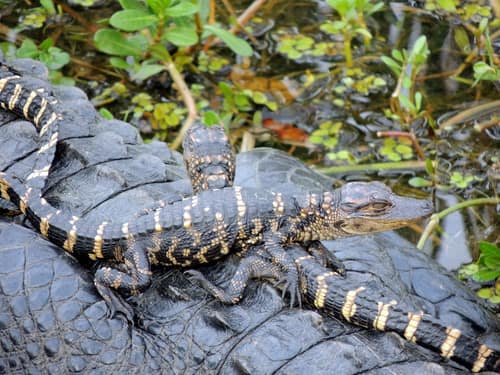
Predator no rights reserved, uploaded by Vijay Barve · cc0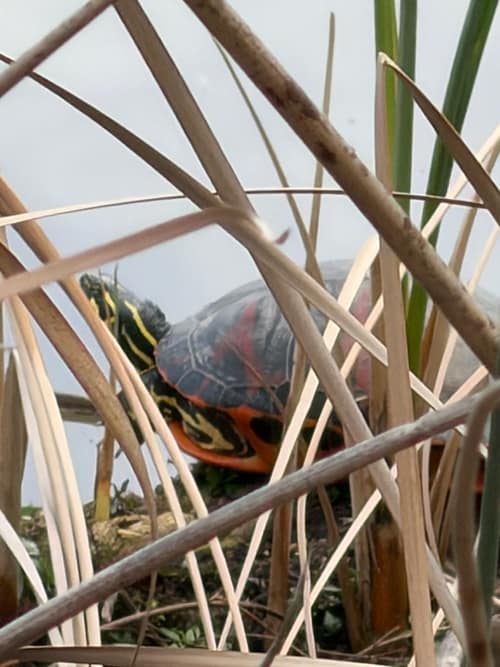
Frequent Companion (c) Irina Mitine, some rights reserved (CC BY) · cc-by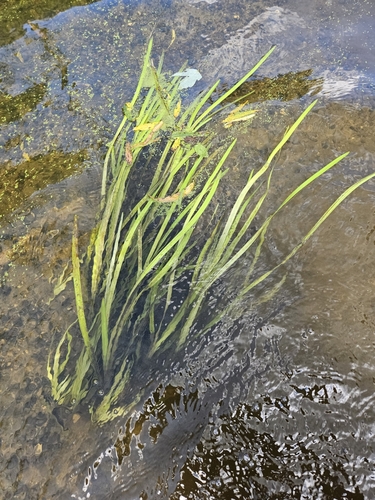
Food Plant (c) Chris Poling, some rights reserved (CC BY), uploaded by Chris Poling · cc-by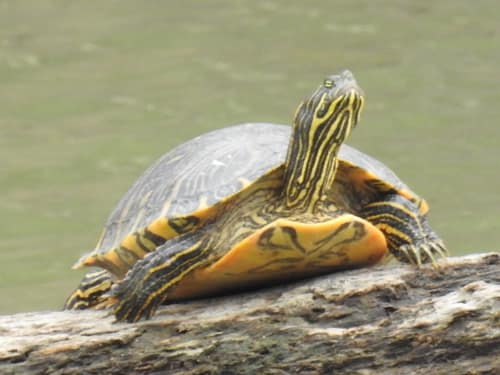
Close Relative (c) Sam Kieschnick, some rights reserved (CC BY), uploaded by Sam Kieschnick · cc-by
Help improve the field guideSomething wrong?
Checking your Fauna account…Report a name, category, or profile issue for review.