
Mammal · GBIF taxon 7519053
Black Capuchin
Sapajus nigritusAlso known as Black-horned Capuchin, Black Tufted Capuchin
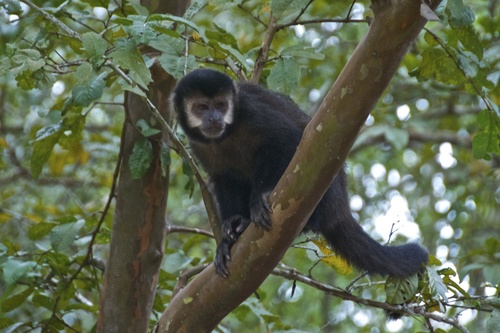
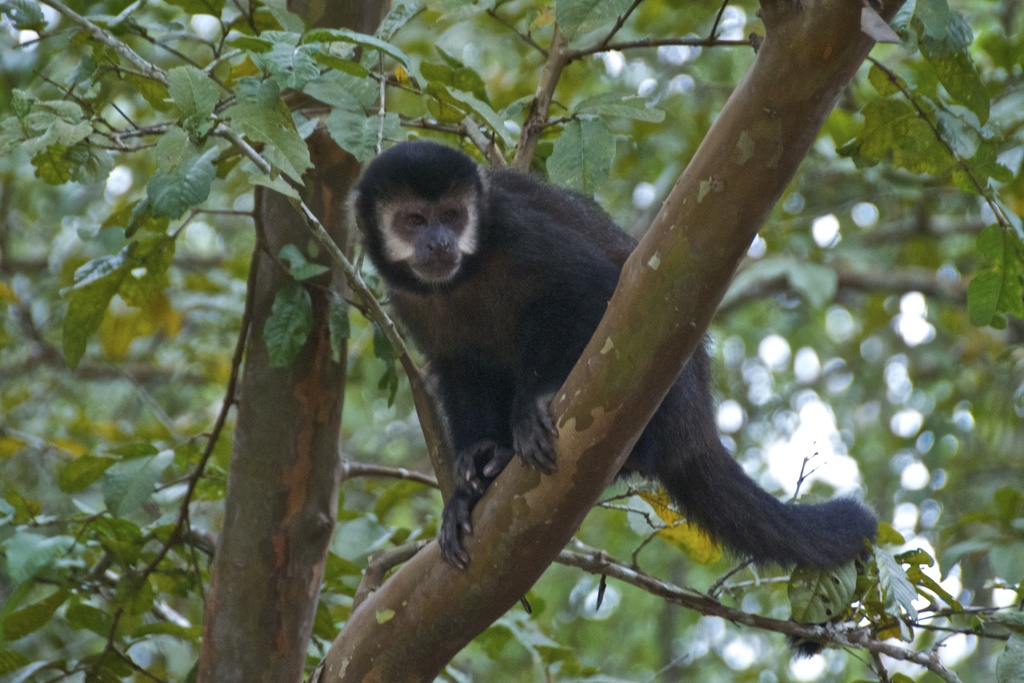
Black capuchins navigate the upper canopy of South America's Atlantic Forest in cohesive, social troops led by an alpha male. Renowned for their intelligence and dexterity, these primates use heavy stones and hard surfaces as tools to crack open tough palm nuts. Their distinct vocal repertoire includes specialized alarm calls that warn troop members about aerial or ground predators.
ArborealSocialPrimate
—observations
—countries
—peak records
Near ThreatenedConservation statusIUCN Red List categoriesLCNTVUENCREWEXNear ThreatenedRed List categories, explained →
Diet & prey
- Palm nuts
- Wild fruits
- Insects
Predators
- Harpy Eagle
- Jaguar
- Ocelot
ThreatsHabitat loss, forest fragmentation, illegal pet trade
HabitatsAtlantic Forest, subtropical rainforest, secondary woodland
Life span15–25 years in the wild
Size / weightNot available
Classification
- FamilyCebidae
- SpeciesSapajus nigritus
Range data is not available yet.
Interaction riskLow
- Low
- Moderate
- High
- Very high
- Why interaction risk is low
- Capable of delivering a painful bite if cornered or harassed; observe quietly from a distance.
- What to notice
- Look for a dark brown to black primate with prominent tufts of dark fur framing the forehead like horns.
- Support conservation
- Observe quietly in protected reserves and avoid disturbing feeding or nursery groups in the canopy.
Responsible observation
- Observer etiquette: Maintain a distance of at least ten meters to avoid causing stress to the troop.
- Avoid feeding: Never offer food, as habituation increases human conflict and disease transmission risks.
- Listen for calls: Locate troops by tuning into canopy branch rustling and high-pitched contact whistles.
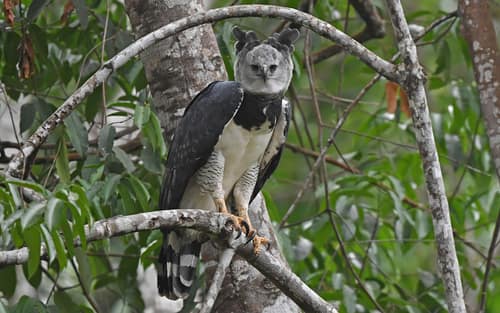
Predator (c) Christoph Moning, some rights reserved (CC BY), uploaded by Christoph Moning · cc-by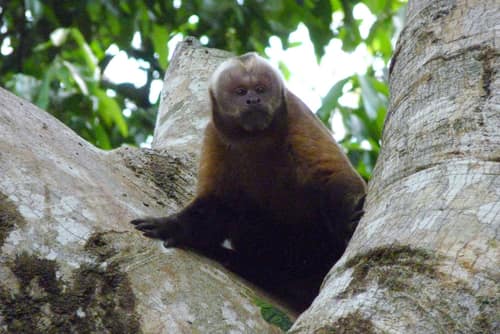
Close Relative (c) Carine06, some rights reserved (CC BY-SA) · cc-by-sa Image unavailable
Close Relative Close Relative
Help improve the field guideSomething wrong?
Checking your Fauna account…Report a name, category, or profile issue for review.