
Invertebrate · GBIF taxon 7470422
Hallucigenia sparsa
Hallucigenia sparsaHallucigenia sparsa navigated the muddy Cambrian sea floor on seven pairs of slender, claw-tipped walking limbs while bearing pairs of rigid dorsal spines for defense against early predators. A elongated neck led to a tiny head equipped with simple visual organs and a circular mouth lined with tiny pharyngeal teeth, which helped it ingest seabed detritus or graze on soft sponges. Early paleontological interpretations famously reconstructed the creature upside down and backward, using its defensive spines as walking stilts until exceptional soft-tissue preservation revealed its true anatomy as a stem-group onychophoran.
FossilCambrian
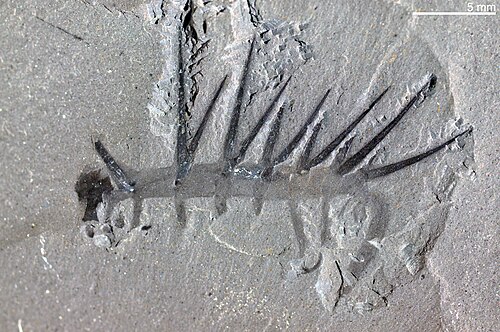
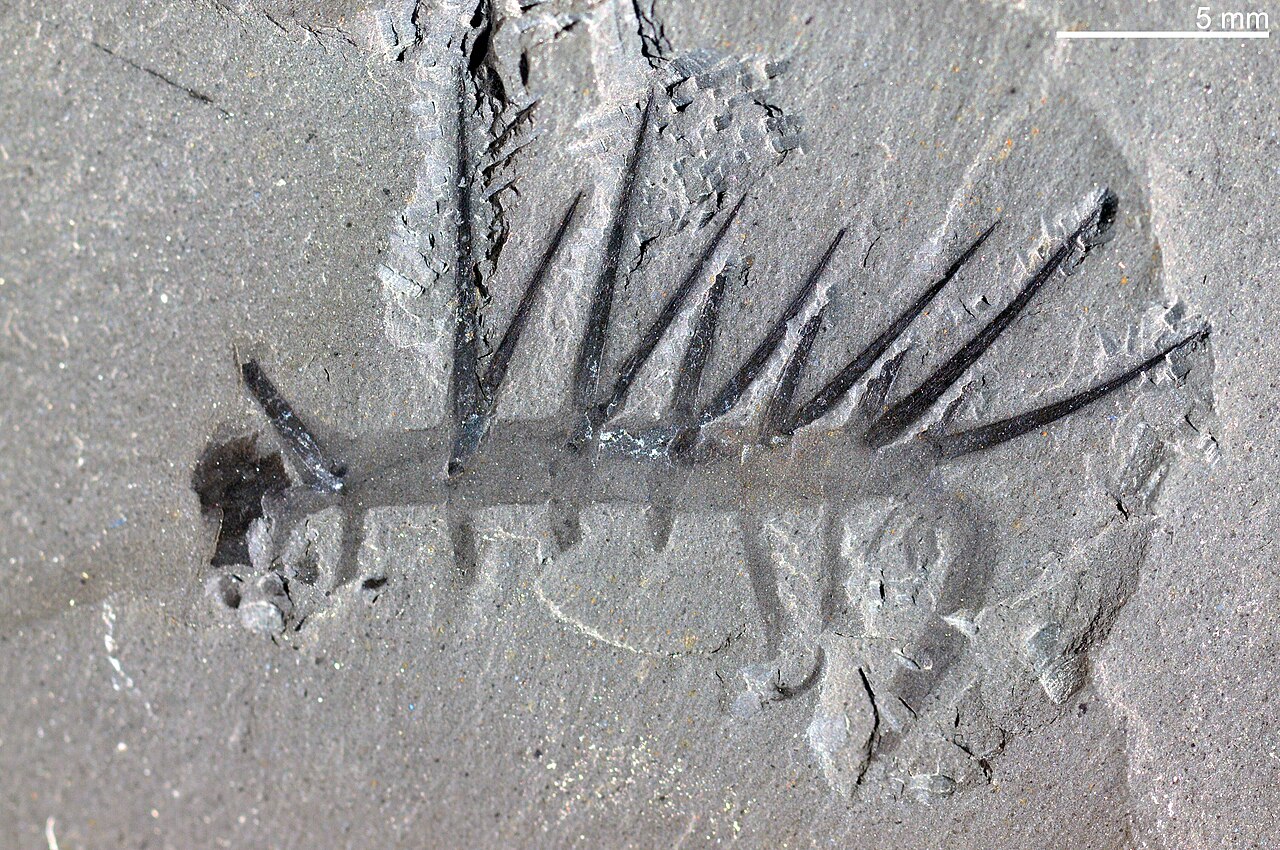
Licensed referenceHan Zeng / CC0 · cc0
—observations
—countries
—peak records
ExtinctConservation statusIUCN Red List categoriesLCNTVUENCREWEXExtinctRed List categories, explained →
Diet & prey
- Organic detritus
- Microbial mats
- Primitive sponges
Predators
- Anomalocaris canadensis
- Opabinia regalis
- Cambrian predatory arthropods
ThreatsCambrian marine ecological shifts and mass extinction events
HabitatsCambrian marine sea floors and muddy offshore basins
Life spanUnknown (estimated months to several years)
Size / weightNot available
Classification
- FamilyHallucigeniidae
- GenusHallucigenia
- SpeciesHallucigenia sparsa
Range data is not available yet.
Interaction riskLow
- Low
- Moderate
- High
- Very high
- Why interaction risk is low
- Extinct fossil species; safe to study and observe in museum collections.
Responsible observation
- Museum Viewing: Examine high-contrast fossil slabs under low-angle directional light to detect faint claw and spine outlines.
- Field Etiquette: Observe paleontological sites strictly within marked heritage trails, leaving fossil-bearing shales untouched.
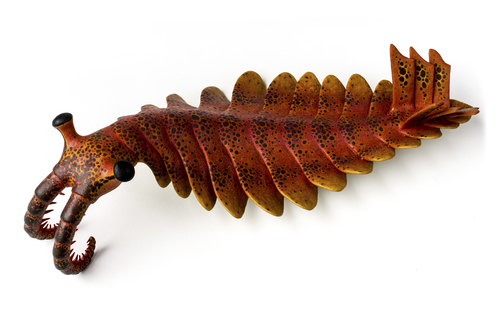
Predator (c) anonymous, some rights reserved (CC BY-SA) · cc-by-sa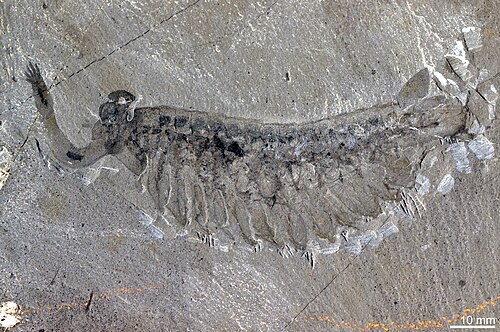
Neighbor Han Zeng / CC0 · cc0 Image unavailable
Close Relative Modern Relative
Help improve the field guideSomething wrong?
Checking your Fauna account…Report a name, category, or profile issue for review.