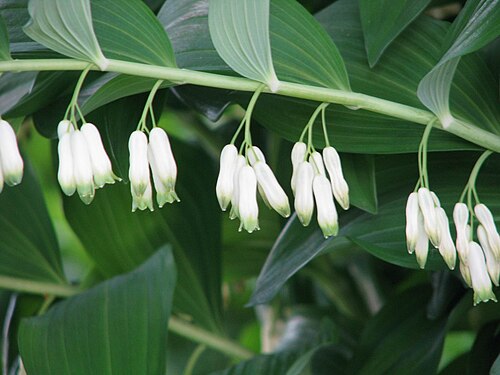
Also known as Lily of the Valley, May Bells, Mary's Tears, Our Lady's Tears
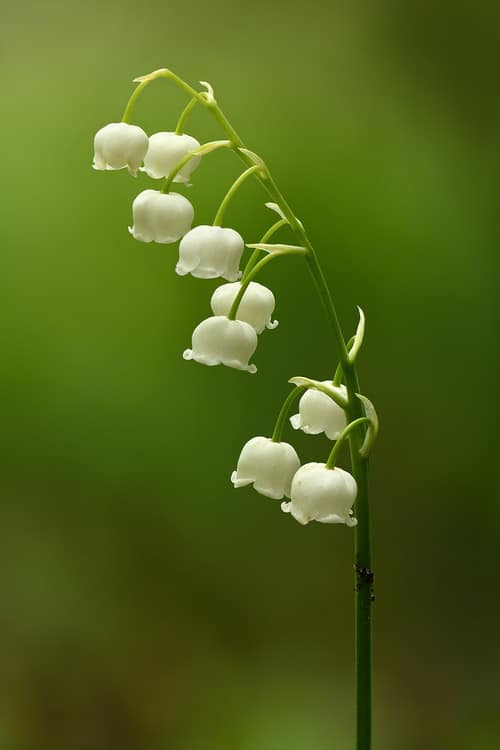
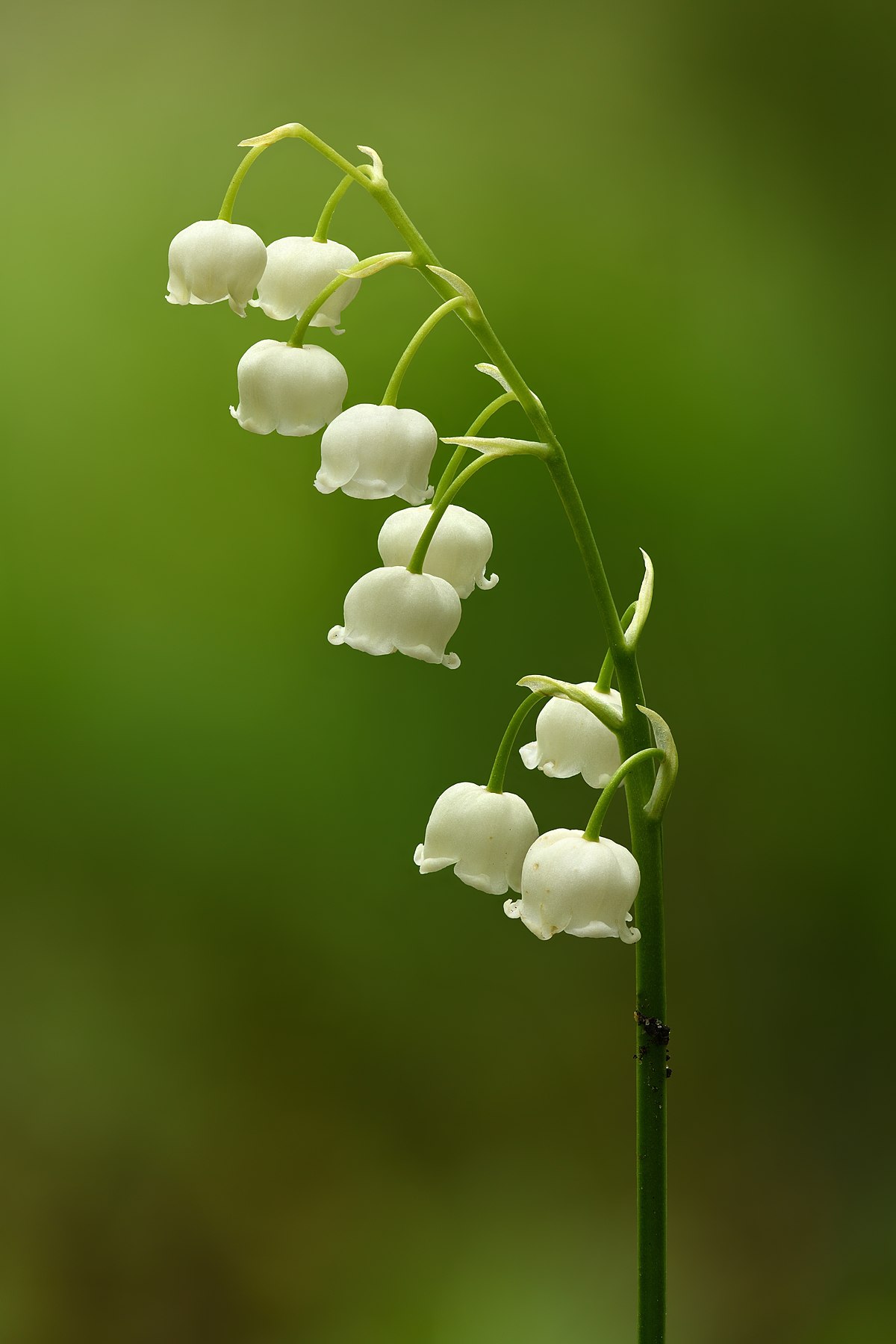
European lily of the valley forms vast carpet-like colonies across shaded forest floors, spreading rapidly through an interconnected underground network of rhizomes. In mid-spring, each plant produces a pair of broad basal leaves alongside a nodding flower stalk crowned with fragrant, pearly white, bell-shaped blossoms. Despite its delicate appearance and sweet perfume, every part of the plant harbors potent cardiac toxins that defend it against most mammalian herbivores.
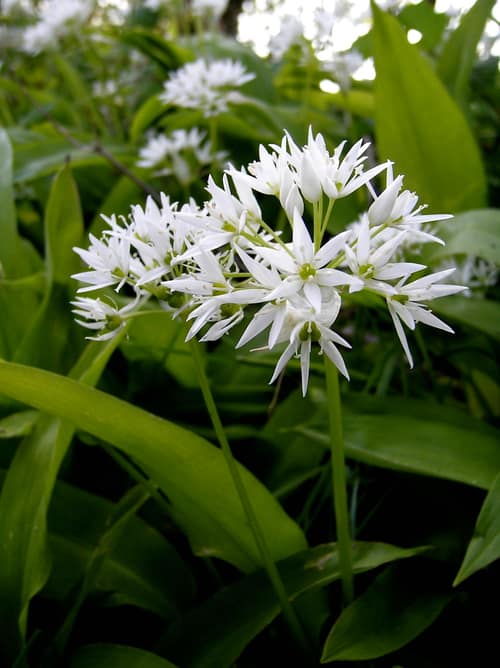
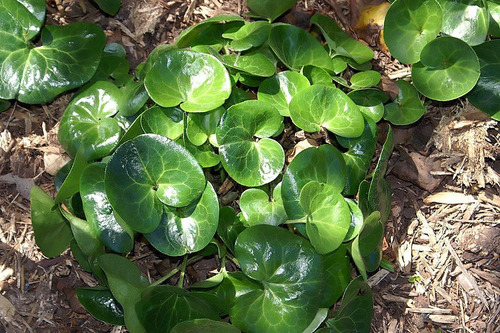
All parts contain deadly cardiac glycosides, and wild foliage easily confuses with edible plants; never ingest.
Why it is dangerous
Contains over thirty cardiac glycosides, including convallatoxin, which cause severe nausea, abdominal pain, dangerous cardiac arrhythmias, and heart failure if consumed.
How to recognize a risky encounter
Look for paired, glossy, oval upright leaves and a leafless central stalk bearing nodding, bell-shaped white flowers.
What to do
Wear gloves when gardening, wash hands after touching bruised foliage, and keep away from young children and pets.
Responsible observation
Enjoy the scent: Appreciate the famous sweet perfume directly from the blooms without plucking the stems.
Spring search: Look for blooming bell sprays from late April through May in cool, moist forest shade.
Crush test: Check for a strong garlic odor to avoid mistaking this toxic foliage for wild garlic.