
Plant
Fuchsia coccinea
Fuchsia coccineaAlso known as Scarlet Fuchsia, Brazilian Fuchsia
Scarlet fuchsia anchors itself in the misty understory of southeastern Brazil's montane Atlantic Forest, producing graceful pendulous blossoms with reflexed crimson sepals and rich violet petals. These hanging nectar reservoirs evolved in close tandem with native hummingbirds, whose long beaks probe the tubular corollas in midair. Introduced to European botanical gardens in the late eighteenth century, this sprawling woody shrub became one of the key horticultural ancestors of modern cultivated fuchsias.
FloweringMontaneHummingbird-Pollinated


—observations
—countries
—peak records
Not EvaluatedConservation statusIUCN Red List categoriesLCNTVUENCREWEXNot Evaluated — not placed on the risk ladderRed List categories, explained →
Diet & preyPhotoautotrophic
Predators
- Aphids
- Spider mites
- Fuchsia gall mites
ThreatsDeforestation, habitat fragmentation, and climate warming
HabitatsMontane rainforests, cloud forest margins, and humid ravines
Life span15–30 years
Classification
- FamilyOnagraceae
- SpeciesFuchsia coccinea
Range data is not available yet.
Interaction riskLow
- Low
- Moderate
- High
- Very high
- Why interaction risk is low
- Wild berries have toxic look-alikes; never eat based on app identification alone.
Responsible observation
- Spotting Flowers: Search humid, partially shaded ravines and forest edges where slender branches droop under heavy blossoms.
- Watching Pollinators: Remain stationary near blooming shrubs in the early morning to catch visiting hummingbirds feeding.

Pollinator (c) Dario Sanches, some rights reserved (CC BY-SA) · cc-by-sa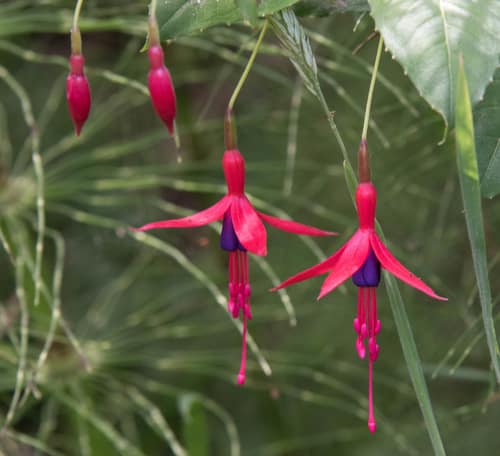
Close Relative (c) Don Loarie, some rights reserved (CC BY), uploaded by Don Loarie · cc-by
Close Relative (c) Edson Luis Fabro Gasperin, some rights reserved (CC BY-SA), uploaded by Edson Luis Fabro Gasperin · cc-by-sa
Help improve the field guideSomething wrong?
Checking your Fauna account…Report a name, category, or profile issue for review.