Also known as Bush Clematis, New Zealand Clematis, White Clematis, Bridal Veil
Puawhānanga ascends high into the forest canopy, anchoring itself with twisting leaf petioles to drape entire treetops in sheets of starry white blooms each spring. This dioecious woody vine produces male and female blossoms on separate plants, followed on pollinated female vines by swirling clusters of silky, wind-dispersed seed heads. In Māori tradition, its brilliant springtime appearance heralds the arrival of the warmer seasons and signals prime coastal fishing times.
Not EvaluatedConservation statusIUCN Red List categoriesLCNTVUENCREWEXNot Evaluated — not placed on the risk ladderRed List categories, explained →
Key facts
Diet & preyAutotrophic (photosynthetic)
Predators
Common brushtail possum
ThreatsBrowsing by introduced possums, forest clearance, and competition from invasive exotic vines
HabitatsLowland and montane native forests, forest margins, and regenerating bush
Life span20–50+ years
Classification
FamilyRanunculaceae
SpeciesClematis paniculata
Range & activity
Range data is not available yet.
Safe observation
Interaction riskHigh
Low
Moderate
High
Very high
Why interaction risk is high
Sap contains irritating protoanemonin; avoid ingestion and wash skin promptly if exposed to crushed foliage.
Why it is dangerous
Plant tissues contain ranunculin, which converts upon crushing to protoanemonin, causing skin blistering, intense mouth irritation, and gastrointestinal inflammation.
How to recognize a risky encounter
Look for a vigorous woody vine with three leathery leaflets and large, multi-petaled white flowers high in forest canopies.
What to do
Wear protective gloves when pruning wild vines and wash exposed skin immediately with soap and cool water.
Responsible observation
Canopy Scanning: Look upward along bush edges from September to November when massed white blooms blanket tall crowns.
Flower Sexing: Use binoculars to distinguish male flowers with large yellow anthers from female flowers with dense carpel clusters.
Garden Cultivation: Keep the climbing foliage in full sun while maintaining shaded, cool, well-mulched roots to mirror native forest soils.

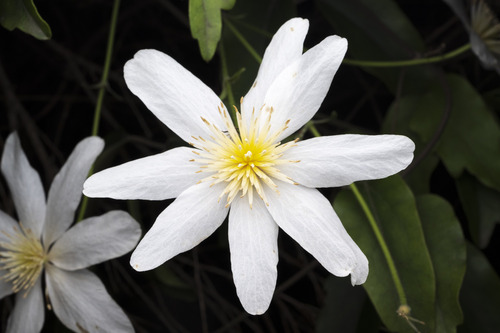
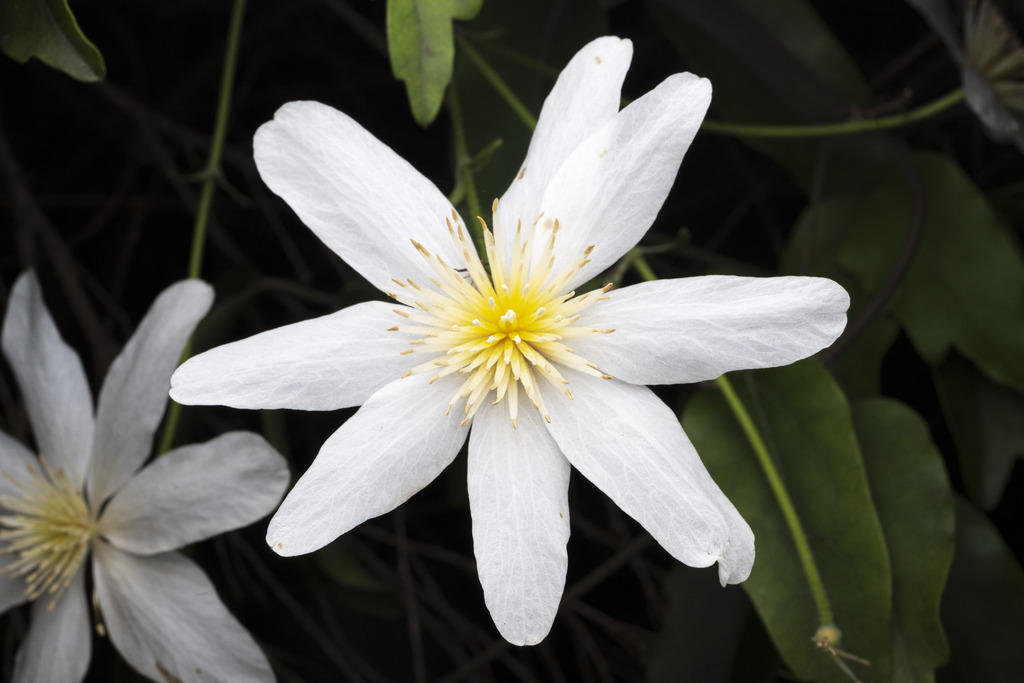
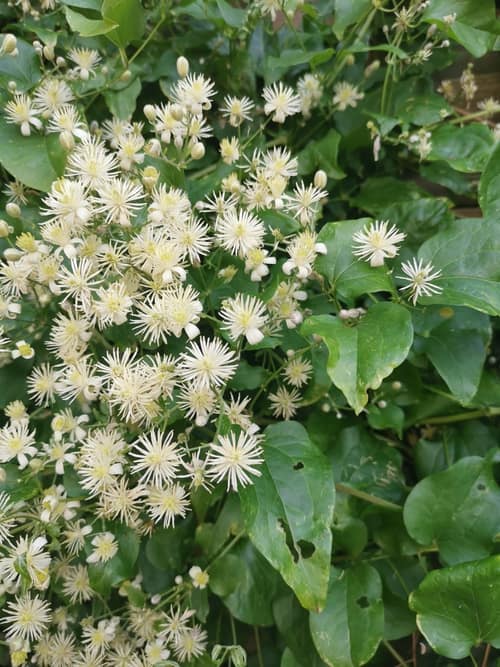

 Image unavailable