Also known as Broad-leaved Spindle, Broadleaf Spindle Tree, Broad-leaved Spindle Tree
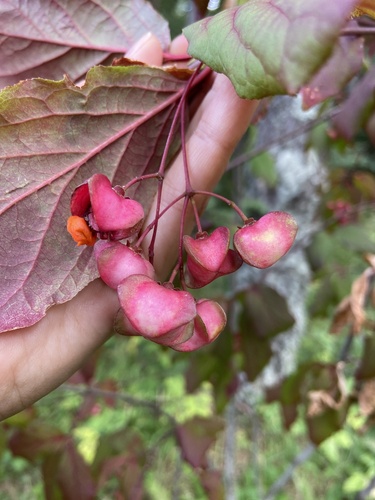
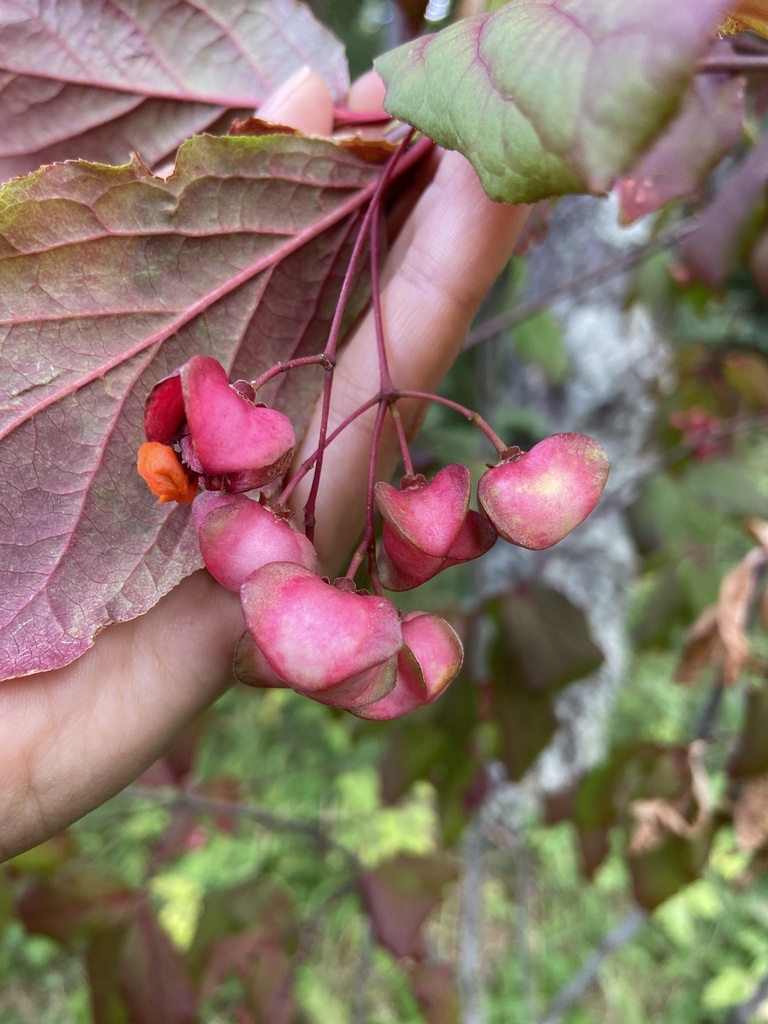
Large-leaved Spindle lights up shaded forest understories each autumn with brilliant carmine foliage and distinctive dangling pink seed capsules. Four-lobed fruit pockets split open in late summer to reveal glossy orange-coated seeds that hang on delicate threads to attract seed-dispersing birds. Native to mountain slopes and rocky ravines across southern Europe and the Middle East, it relies on deep canopy shade to shield its broad leaves from scorching sunlight.
ThreatsDeforestation, habitat fragmentation, and extreme drought
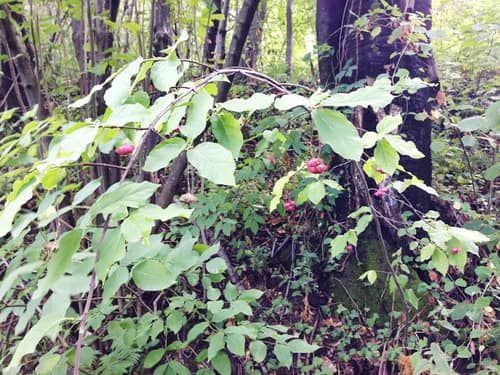
HabitatsShaded woodlands, mountain shrublands, rocky slopes, and inland cliffs
Life span30–50 years
Classification
FamilyCelastraceae
SpeciesEuonymus latifolius
Range & activity
Range data is not available yet.
Safe observation
Interaction riskHigh
Low
Moderate
High
Very high
Why interaction risk is high
All parts are toxic if ingested; wild berries have toxic look-alikes and should never be eaten.
Why it is dangerous
Contains cardiac glycosides and toxic alkaloids in all tissues, especially the colorful fruit and seeds, causing severe gastrointestinal and cardiac distress if ingested.
How to recognize a risky encounter
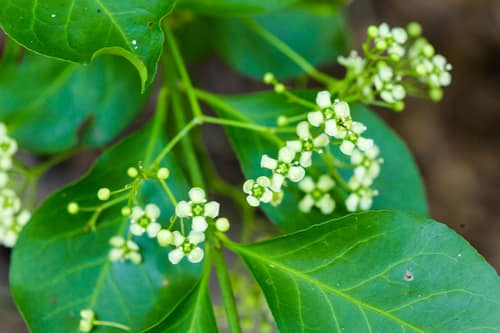
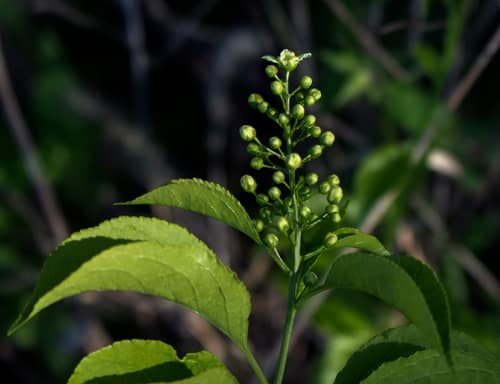
Look for broad oval leaves, greenish summer flowers, and four-lobed deep pink fruit capsules splitting to reveal orange seeds.
What to do
Do not ingest any part of the plant, and keep children and domestic pets away from fallen seeds.
Responsible observation
Observing Fruit: Look for pink split capsules with hanging orange arils along shaded forest paths in early autumn.
Garden Care: Position in deep or partial shade with moist, well-draining soil to avoid leaf scorch.
Safe Pruning: Wear gloves when handling cut branches to prevent direct contact with toxic sap.