
Mammal
Domestic Water Buffalo
Bubalus bubalisAlso known as Asian Water Buffalo, Asiatic Water Buffalo, River Buffalo, Swamp Buffalo
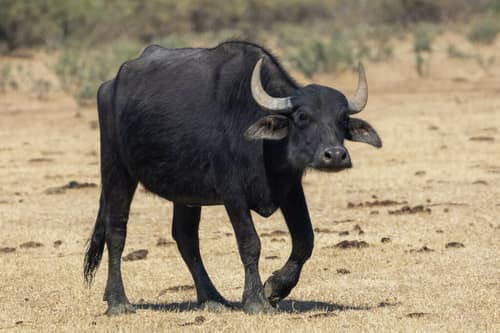
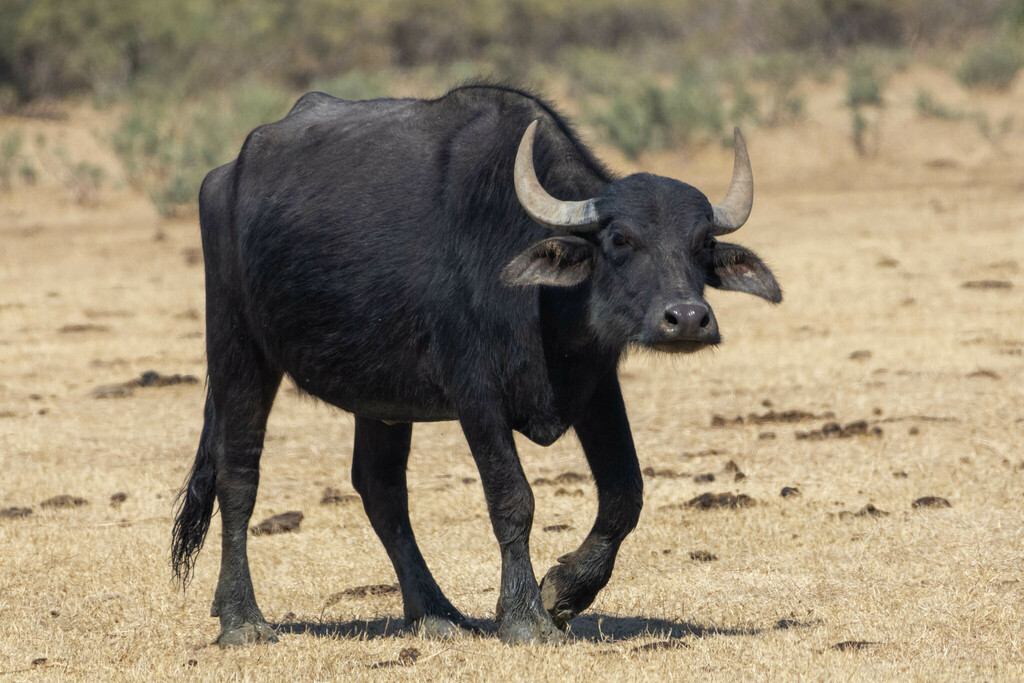
Domestic water buffaloes rely on mud wallows and slow rivers to stay cool, as their thick dark skin possesses fewer sweat glands than cattle. Herds maintain tight social bonds and cooperative defense strategies, with cows actively protecting calves from potential predators. Essential to Asian agriculture for millennia, these resilient bovines produce high-fat milk while thriving on coarse wetland vegetation.
DomesticatedLarge MammalSemi-Aquatic
—observations
—countries
—peak records
Not EvaluatedConservation statusIUCN Red List categoriesLCNTVUENCREWEXNot Evaluated — not placed on the risk ladderRed List categories, explained →
Diet & preyHerbivorous (grasses, aquatic plants, reeds, crop residues)
Predators
- Tiger
- Mugger Crocodile
- Dhole
ThreatsDisease outbreaks, loss of wetland habitat, genetic swamping of wild stock
HabitatsWetlands, river valleys, marshes, flooded pastures, farmland
Life span20–25 years
Classification
- OrderArtiodactyla
- FamilyBovidae
- GenusBubalus
- SpeciesBubalus bubalis
Range data is not available yet.
Interaction riskHigh
- Low
- Moderate
- High
- Very high
- Why interaction risk is high
- Maintain a safe distance around large bulls or cows with calves to avoid trampling or charging.
- Why it is dangerous
- Massive body size and sharp horns can cause serious impact trauma or goring if startled or defensive.
- How to recognize a risky encounter
- Recognize by swept-back crescent horns, sparse grey-black hair, and heavy barrel-chested body near water.
- What to do
- View from farm fences or parked vehicles, avoiding direct approaches on foot in open pastures.
Responsible observation
- Observe from Distance: Give wide clearance around large bulls or mothers with young calves.
- Respect Wallows: Avoid approaching muddy pools where resting herds submerge to regulate temperature.
- Watch Body Language: Watch for raised heads, flared nostrils, or pinned ears signaling distress.
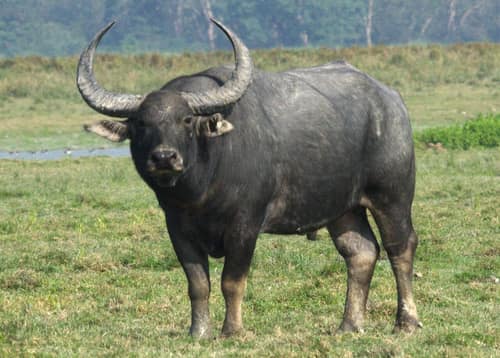
Ancestor Dr. Raju Kasambe / CC BY-SA 4.0 · cc-by-sa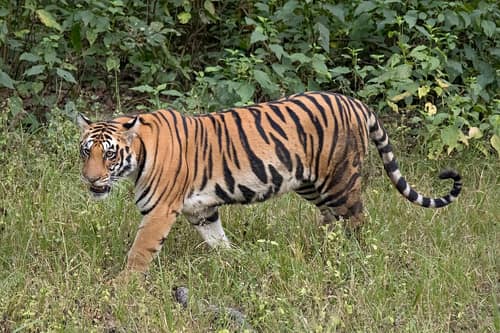
Predator Charles J. Sharp / CC BY-SA 4.0 · cc-by-sa Image unavailable
Close Relative 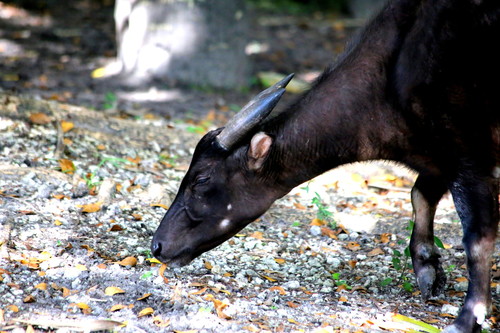
Close Relative (c) cuatrok77, some rights reserved (CC BY-SA) · cc-by-sa
Help improve the field guideSomething wrong?
Checking your Fauna account…Report a name, category, or profile issue for review.