
Invertebrate · GBIF taxon 7422457
West African Giant Snail
Archachatina marginataAlso known as Banana Rasp Snail, Giant West African Snail
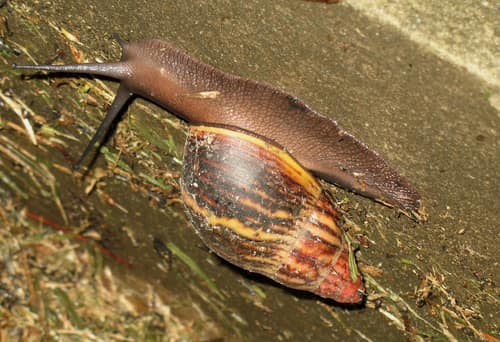
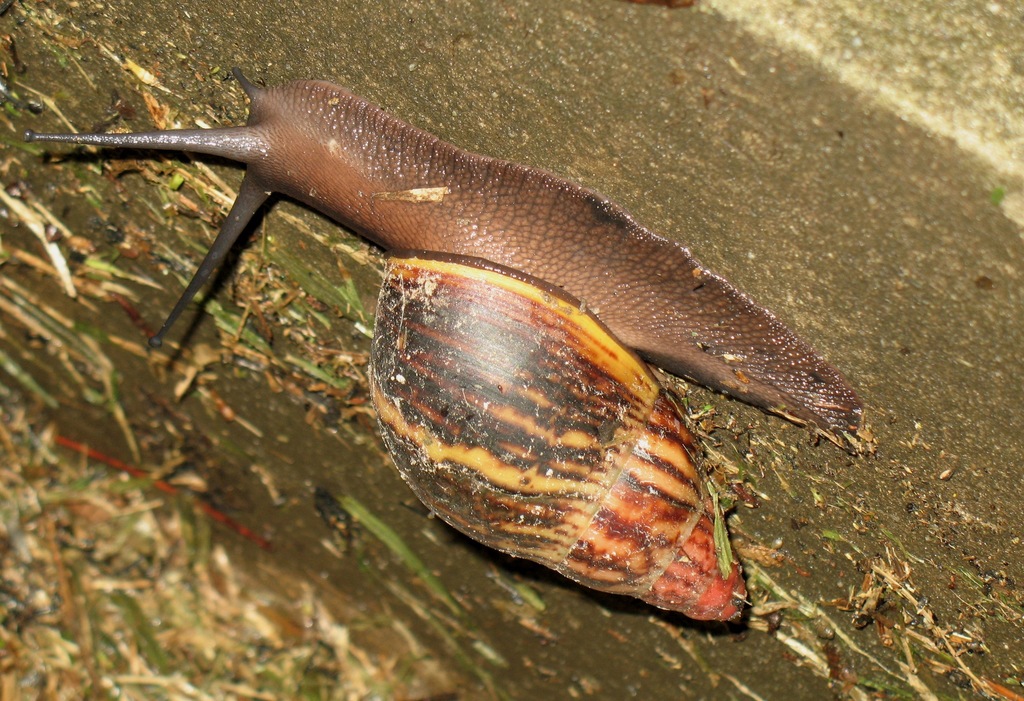
West African giant snails roam tropical forest floors under the cover of night, rasping away at decaying plant matter, fallen fruit, and calcium-rich bark. Their heavy shells feature a characteristically rounded tip, setting them apart from other giant African gastropods. Hermaphroditic by nature, individuals lay batches of thick-shelled eggs in moist soil that hatch into fully formed miniature snails.
NocturnalHerbivoreTropical
 1 / 5
1 / 5—observations
—countries
—peak records
Not EvaluatedConservation statusIUCN Red List categoriesLCNTVUENCREWEXNot Evaluated — not placed on the risk ladderRed List categories, explained →
Diet & prey
- Fallen fruits
- Decaying leaves
- Fungi
Predators
- Small mammals
- Birds
- Reptiles
ThreatsHabitat loss, overharvesting for bushmeat, illegal pet trade
HabitatsTropical rainforests, agricultural areas, gardens, humid woodlands
Life span5–10 years
Size / weightNot available
Classification
- FamilyAchatinidae
- SpeciesArchachatina marginata
Range data is not available yet.
Interaction riskModerate
- Low
- Moderate
- High
- Very high
- Why interaction risk is moderate
- Can host parasites like rat lungworm; wash hands after handling and avoid touching wild individuals.
- Why it is dangerous
- Carries parasitic rat lungworm larvae, which cause severe eosinophilic meningitis if ingested or introduced through mucosal contact.
- How to recognize a risky encounter
- Recognized by a heavy, brownish shell with yellowish stripes and a uniquely rounded apex.
- What to do
- Avoid touching with bare skin, and never bring wild snails near food or face.
Responsible observation
- Evening Search: Look along humid forest paths after rain when snails emerge to feed.
- Hand Hygiene: Wash hands thoroughly with soap if direct contact occurs.
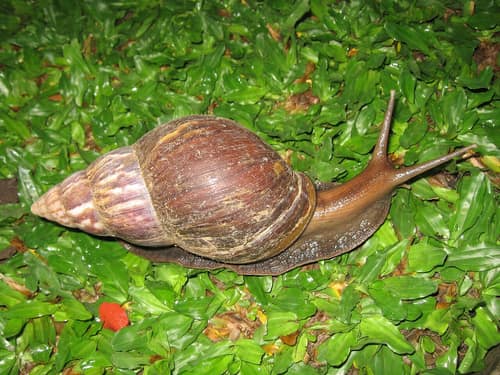
Close Relative Alexander R. Jenner / CC BY-SA 3.0 · cc-by-sa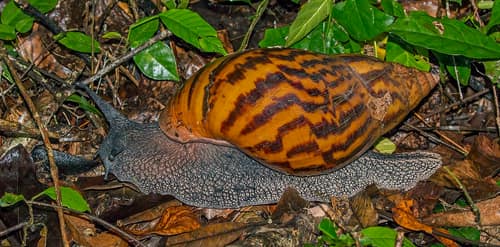
Close Relative Charles J. Sharp / CC BY-SA 4.0 · cc-by-sa Image unavailable
Close Relative
Help improve the field guideSomething wrong?
Checking your Fauna account…Report a name, category, or profile issue for review.