
Fungus
Dryad's Saddle
Polyporus squamosusAlso known as Pheasant's Back
Dryad's Saddle forms broad fan-shaped brackets patterned with dark scales across a yellow-brown cap. Large angular pores cover the underside, while the fungus causes white rot in dead or weakened hardwood.
bracket fungushardwood decomposerscaly cap
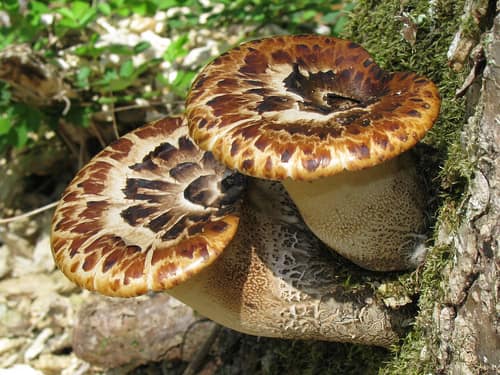
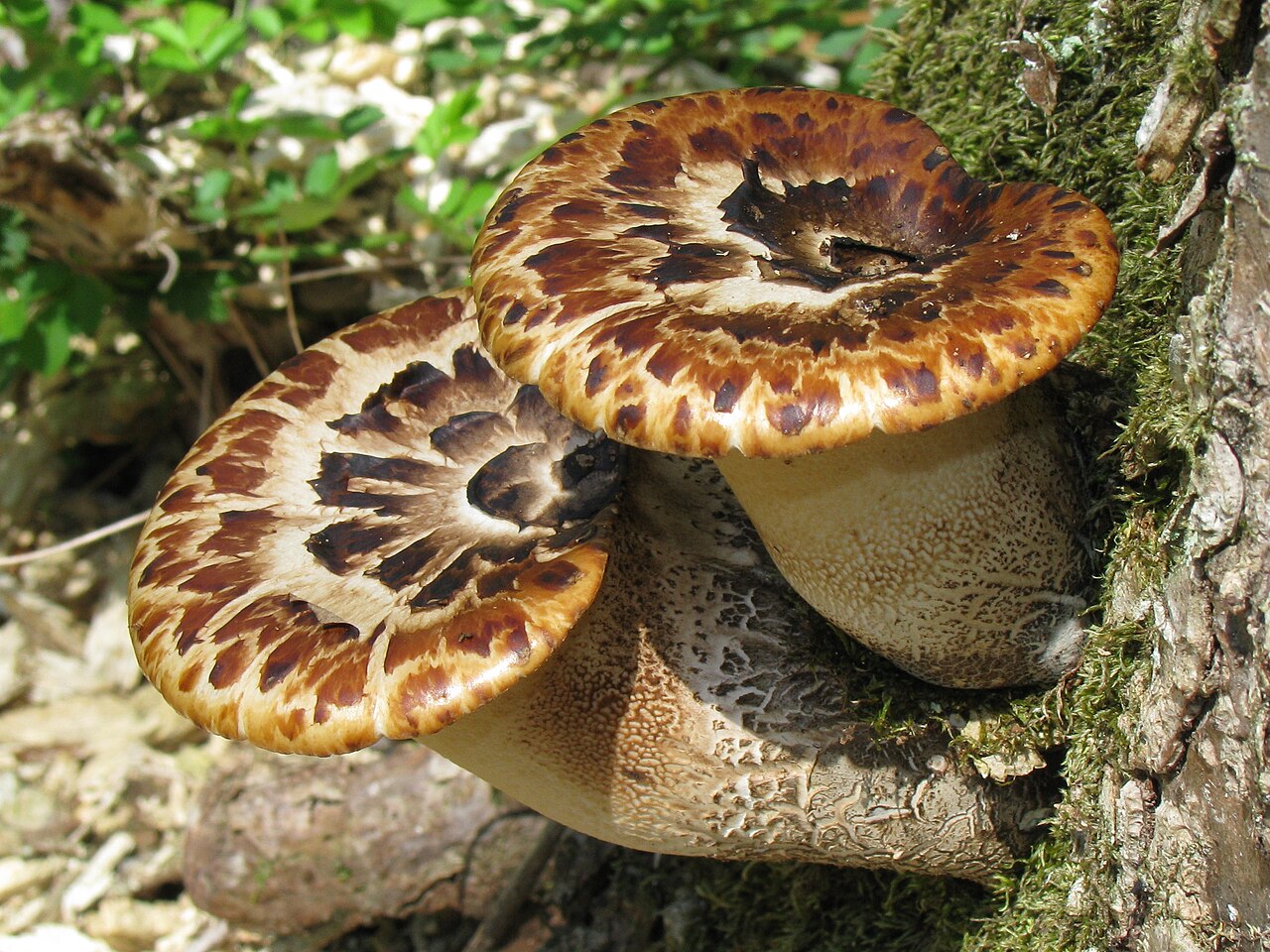
—observations
—countries
—peak records
Not EvaluatedConservation statusIUCN Red List categoriesLCNTVUENCREWEXNot Evaluated — not placed on the risk ladderRed List categories, explained →
Diet & preyDecomposes lignin and cellulose in dead or weakened hardwood, producing white rot
Predators
- fungus beetles
- slugs
- small mammals
ThreatsDeadwood removal, tree felling, drought, soil compaction, and loss of mature hardwood habitat
HabitatsDeciduous woodland, parks, riverbanks, stumps, fallen logs, and wounds on living hardwood trees
Life spanBrackets last weeks to months; wood-inhabiting mycelium may persist for years
Classification
- FamilyPolyporaceae
- SpeciesPolyporus squamosus
Range data is not available yet.
Interaction riskLow
- Low
- Moderate
- High
- Very high
- Why interaction risk is low
- Scaly bracket look-alikes can be misidentified; do not eat or ingest any wild fungus, and leave the hardwood bracket attached.
Responsible observation
- Cap: Look for dark featherlike scales arranged across a broad fan.
- Underside: Observe large angular pores without cutting or removing the bracket.
Help improve the field guideSomething wrong?
Checking your Fauna account…Report a name, category, or profile issue for review.