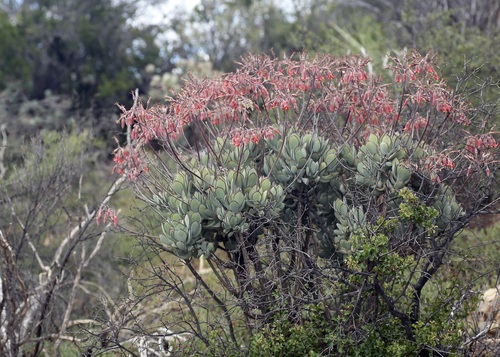
Also known as Bear's Paw, Kitten Paws, Woolly Cotyledon
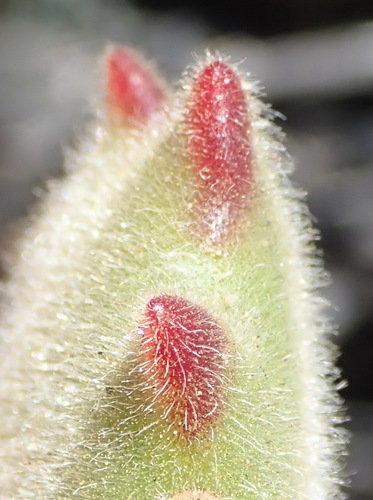
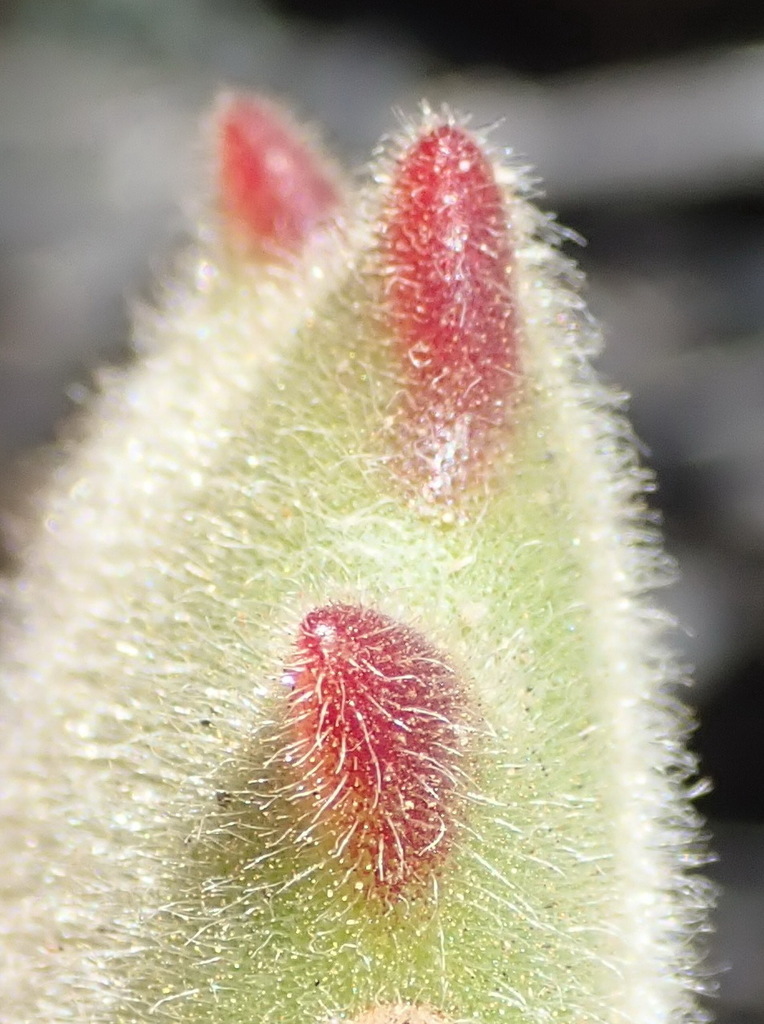
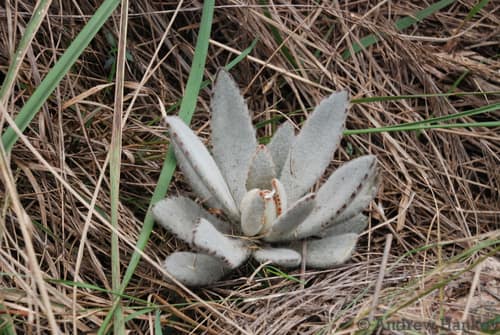
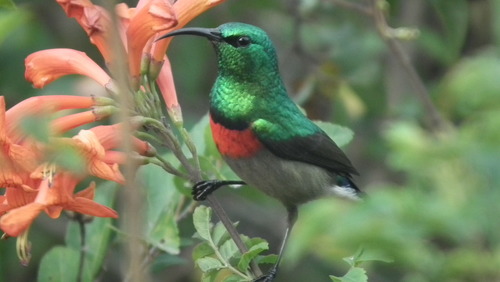
Bear-paws is a compact succulent shrub prized for its thick, paddle-shaped leaves coated in soft velvety hairs and edged with dark reddish-brown teeth resembling animal claws. Clusters of nodding, bell-shaped orange or reddish flowers emerge on slender stalks above the foliage in spring, attracting sunbirds and opportunistic insect pollinators. Adapted to arid cliff crevices and rocky quartzite slopes, the plant relies on its dense leaf fur to trap ambient humidity and deflect harsh sunlight.
Not EvaluatedConservation statusIUCN Red List categoriesLCNTVUENCREWEXNot Evaluated — not placed on the risk ladderRed List categories, explained →
Key facts
Diet & prey
Photosynthesis (Autotroph)
Predators
Goats
Tortoises
Scale Insects
ThreatsIllegal succulent poaching, localized overgrazing, and prolonged drought
HabitatsArid rocky slopes, quartzite hillsides, and cliff crevices
Life span10–25 years
Classification
OrderSaxifragales
FamilyCrassulaceae
GenusCotyledon
SpeciesCotyledon tomentosa
Range & activity
Range data is not available yet.
Safe observation
Interaction riskHigh
Low
Moderate
High
Very high
Why interaction risk is high
Tissues contain cardiac glycosides toxic to pets and livestock; keep out of reach of animals.
Why it is dangerous
Contains bufadienolide cardiac glycosides that interfere with heart muscle regulation and cause severe neuromuscular toxicity, known in southern Africa as krimpsiekte, particularly in pets and livestock.
How to recognize a risky encounter
Look for fleshy, wedge-shaped leaves densely covered in white velvety hairs with distinct brown or reddish tooth-like serrations along the apex.
What to do
Keep container plants away from grazing pets and wash hands after pruning or propagating stem cuttings.
Responsible observation
Watering: Allow soil to dry completely between waterings to prevent root rot.
Lighting: Provide bright filtered sunlight to maintain leaf fuzz and tooth pigmentation.
Handling: Touch leaves gently because mature foliage detaches easily when jostled.