
Plant · GBIF taxon 7319350
Climbing Fern
Polybotrya osmundaceaClimbing Fern anchors to forest host trees as a hemiepiphyte, scaling trunks high into the canopy using creeping, densely scaly rhizomes. Its sterile fronds spread wide to capture filtered sunlight, while fertile fronds are dramatically skeletonized and dedicated entirely to spore production. Found across Neotropical rainforests, it plays a vital role in creating complex mid-story microhabitats for canopy fauna.
ClimberHemiepiphyticRainforest
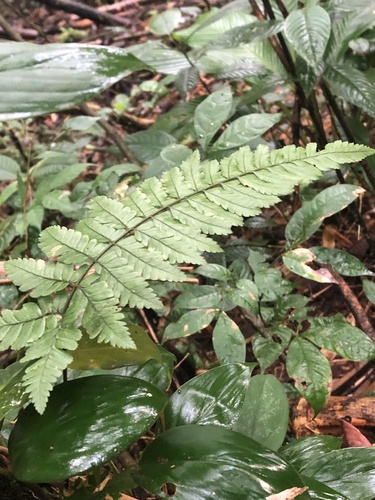
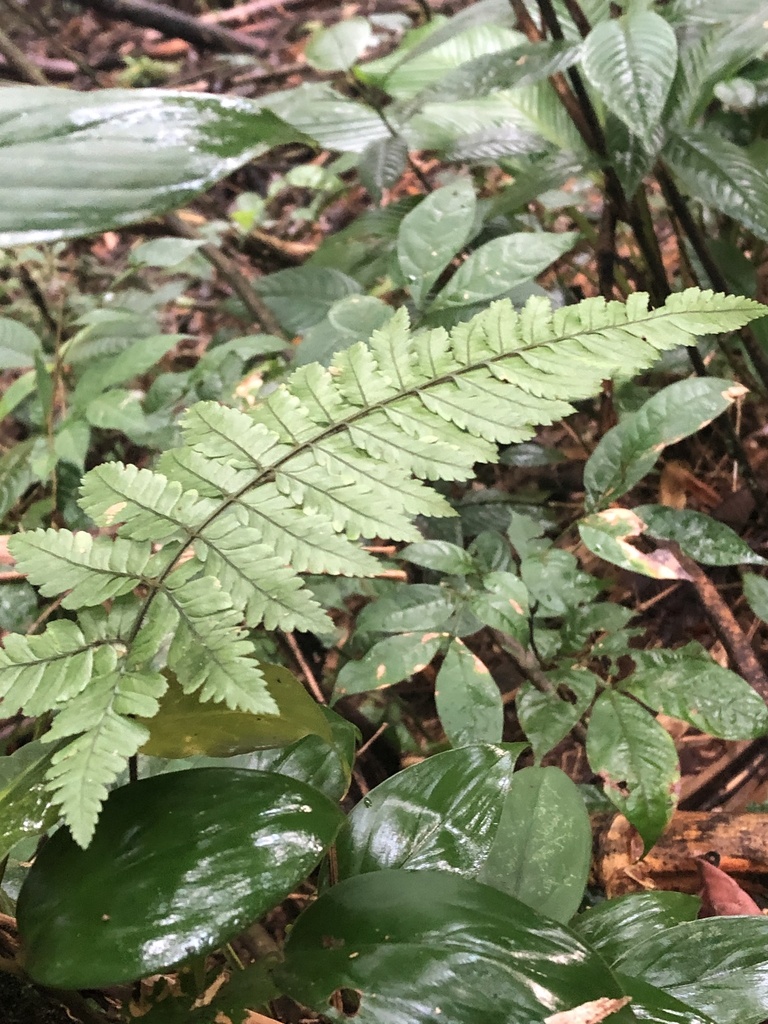
Licensed reference(c) Jared Shorma, some rights reserved (CC BY) · cc-by
—observations
—countries
—peak records
Not EvaluatedConservation statusIUCN Red List categoriesLCNTVUENCREWEXNot Evaluated — not placed on the risk ladderRed List categories, explained →
Diet & prey
- Autotrophic (Photosynthesis)
Predators
- Herbivorous insects
- Snails
- Slugs
ThreatsDeforestation, habitat fragmentation, forest canopy degradation
HabitatsNeotropical wet forests, montane rainforests, lowland tropical forests
Life spanPerennial (decades)
Size / weightNot available
Classification
- FamilyDryopteridaceae
- SpeciesPolybotrya osmundacea
Range data is not available yet.
Interaction riskLow
- Low
- Moderate
- High
- Very high
- Why interaction risk is low
- Safe to observe at a normal distance.
Responsible observation
- Spotting: Scan mature rainforest tree trunks in humid understories for scaly creeping stems.
- Examination: Compare the broad green sterile fronds with the narrow spore-bearing fertile fronds.
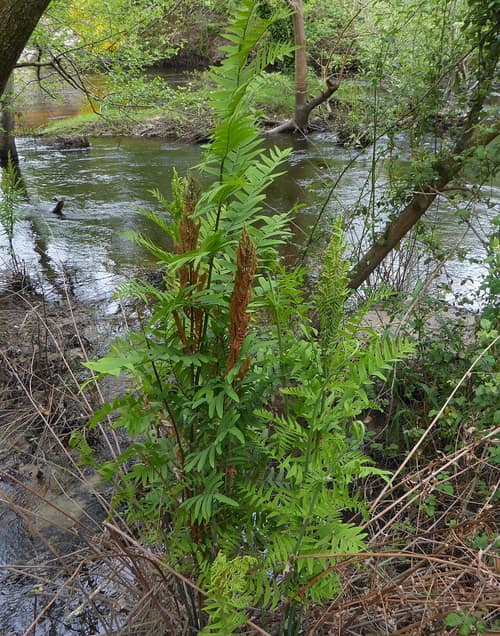
Morphological Lookalike E Wusk / CC BY-SA 4.0 · cc-by-sa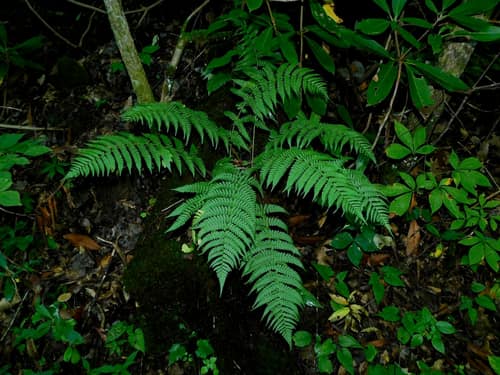
Close Relative (c) Michael J. Papay, some rights reserved (CC BY), uploaded by Michael J. Papay · cc-by
Help improve the field guideSomething wrong?
Checking your Fauna account…Report a name, category, or profile issue for review.