
Plant · GBIF taxon 7280494
Golden Barrel Cactus
Echinocactus grusoniiAlso known as Golden Ball, Mother-in-Law's Cushion, Mother-in-Law's Chair
Golden barrel cacti grow as pale green, deeply ribbed globes that can reach over a meter in height, crowned with a dense mat of golden-yellow wool and armed with formidable, curved yellow spines. In the wild, these striking plants cling to volcanic rock slopes, absorbing intense sunlight and storing precious water in their thick, fleshy stems. While endangered in their native Mexican habitat due to poaching and habitat loss, they have become one of the most popular cultivated cacti in gardens worldwide.
SucculentDesert
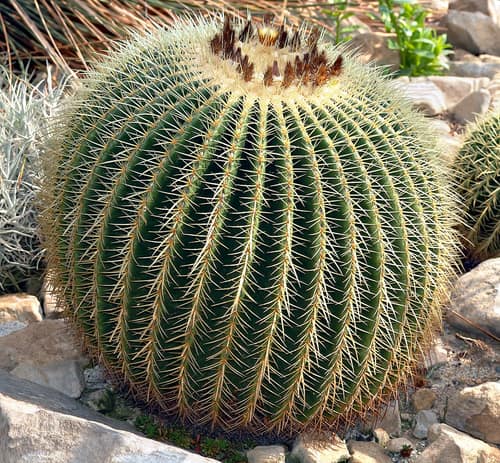
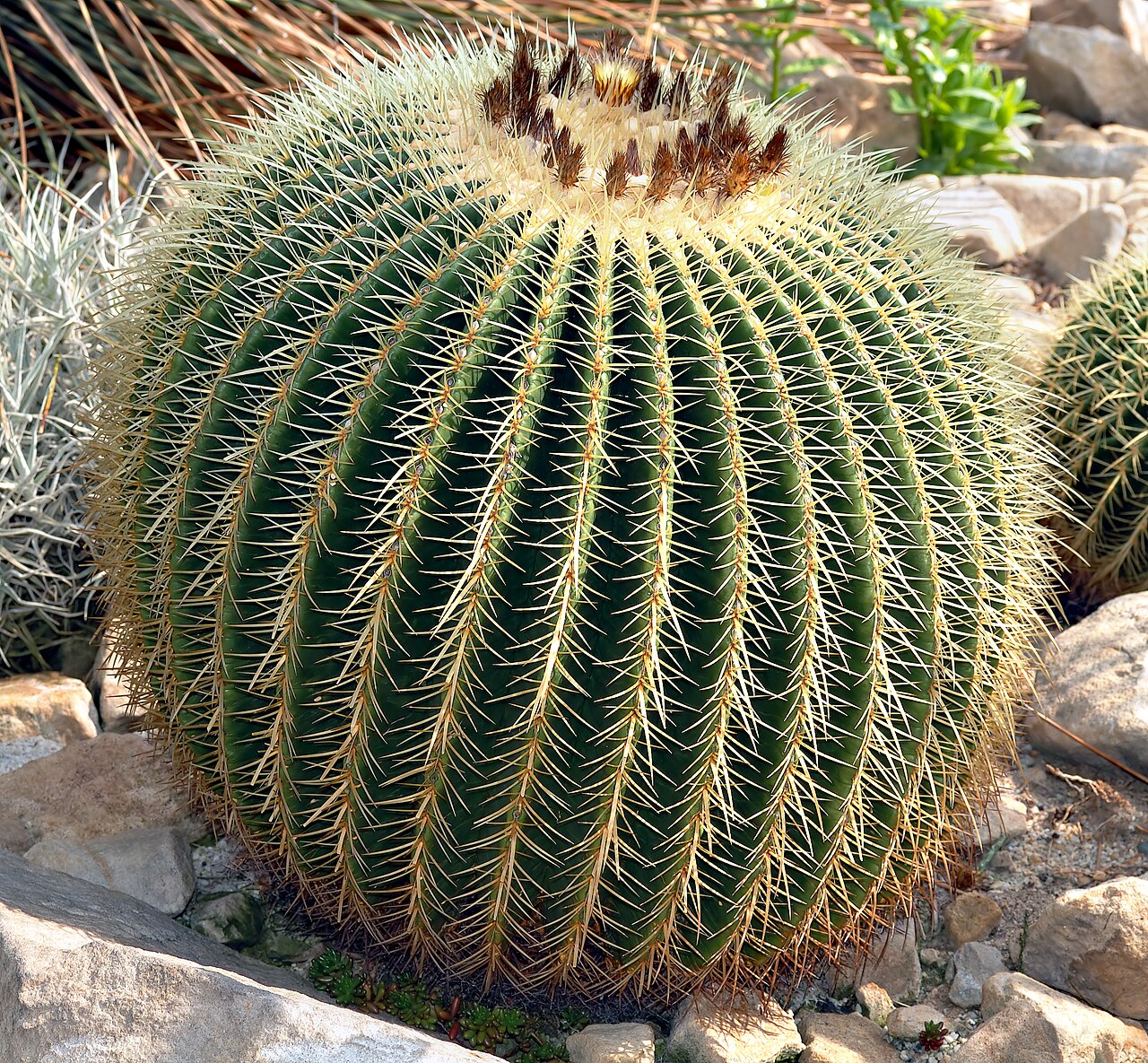
Licensed referenceAndré Karwath aka Aka / CC BY-SA 2.5 · cc-by-sa
—observations
—countries
—peak records
EndangeredConservation statusIUCN Red List categoriesLCNTVUENCREWEXEndangeredRed List categories, explained →
Diet & prey
- Photosynthesis (Autotrophic)
Predators
- Rodents
- Feral goats
- Mealybugs
ThreatsIllegal poaching for the horticultural trade, habitat flooding from dam construction, and land clearing
HabitatsVolcanic slopes, semi-desert scrublands, and rocky cliffs
Life span30 to 100 years
Size / weightNot available
Classification
- OrderCaryophyllales
- FamilyCactaceae
- GenusKroenleinia
- SpeciesEchinocactus grusonii
Range data is not available yet.
Interaction riskLow
- Low
- Moderate
- High
- Very high
- Why interaction risk is low
- Safe to observe at a normal distance.
- What to notice
- Look for large, perfectly spherical green globes with bright golden-yellow spines and a woolly yellow crown.
- Support conservation
- Never harvest wild cacti or disturb their fragile rocky habitat; stick to designated trails when viewing them in nature.
Responsible observation
- Observe the crown: Look closely at the top of mature plants to spot the yellow flowers that bloom in summer.
- Keep your distance: Avoid touching the sharp, rigid spines, which can easily puncture skin and cause painful wounds.
- Support conservation: Only purchase specimens from certified nurseries that propagate plants from seed rather than wild-harvesting.
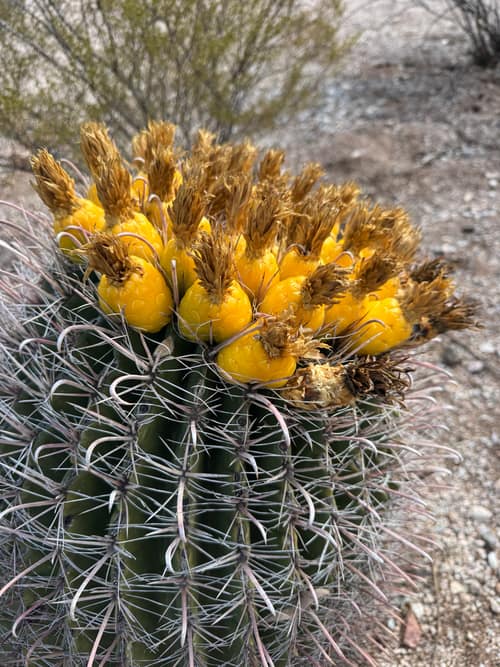
Look-Alike (c) CK2AZ, some rights reserved (CC BY), uploaded by CK2AZ · cc-by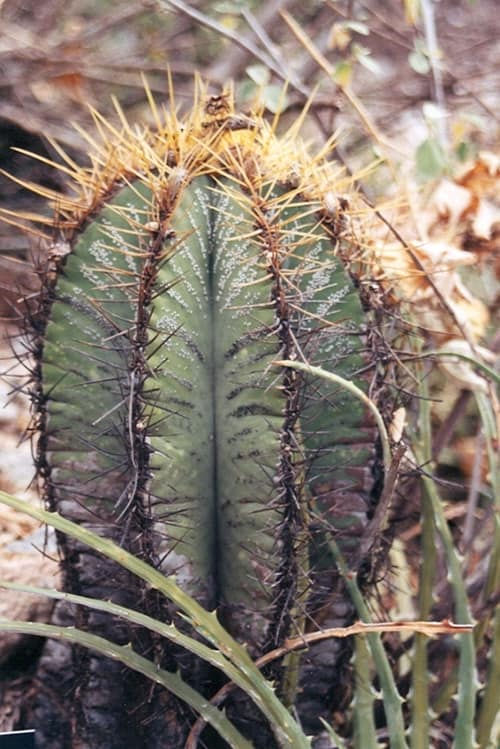
Co-Occurring Species (c) Juan Cruzado Cortés, some rights reserved (CC BY-SA), uploaded by Juan Cruzado Cortés · cc-by-sa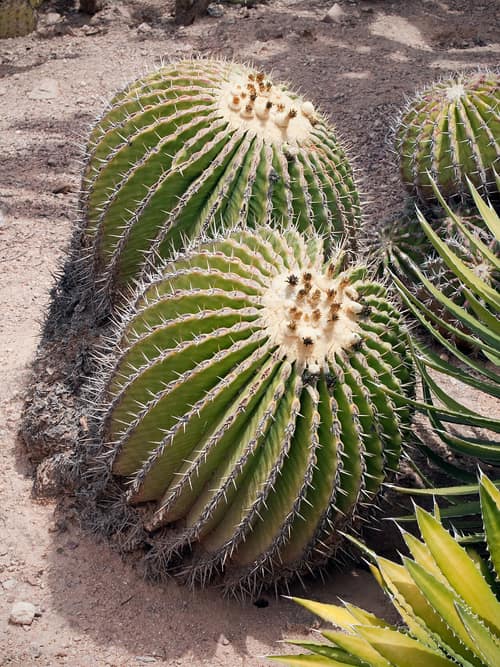
Close Relative Kaldari / CC0 · cc0
Help improve the field guideSomething wrong?
Checking your Fauna account…Report a name, category, or profile issue for review.