
Reptile · GBIF taxon 7190560
Pacific Gopher Snake
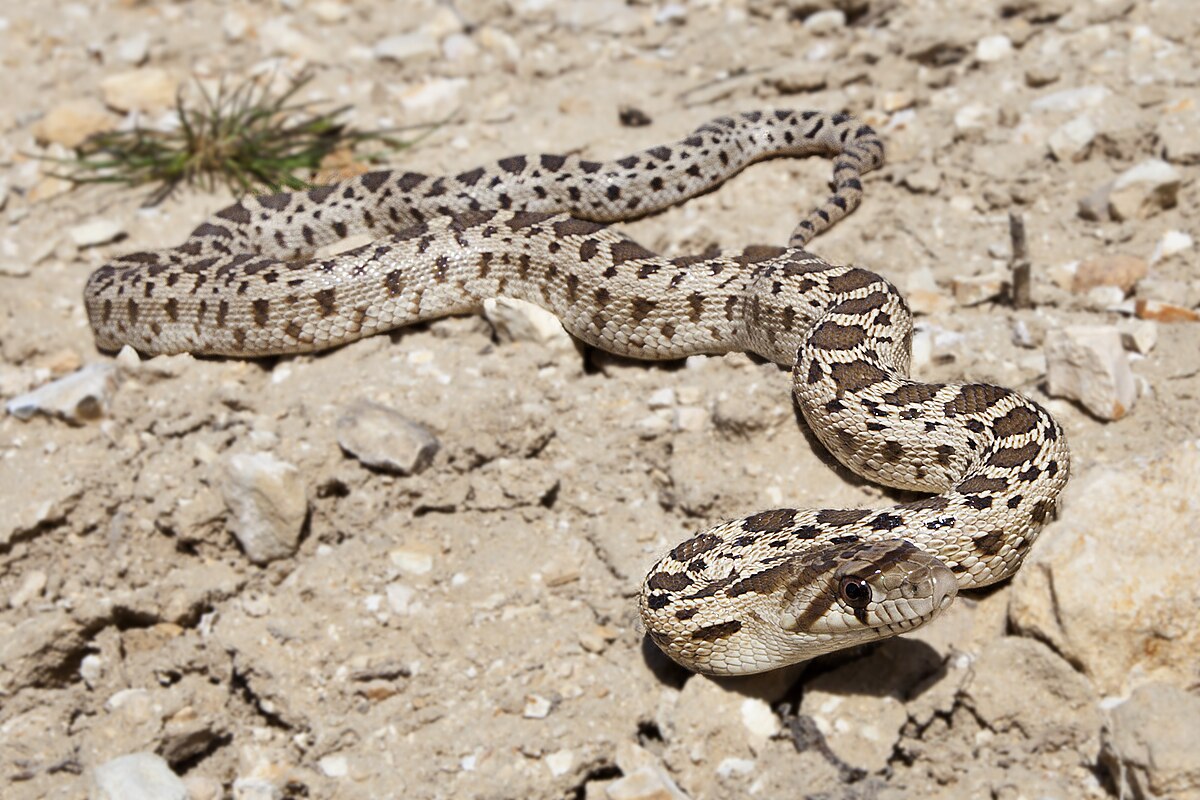
Pituophis catenifer cateniferThe Pacific Gopher Snake is a large nonvenomous snake with brown or reddish blotches on a tan ground color. When alarmed it may hiss, flatten its head, and vibrate its tail, a defensive display often mistaken for a rattlesnake.
Nonvenomous SnakeBurrow HunterDefensive Mimicry
Licensed referenceBill Bouton / CC BY-SA 2.0 · cc-by-sa
—observations
—countries
—peak records
Least ConcernConservation statusIUCN Red List categoriesLCNTVUENCREWEXLeast ConcernRed List categories, explained →
Diet & prey
- Pocket gophers
- Mice
- Bird eggs
Predators
- Hawks
- Owls
- Coyotes
ThreatsRoad mortality, habitat conversion, persecution from misidentification, and entanglement
HabitatsGrassland, scrub, woodland, farms, dunes, open forest, and suburban edges
Life spanOften 10 to 15 years, with longer lives possible
Size / weightNot available
Classification
- FamilyColubridae
- SpeciesPituophis catenifer catenifer
Range data is not available yet.
Interaction riskLow
- Low
- Moderate
- High
- Very high
- Why interaction risk is low
- A cornered snake may strike and bite defensively despite lacking venom.
- Why it is dangerous
- A frightened or restrained gopher snake can deliver a painful defensive bite and may repeatedly strike.
- How to recognize a risky encounter
- Its tan body has dark dorsal blotches, and defensive hissing or tail vibration can resemble rattlesnake behavior.
- What to do
- Do not corner, touch, or capture it; step back slowly and allow the snake to leave.
Responsible observation
- Distance: Back away and leave a clear escape route.
- Identify: Look for a narrow head and a blotched body tapering to the tail.
- Listen: Loud hissing and tail vibration mean the snake needs more space.
Help improve the field guideSomething wrong?
Checking your Fauna account…Report a name, category, or profile issue for review.