
Plant · GBIF taxon 7126767
Staghorn Fern
Platycerium bifurcatumAlso known as Elkhorn Fern, Common Staghorn Fern
Staghorn ferns grow as spectacular epiphytes attached to tree trunks and branches in moist Australian forests. They produce two distinct types of fronds: basal shield fronds that anchor the plant and capture falling leaf litter, and antler-like fertile fronds that bear spore patches on their undersides. In cultivation and the wild, these long-lived plants create massive suspended colonies that support tiny micro-ecosystems.
EpiphyticEvergreenTropical Plant
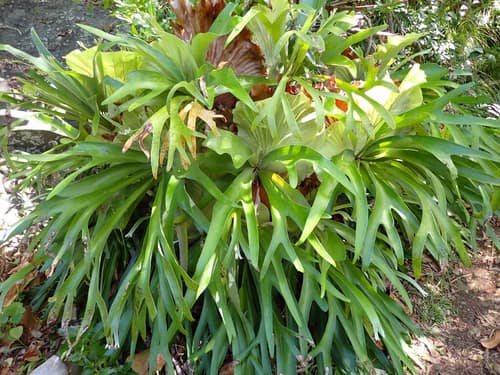
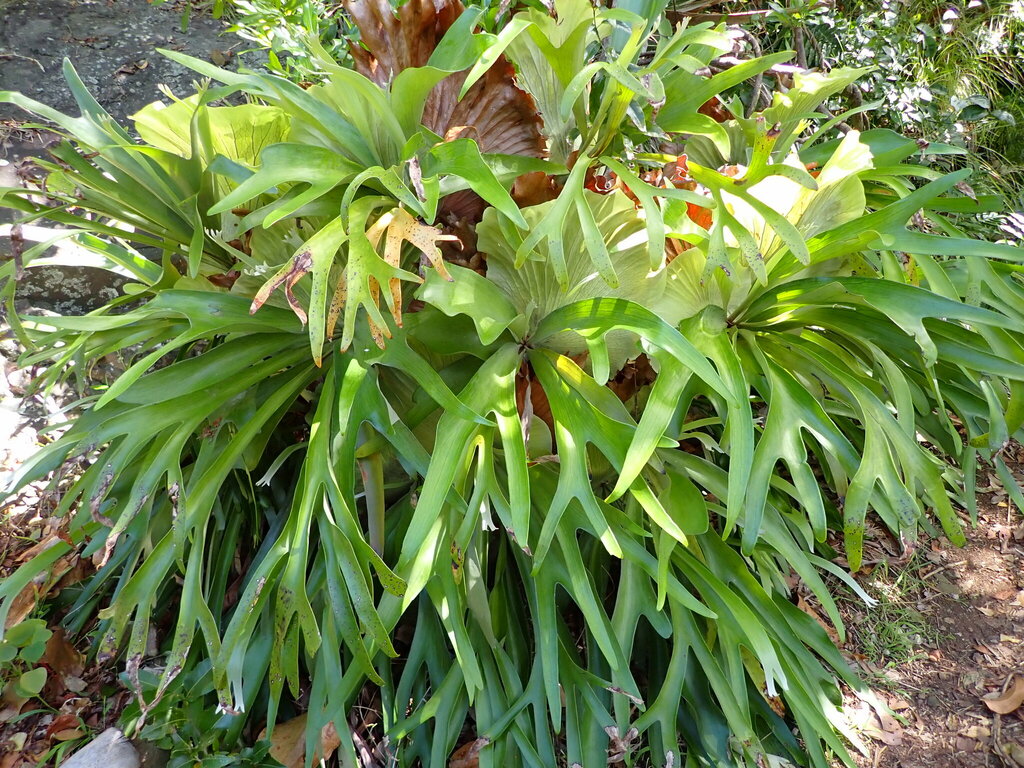
—observations
—countries
—peak records
Not EvaluatedConservation statusIUCN Red List categoriesLCNTVUENCREWEXNot Evaluated — not placed on the risk ladderRed List categories, explained →
Diet & prey
- Autotrophic (absorbs water and nutrients from trapped organic debris)
Predators
- Scale insects
- Mealybugs
- Snails
ThreatsHabitat loss, illegal harvesting from wild forests, severe extended droughts
HabitatsRainforests, sclerophyll forests, tropical and subtropical woodlands
Life span20–50 years
Size / weightNot available
Classification
- FamilyPolypodiaceae
- SpeciesPlatycerium bifurcatum
Range data is not available yet.
Interaction riskLow
- Low
- Moderate
- High
- Very high
- Why interaction risk is low
- Safe to observe at a normal distance.
Responsible observation
- Viewing Position: Look up into the forest canopy or examine hanging specimens from below to see spore patches.
- Careful Handling: Avoid touching the powdery coating on young fronds, which protects against moisture loss.
 Image unavailable
Close Relative 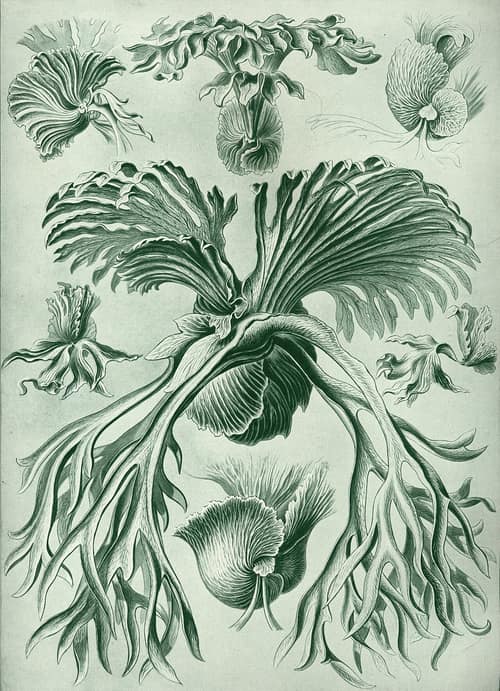
Close Relative Ernst Haeckel / Public domain · cc0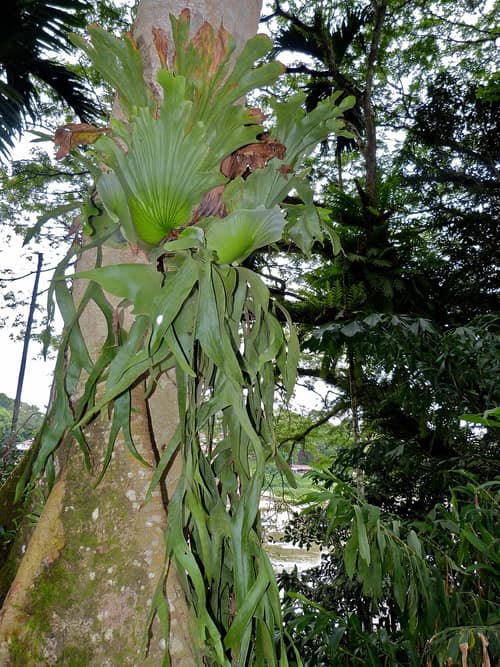
Close Relative Bernard DUPONT from FRANCE / CC BY-SA 2.0 · cc-by-saClose Relative
Help improve the field guideSomething wrong?
Checking your Fauna account…Report a name, category, or profile issue for review.