
Arachnid · GBIF taxon 6894244
Arizona Bark Scorpion
Centruroides sculpturatusAlso known as Bark Scorpion
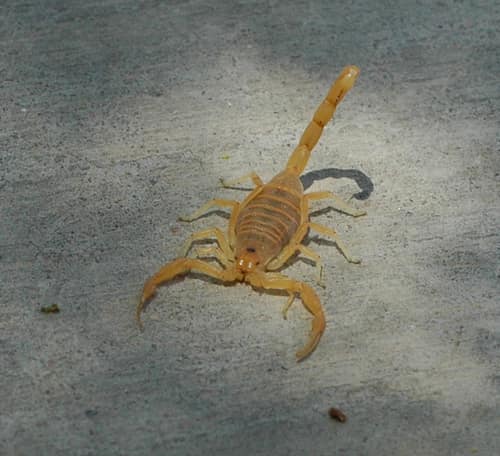
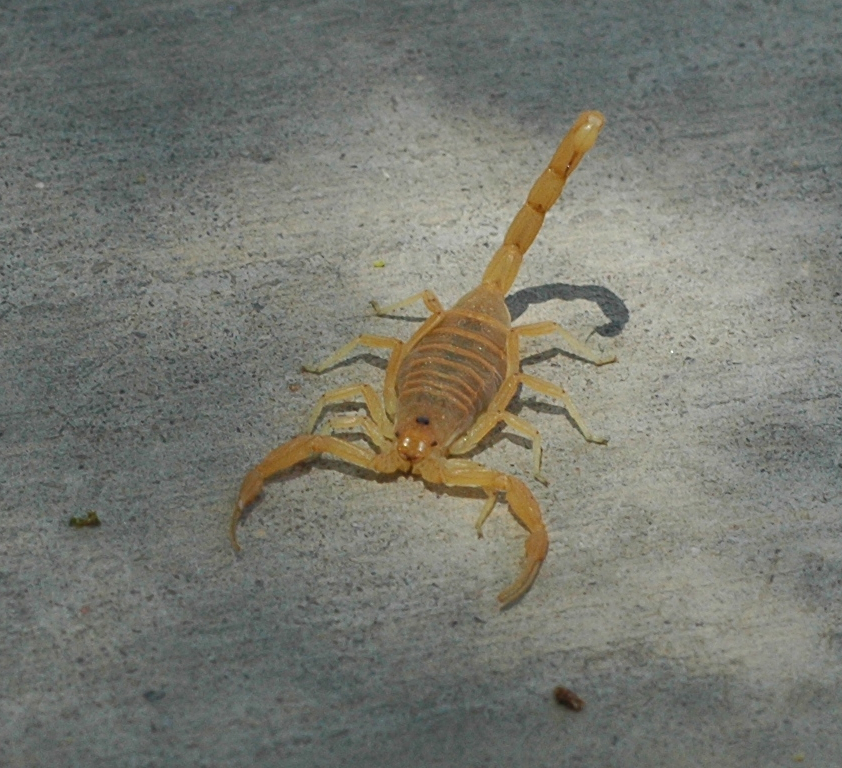
Arizona bark scorpions are nocturnal hunters distinguished by their remarkable climbing ability and lean, yellowish bodies. Unlike most desert scorpions that burrow in sand, these agile arachnids scale trees, rocky walls, and human dwellings to stalk prey from elevated perches. They are intensely social during winter months, often aggregating in groups of dozens to conserve moisture and body warmth.
NocturnalVenomousArachnid
—observations
—countries
—peak records
Not EvaluatedConservation statusIUCN Red List categoriesLCNTVUENCREWEXNot Evaluated — not placed on the risk ladderRed List categories, explained →
Diet & prey
- Crickets
- Cockroaches
- Beetles
Predators
- Pallid Bat
- Southern Grasshopper Mouse
- Desert Hairy Scorpion
ThreatsPesticide application, urbanization, and human eradication
HabitatsDesert scrub, rocky canyons, riparian areas, and suburban walls
Life span3–6 years
Size / weightNot available
Classification
- FamilyButhidae
- SpeciesCentruroides sculpturatus
Range data is not available yet.
Interaction riskVery high
- Low
- Moderate
- High
- Very high
- Why interaction risk is very high
- Possesses potent neurotoxic venom; avoid handling and inspect vertical surfaces before touching.
- Why it is dangerous
- Delivers a potent neurotoxin that causes severe localized pain, numbness, muscle spasms, and potential respiratory difficulties.
- How to recognize a risky encounter
- Recognized by a slender light tan to golden body, long narrow pincers, and a distinct small tubercle beneath the tail stinger.
- What to do
- Never touch with bare hands; use long forceps for containment or step away to allow the scorpion to pass.
Responsible observation
- UV Detection: Scan walls and tree trunks at night with a blacklight to see their fluorescent bright yellow body.
- Shake Footwear: Check boots, gloves, and sleeping bags before use in native desert environments.
- Safe Distance: Maintain a respectful distance and avoid reaching blindly into dark crevices or stacks of wood.
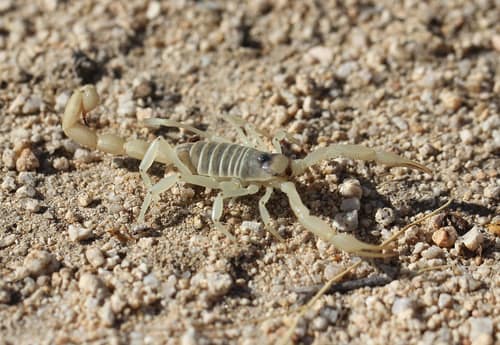
Competitor "Giant Hairy Scorpion, Hadrurus sp." by Joshua Tree National Park is marked with Public Domain Mark 1.0. To view the terms, visit https://creativecommons.org/publicdomain/mark/1.0/. · cc0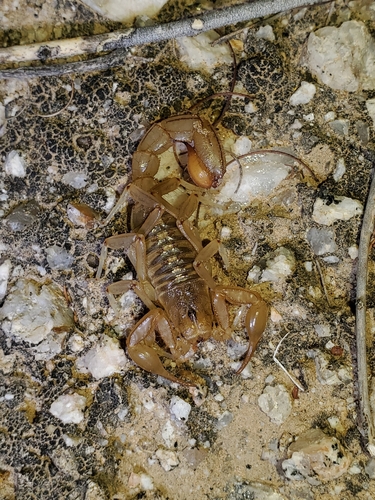
Co-occurring Species (c) Bob Miller, some rights reserved (CC BY) · cc-by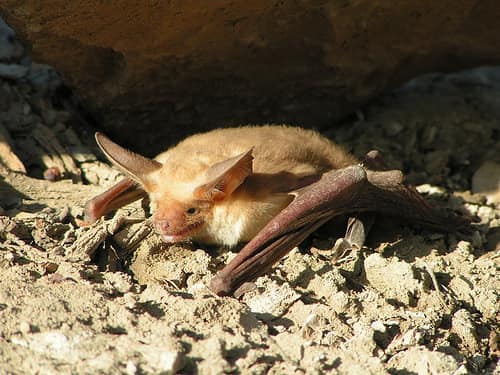
Predator (c) Keaton Wilson, some rights reserved (CC BY) · cc-by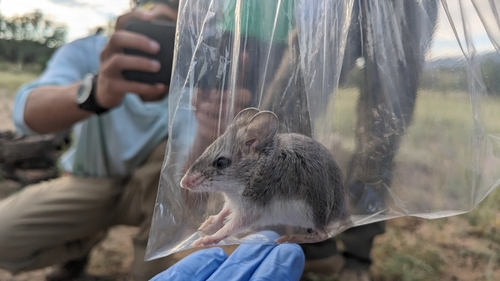
Predator (c) Olivia Guswiler, some rights reserved (CC BY) · cc-by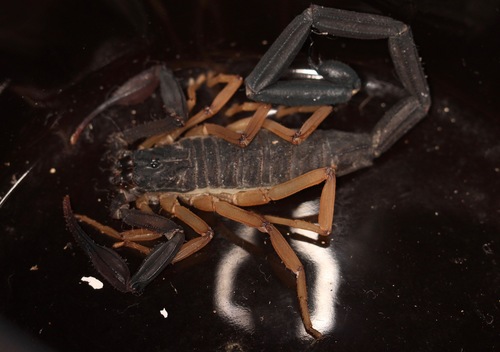
Close Relative (c) lazarus, some rights reserved (CC BY), uploaded by lazarus · cc-by
Help improve the field guideSomething wrong?
Checking your Fauna account…Report a name, category, or profile issue for review.