
Arachnid
Pulmonoscorpius kirktonensis
Pulmonoscorpius kirktonensisPulmonoscorpius kirktonensis prowled the humid swamp forests of Carboniferous Scotland, hunting as a fully terrestrial giant among early land animals. Unlike modern nocturnal scorpions, it possessed enlarged compound eyes that facilitated daytime visual pursuit across dense vegetation and volcanic lake margins. Fossilized book lungs demonstrate its complete independence from aquatic environments, supported by the oxygen-rich atmosphere of the Mississippian period.
FossilCarnivore
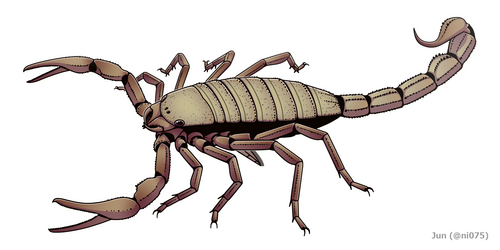
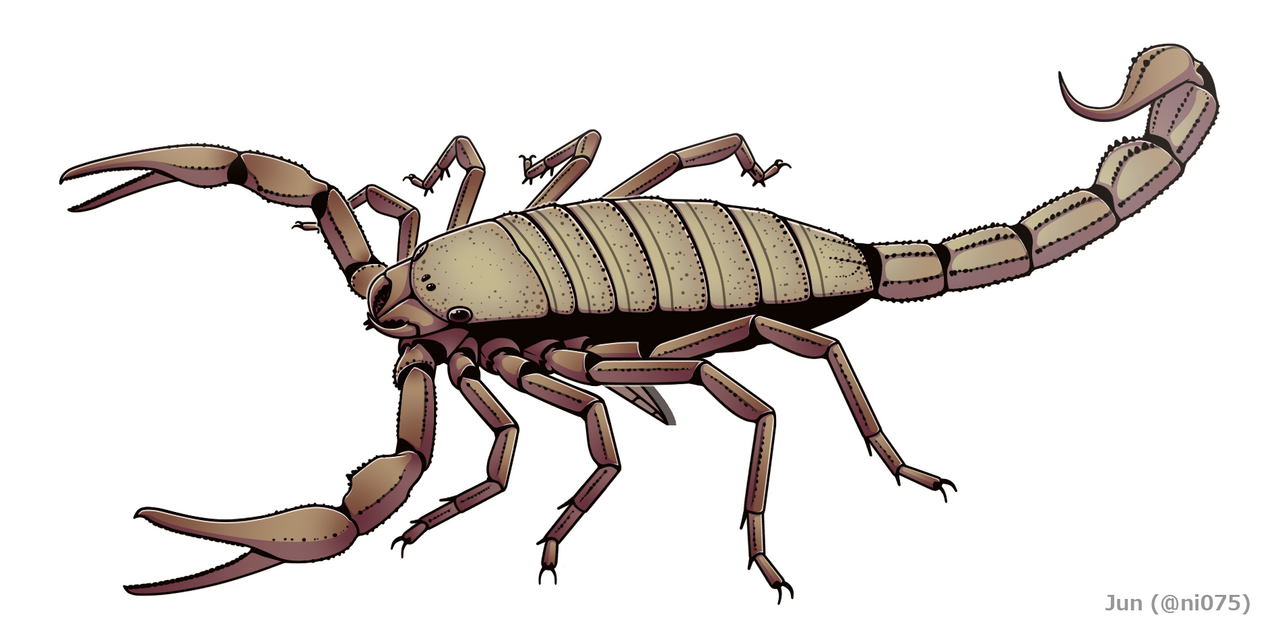
—observations
—countries
—peak records
ExtinctConservation statusIUCN Red List categoriesLCNTVUENCREWEXExtinctRed List categories, explained →
Diet & preyEarly tetrapods, Primitive insects, Myriapods
Predators
- Large stem-tetrapods
- Basal amphibians
ThreatsEnvironmental changes and habitat loss during Carboniferous climatic shifts
HabitatsCarboniferous swamp forests and freshwater lake margins
Life spanUnknown; estimated several years
Classification
- OrderScorpiones
- FamilyCentromachidae
- GenusPulmonoscorpius
- SpeciesPulmonoscorpius kirktonensis
Range data is not available yet.
Interaction riskVery high
- Low
- Moderate
- High
- Very high
- Why interaction risk is very high
- Extinct in prehistory; possessed a massive stinger used to inject immobilizing venom.
Responsible observation
- Fossil examination: Study high-resolution casts or thin sections to view the preserved compound eye ommatidia.
- Museum observation: View articulated specimen slabs displayed in Scottish national geological collections.
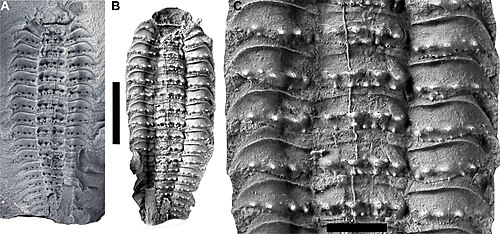
Coexisting Arthropod Mickaël Lhéritier, Gregory D. Edgecombe, Russell J. Garwood, Adrien Buisson, Alexis Gerbe, Nicolás Mongiardino Koch, Jean Vannier, Gilles Escarguel, Jérome Adrien, Vincent Fernandez, Aude Bergeret-Medina, and Vincent Perrier / CC BY 4.0 · cc-by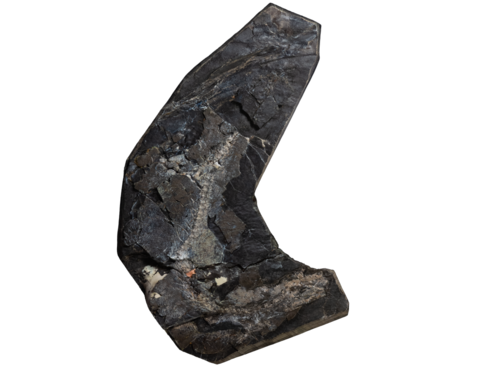
Potential Prey Millerettidmayhem / CC BY-SA 4.0 · cc-by-sa Image unavailable
Prehistoric Relative Ancient Relative
Keep collecting in Fauna
Found in Collections
Ecosystem chain Pro
Desert Sands
Pulmonoscorpius kirktonensis is found in this collection. Identify it in Fauna to fill this slot and continue your progress.
Unlock to track progress
Help improve the field guideSomething wrong?
Checking your Fauna account…Report a name, category, or profile issue for review.