
Invertebrate · GBIF taxon 6788219
Hopkins' Rose
Okenia rosaceaAlso known as Hopkins' Rose Nudibranch, Rosy Nudibranch, Pink Hopkins' Rose
Hopkins' Rose nudibranchs resemble vibrant pink, shaggy pom-poms scattered across rocky Pacific tide pools. These striking sea slugs derive their brilliant coloration directly from the pink encrusting bryozoans they consume. During warm-water ocean events, they can experience dramatic population blooms, carpeting the intertidal zone in bright rose hues.
MarineColorfulCarnivorous
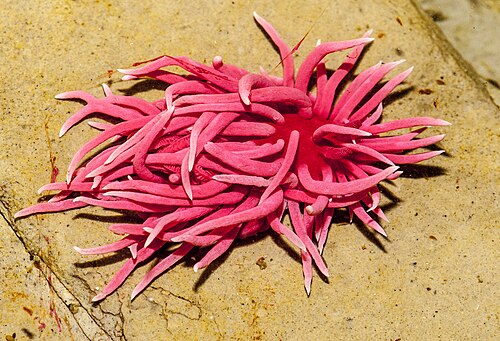
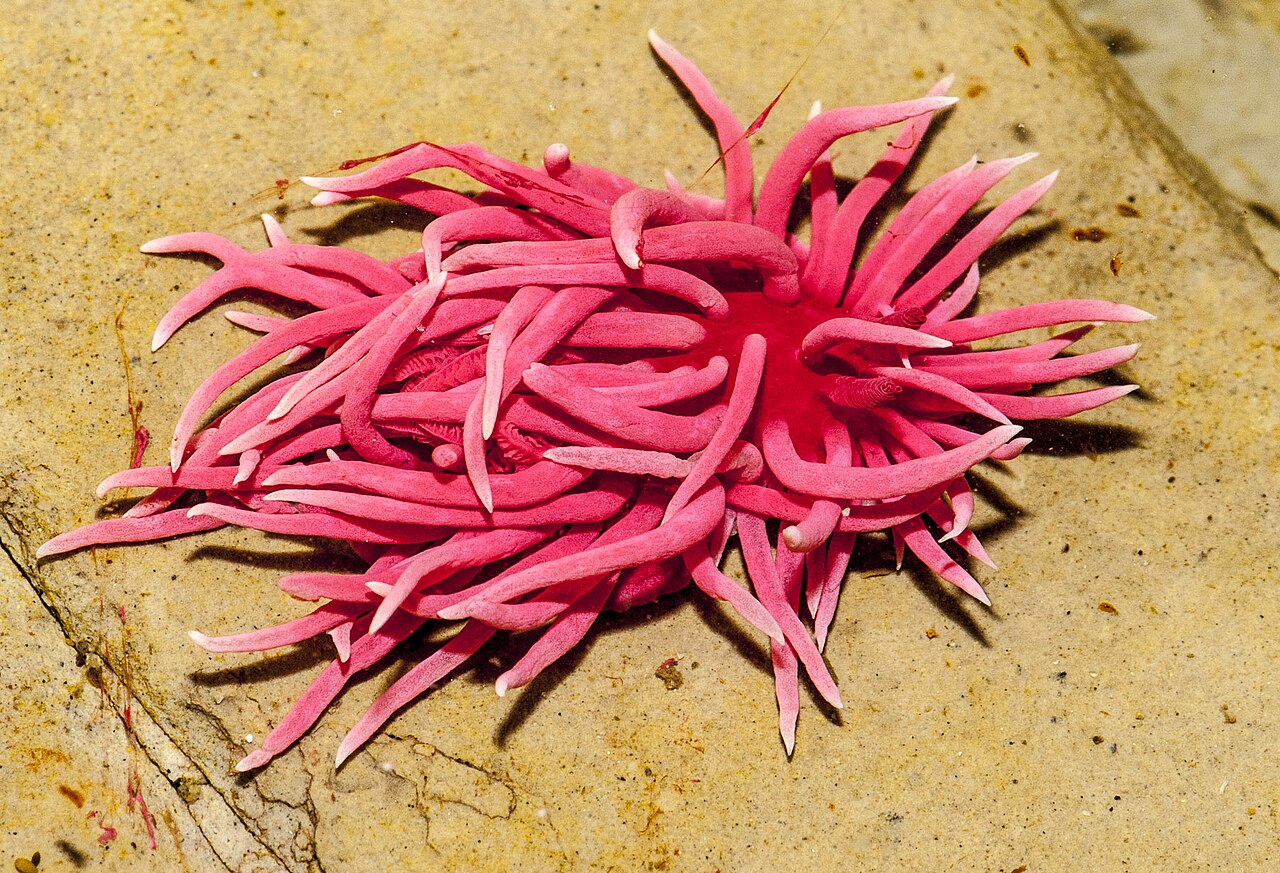
Licensed referenceJerry Kirkhart from Los Osos, Calif. / CC BY 2.0 · cc-by
—observations
—countries
—peak records
Not EvaluatedConservation statusIUCN Red List categoriesLCNTVUENCREWEXNot Evaluated — not placed on the risk ladderRed List categories, explained →
Diet & prey
- Integripelta bilabiata
Predators
- Fish
- Crabs
- Sea stars
ThreatsClimate change, ocean warming, and habitat degradation
HabitatsRocky intertidal zones, tide pools, and shallow subtidal reefs
Life spanAbout 1 year
Size / weightNot available
Classification
- FamilyGoniodorididae
- SpeciesOkenia rosacea
Range data is not available yet.
Interaction riskLow
- Low
- Moderate
- High
- Very high
- Why interaction risk is low
- Safe to observe at a normal distance.
Responsible observation
- Look in tide pools: Search shallow, rocky intertidal pools during low tide, especially where pink bryozoan crusts are visible.
- Do not touch: Their delicate, long papillae are easily damaged by handling.
- Watch for blooms: Look for them during warm-water events when populations can dramatically spike.
 Image unavailable
Prey Frequent Companion Close Relative Close Relative
Help improve the field guideSomething wrong?
Checking your Fauna account…Report a name, category, or profile issue for review.