
Plant
Caper Bush
Capparis spinosaAlso known as Flinders Rose
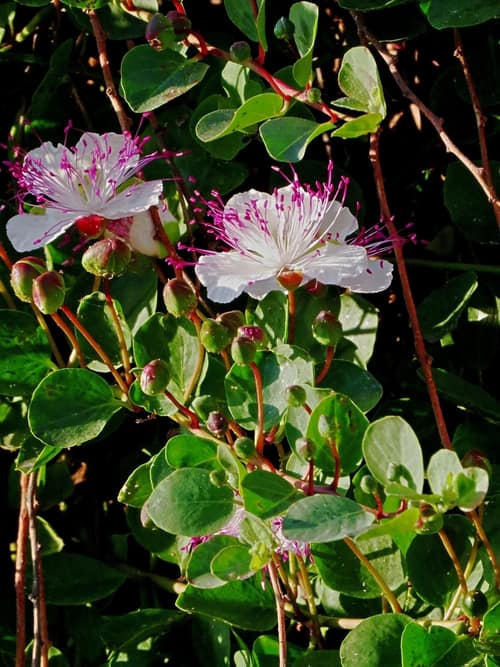
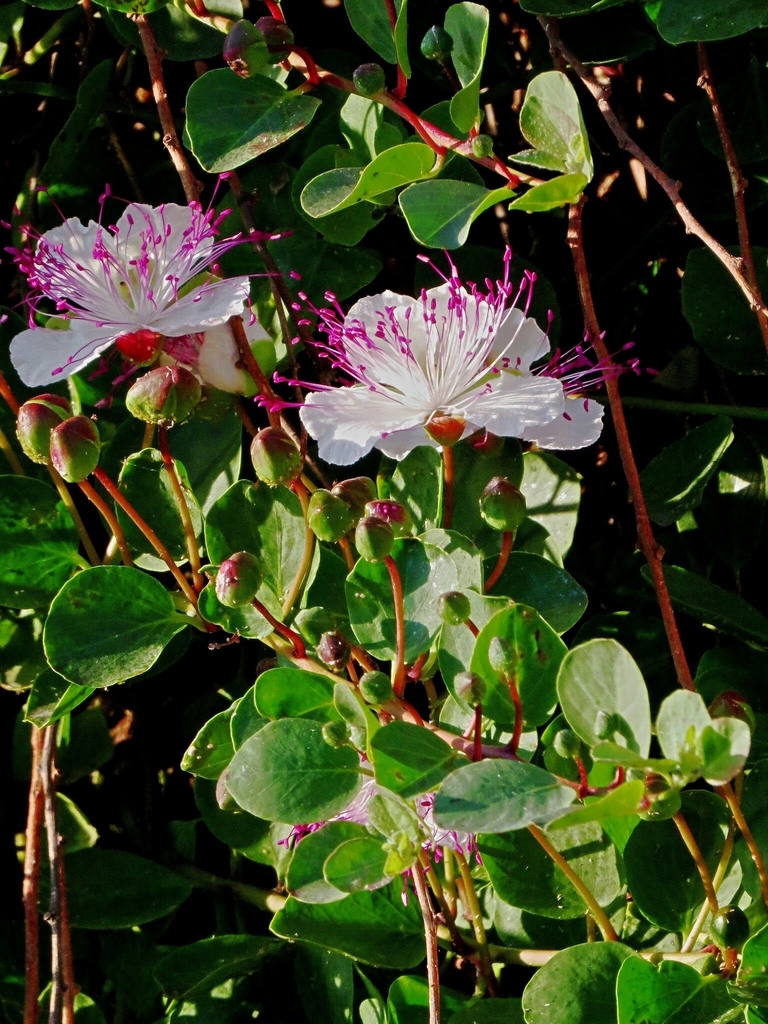
Caper Bush spreads woody stems across dry rock and carries rounded, fleshy leaves that conserve water. Large white to pinkish flowers open with a spray of long violet stamens, often fading within a day.
Drought TolerantRock CreviceShowy Stamens
—observations
—countries
—peak records
Least ConcernConservation statusIUCN Red List categoriesLCNTVUENCREWEXLeast ConcernRed List categories, explained →
Diet & preyPhotosynthesis; roots absorb water and mineral nutrients
Predators
- Leaf-feeding caterpillars
- Beetles
- Browsing mammals
ThreatsQuarrying, coastal development, trampling, severe frost, and destructive collection
HabitatsRocky slopes, limestone cliffs, old walls, coastal scrub, and other dry sunny ground
Life spanA long-lived perennial shrub that can persist for several decades
Classification
- FamilyCapparaceae
- SpeciesCapparis spinosa
Range data is not available yet.
Interaction riskLow
- Low
- Moderate
- High
- Very high
- Why interaction risk is low
- Admire flowers without picking them or damaging plants rooted in fragile rock crevices.
Responsible observation
- Bloom: Look early for white petals surrounding many purple stamens.
- Leaves: Notice the round, thick leaves along trailing woody stems.
Help improve the field guideSomething wrong?
Checking your Fauna account…Report a name, category, or profile issue for review.