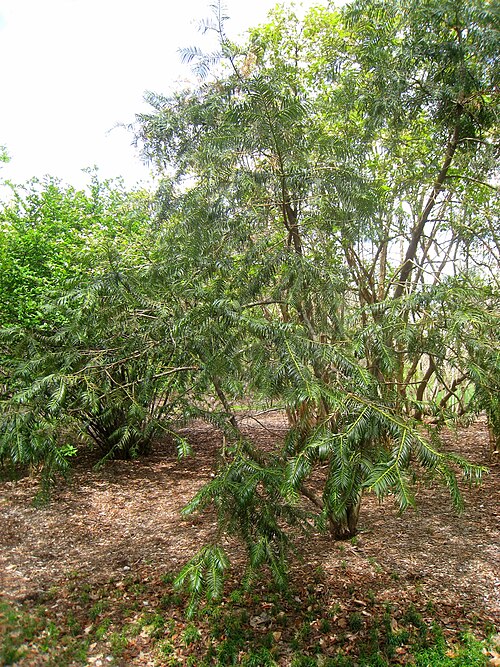
Also known as Korean Plum Yew, Cowtail Pine, Harrington's Cephalotaxus
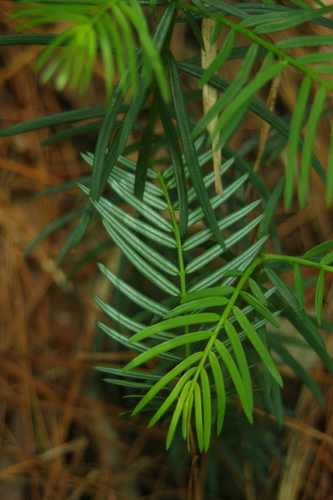
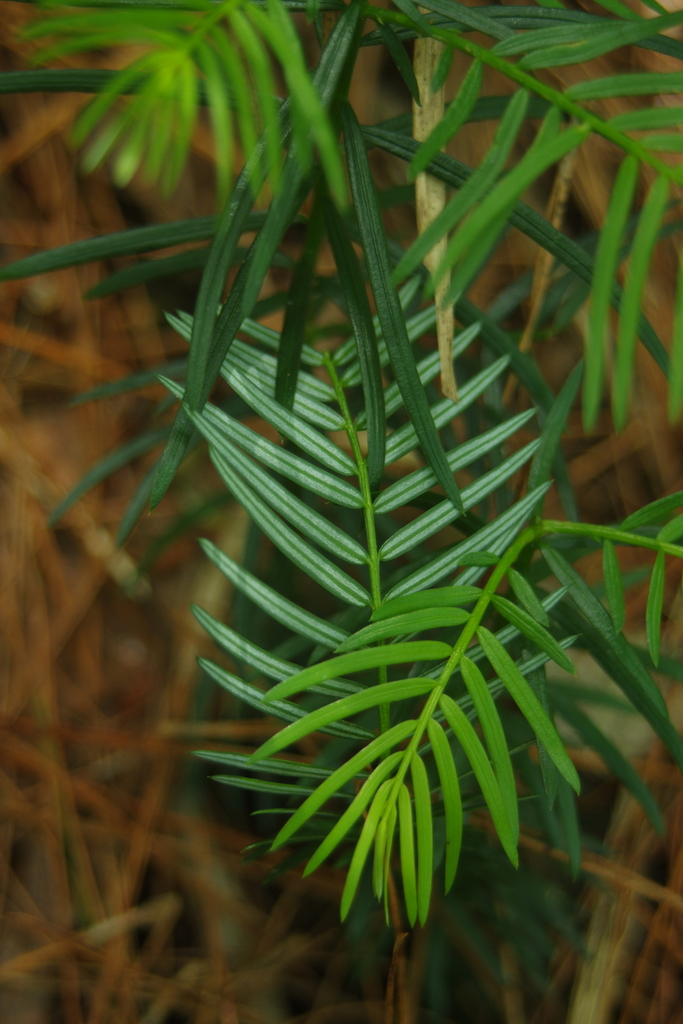
Japanese plum-yew is a slow-growing, shade-tolerant evergreen conifer native to temperate mountain ravines and moist woodlands across Japan and Korea. Its flexible, glossy needles arrange along the twigs in graceful V-shaped troughs, distinguishing its rich green silhouette from true yews. Mature female specimens bear solitary, olive-shaped seed cones coated in a fleshy green-to-purplish coat that matures over two full seasons.
HabitatsTemperate broadleaf and mixed forests, ravines, rocky hillsides
Life span100–300 years
Classification
OrderPinales
FamilyCephalotaxaceae
GenusCephalotaxus
SpeciesCephalotaxus harringtonia
Range & activity
Range data is not available yet.
Safe observation
Interaction riskHigh
Low
Moderate
High
Very high
Why interaction risk is high
Seeds and foliage contain toxic alkaloids, and wild fruit has dangerous look-alikes; never ingest.
Why it is dangerous
Contains cephalotaxine and homoharringtonine alkaloids, which inhibit protein synthesis and cause severe gastrointestinal distress, hypotension, and cardiotoxicity if chewed or swallowed.
How to recognize a risky encounter
Look for glossy needles arranged in a distinctive V-shaped trough and large, fleshy olive-like seed cones on female plants.
What to do
Keep ornamental plantings away from grazing livestock and pets, and never consume wild cones or seeds.
Responsible observation
Identifying Foliage: Turn needles over to inspect two conspicuous white stomatal bands running along the underside.
Sunlight Protection: Plant or search in deep shade, as direct summer sun scorches the glossy foliage.
Handling Precautions: Wear gardening gloves when trimming to avoid plant sap exposure.