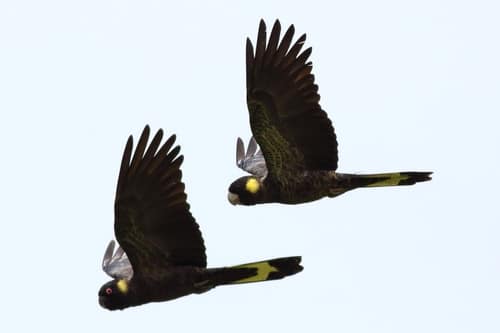
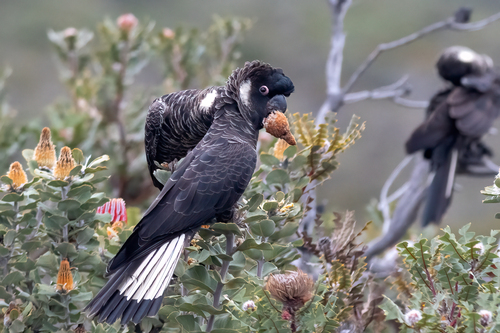
Also known as Banksian Cockatoo, Banks's Black Cockatoo, Banksian Red-tailed Cockatoo
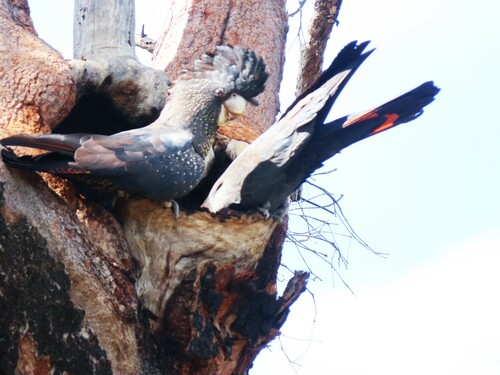
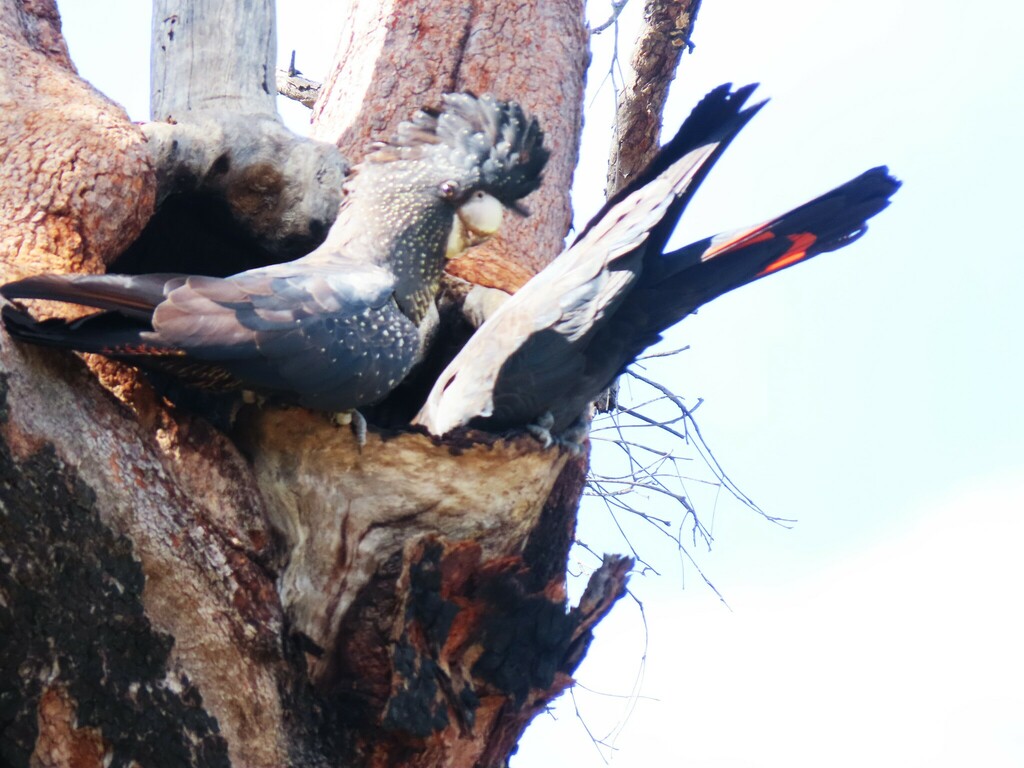
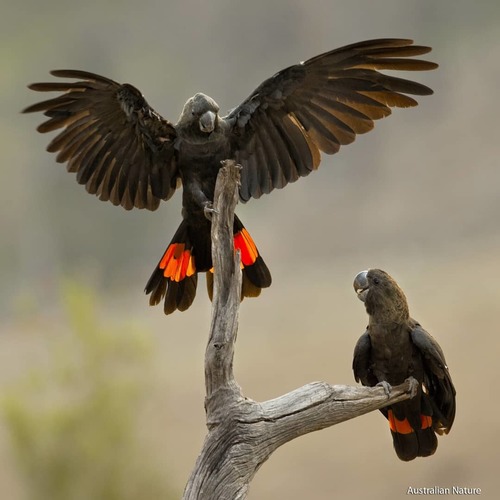
Red-tailed black cockatoos drift across Australian woodlands in noisy, fluid flocks, their loud, rolling metallic calls announcing their approach across the tree canopy. Pairs form lifelong monogamous bonds and depend heavily on mature, hollow-bearing eucalyptus trees that can take up to two centuries to develop suitable nesting cavities. Females display distinctive yellow-orange barring across their tail feathers and pale speckles on the head, while adult males boast striking scarlet panels in their tails and a glossy charcoal plumage.
ThreatsLoss of mature hollow-bearing nesting trees, agricultural clearing, and competition for nest sites
HabitatsEucalyptus forests, riverine woodlands, coastal shrublands, and tropical savannas
Life span30–50 years in the wild (up to 50+ in captivity)
Classification
FamilyPsittacidae
SpeciesCalyptorhynchus banksii naso
Range & activity
Range data is not available yet.
Safe observation
Interaction riskLow
Low
Moderate
High
Very high
Why interaction risk is low
Powerful beaks can crush nuts and inflict severe bites if cornered or handled; observe from a distance.
Why it is dangerous
Equipped with massive, heavy-mandibled beaks built to crack hardwood seed casings, which can easily crush fingers and cause deep lacerations if the bird is restrained.
How to recognize a risky encounter
Look for a large black cockatoo with a prominent rounded crest and broad red or barred orange tail panels.
What to do
Never attempt to grab or handle an injured adult; contact a licensed wildlife rescue organization equipped with protective gloves and transport boxes.
Responsible observation
Listening: Tune your ear to metallic, rolling rolling calls echoing over the forest canopy.
Ground Evidence: Search beneath eucalyptus trees for freshly sheared seed capsules and chewed twigs.
Distance: Maintain a respectful distance around nest hollows to avoid causing birds to abandon broods.