
Mammal
Hartmann's Mountain Zebra
Equus zebra hartmannaeAlso known as Hartmann's Zebra
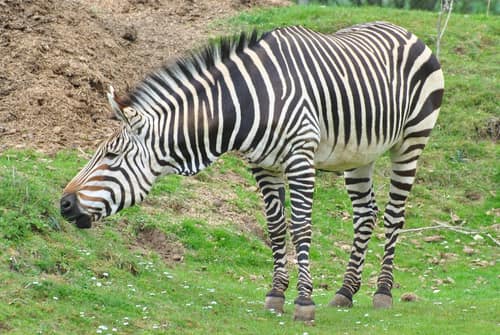
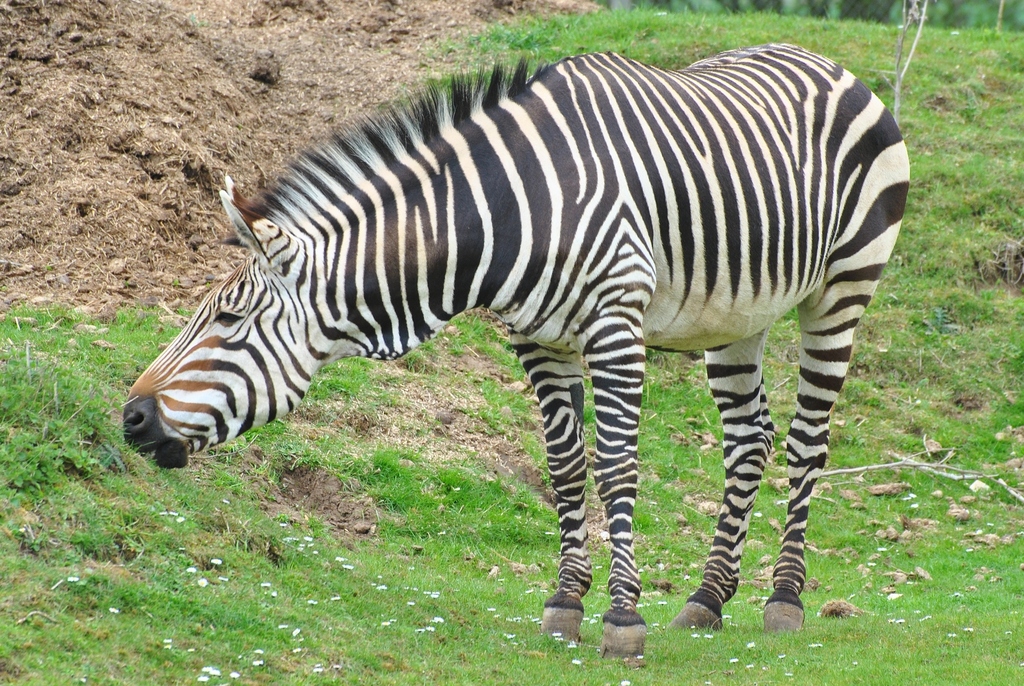
Hartmann's mountain zebras are agile climbers uniquely adapted to rugged, arid escarpments, using their hard, fast-growing hooves to navigate steep rocky terrain. They live in small, stable breeding herds led by a dominant stallion, communicating through high-pitched whinnies and subtle ear movements. Unlike plains zebras, they possess a distinct throat dewlap and a white, unstriped underbelly.
HerbivoreMammalArid-adapted
—observations
—countries
—peak records
VulnerableConservation statusIUCN Red List categoriesLCNTVUENCREWEXVulnerableRed List categories, explained →
Diet & preyGrasses, bark, leaves, and scrub vegetation
Predators
- Lions
- Leopards
- Spotted hyenas
ThreatsHabitat loss, agricultural competition, drought, and poaching
HabitatsMountainous escarpments, rocky hillsides, and arid grasslands
Life span20 to 25 years in the wild
Classification
- FamilyEquidae
- SpeciesEquus zebra hartmannae
Range data is not available yet.
Interaction riskHigh
- Low
- Moderate
- High
- Very high
- Why interaction risk is high
- Can deliver powerful kicks and bites if cornered; maintain a safe viewing distance.
- Why it is dangerous
- Capable of inflicting severe injuries with powerful kicks and defensive bites when threatened.
- How to recognize a risky encounter
- Look for the prominent throat dewlap, vertical stripes on the torso, and a completely white belly.
- What to do
- Never approach on foot; remain inside a vehicle when viewing them in national parks.
- What to notice
- Recognized by their narrow, closely spaced black stripes and preference for steep, rocky slopes.
- Support conservation
- Avoid blocking access to scarce waterholes, especially during the dry season.
Responsible observation
- Keep your distance: Use binoculars or a telephoto lens to observe their natural climbing behavior without causing alarm.
- Watch the ears: Flattened ears indicate aggression or stress, signaling that you are too close.
- Look for waterholes: They often visit water sources in the early morning or late afternoon.
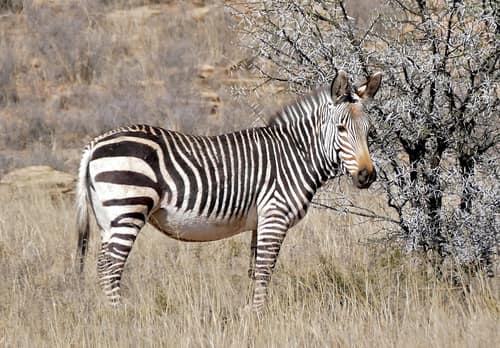
Close Relative "Cape Mountain Zebra (Equus zebra zebra)" by berniedup is licensed under CC BY-SA 2.0. To view a copy of this license, visit https://creativecommons.org/licenses/by-sa/2.0/. · cc-by-sa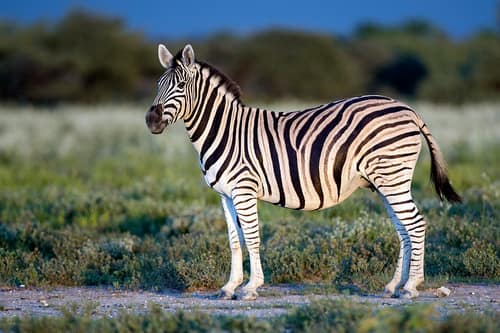
Close Relative Yathin S Krishnappa / CC BY-SA 3.0 · cc-by-sa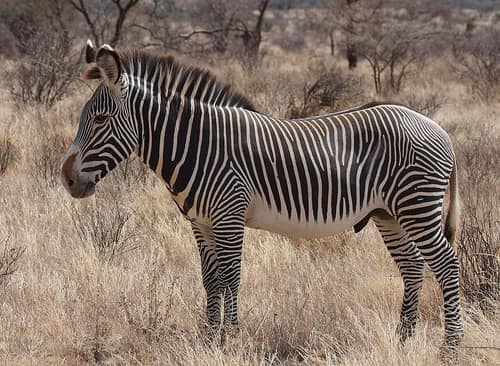
Close Relative Rainbirder / CC BY-SA 2.0 · cc-by-sa
Help improve the field guideSomething wrong?
Checking your Fauna account…Report a name, category, or profile issue for review.