
Reptile · GBIF taxon 6161347
Grass Snake
Natrix natrixAlso known as Ringed Snake
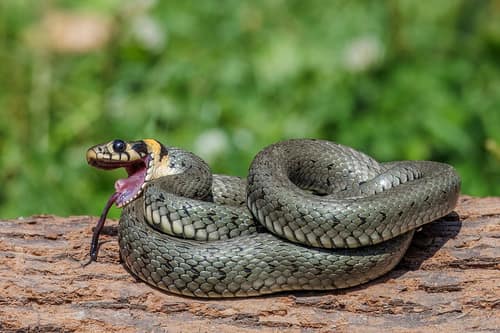
Grass snakes are nonvenomous swimmers usually marked by pale yellow or cream collars behind the head. They hunt amphibians near wetlands and may hiss, release foul-smelling musk, or feign death when trapped.
Nonvenomous SnakeWetland HunterPale Collar

—observations
—countries
—peak records
Least ConcernConservation statusIUCN Red List categoriesLCNTVUENCREWEXLeast ConcernRed List categories, explained →
Diet & prey
- Frogs
- Toads
- Newts
Predators
- Foxes
- Badgers
- Raptors
ThreatsWetland loss, road mortality, persecution, garden machinery, and loss of egg-laying sites
HabitatsPond margins, marshes, rivers, wet meadows, gardens, and woodland edges
Life spanOften 10 to 15 years, with some individuals living beyond 20 years
Size / weightNot available
Classification
- FamilyColubridae
- SpeciesNatrix natrix
Range data is not available yet.
Interaction riskLow
- Low
- Moderate
- High
- Very high
- Why interaction risk is low
- A cornered grass snake may bite or release musk; never handle it and leave an open escape route.
- Why it is dangerous
- Although nonvenomous, a restrained grass snake can inflict a defensive bite and discharge strong-smelling musk from its glands.
- How to recognize a risky encounter
- A pale yellow, cream, or whitish collar behind the head contrasts with an olive, gray, or dark body.
- What to do
- Do not pick up, corner, or block the snake; step back and allow it to leave under cover.
Responsible observation
- Collar: Look for pale crescents immediately behind the head.
- Water: Scan sunny banks from afar because the snake dives when disturbed.
Help improve the field guideSomething wrong?
Checking your Fauna account…Report a name, category, or profile issue for review.